
Ear Shaping
Baby Born With a Folded Ear — What Parents Should Check First
If your baby was born with a folded ear, learn common patterns (lidding, lop), when folds may soften, and how early ear molding is assessed.
Many parents type baby born with folded ear after the first photos. A folded rim is common. The medical names you may hear later include lidding, lop ear, or constricted rim — the shared theme is a soft helix that sits folded instead of open.
Short answer: Note the fold, take clear photos, and ask your pediatrician at the newborn check. Some temporary creases ease; folds that hold their shape in the early weeks can be assessed for physician ear molding while cartilage is still soft.
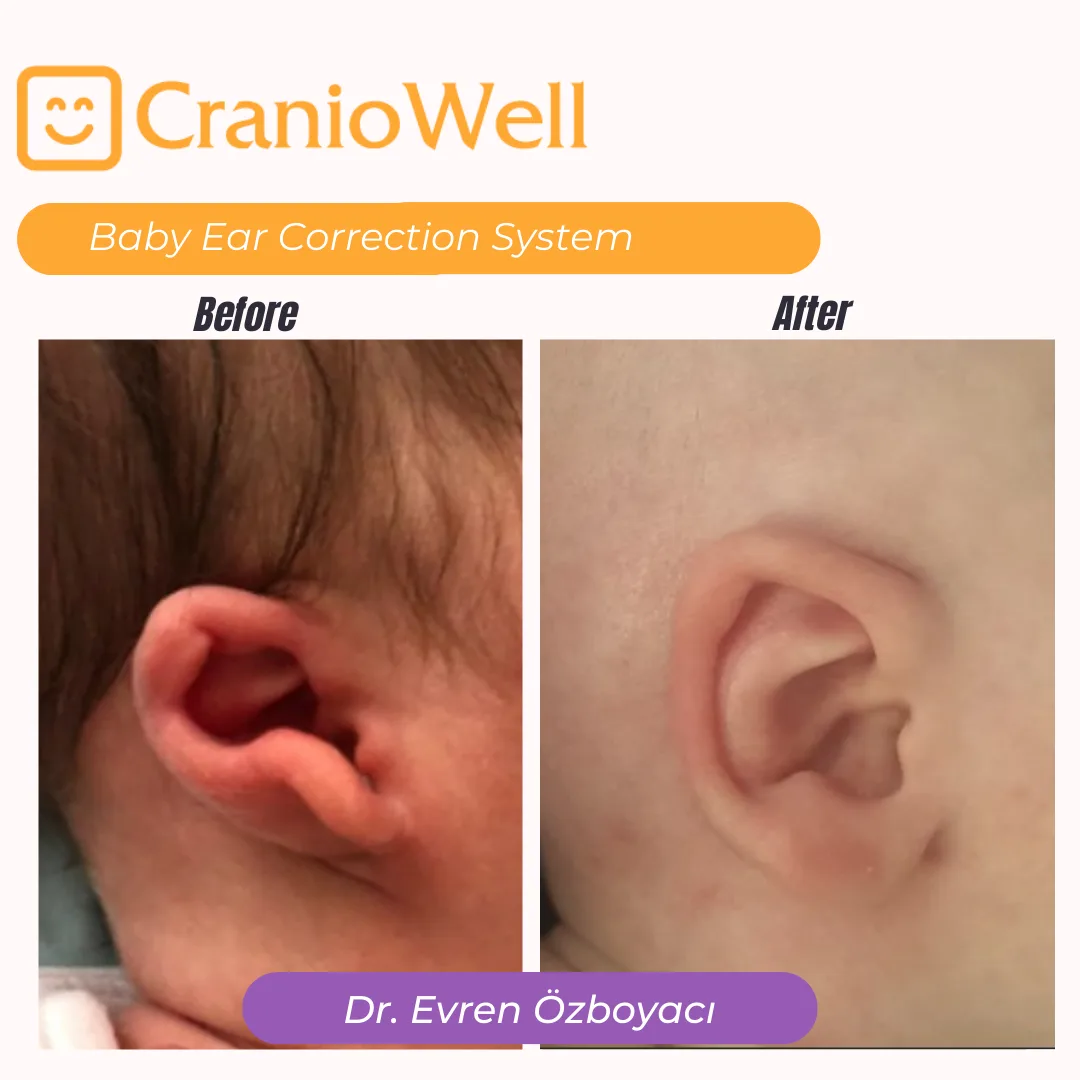
In the uterus, the ear can be pressed by the womb wall, a hand, or birth canal position. Soft cartilage holds that imprint after birth. Hormone-related cartilage flexibility in the first weeks is why early molding can work when a physician recommends it. More context: causes and treatment overview.
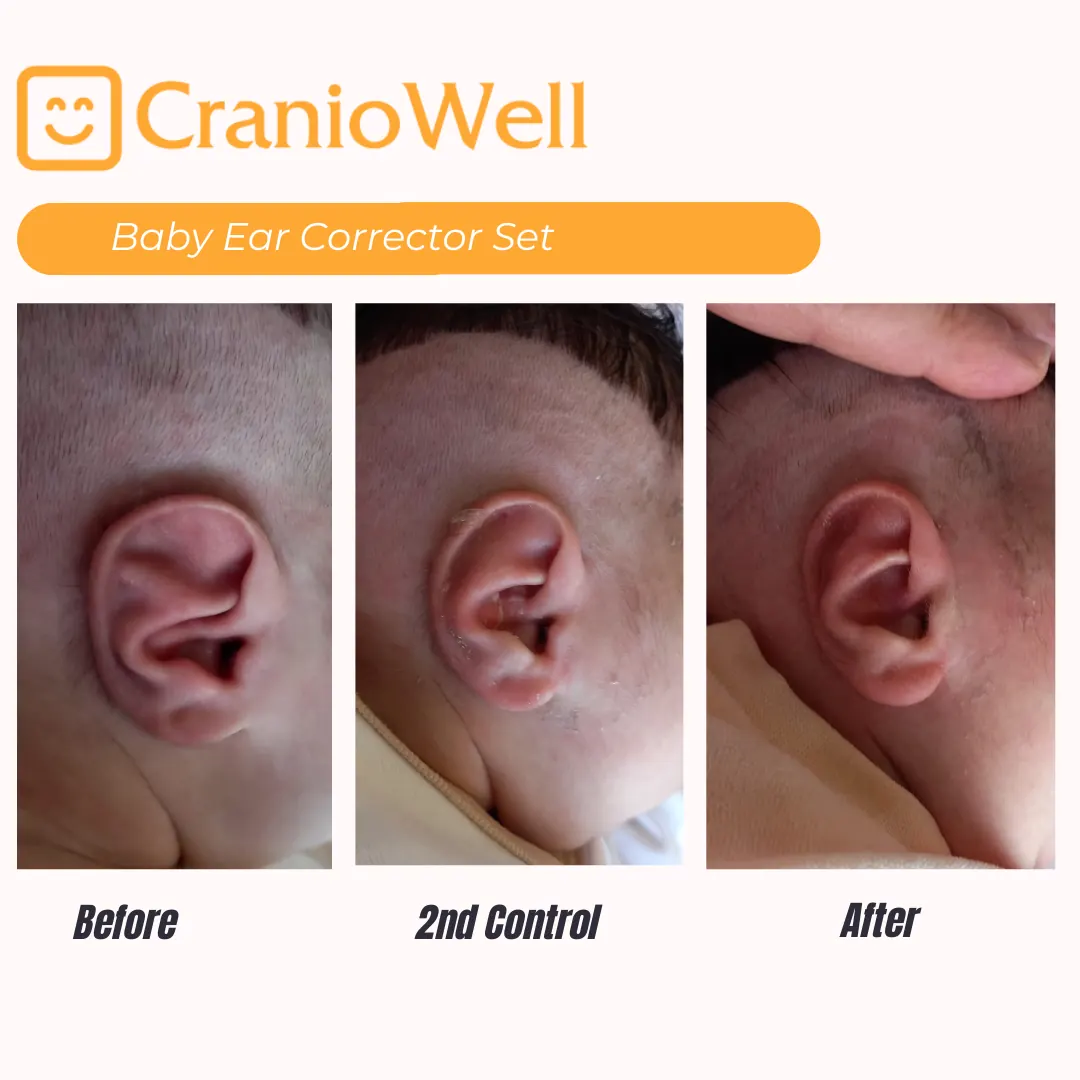
Mild temporary creases sometimes look better within days. Folds that still look the same at subsequent checks deserve a plan rather than endless waiting. Parent guide: do babies grow out of ear deformities?
When appropriate, a treating physician fits a molding system that holds the helix open while cartilage firms. Wear time and follow-up are individualized. Read ear molding for infants and newborn molding steps.
The CranioWell baby ear corrector set is applied and followed only by treating physicians. Find the nearest one in our specialist directory. If there is no physician near you, send us a photo of your baby’s ear and your location, and we will tell you what options are available.
Shape library: prominent ears, Stahl’s ear, lop ear, cup ear, ear lidding, flat ear helix / helical rim, cryptotia, constricted ear, conchal crus, mixed ear deformity. Hub: baby ear molding.
Related: flattening newborn ears at home, parts of the ear, ear molding skin care.
The fold itself is usually not painful. Redness, swelling, or drainage needs prompt pediatric review.
Do not force the cartilage. Photo documentation and clinician guidance are safer than repeated manual unfolding.
Outer-ear shape and hearing are related but not the same. Complete the newborn hearing screen and follow any referral.
No CranioWell physician in your country yet? You can contact us about a distribution / partnership application for your region.