
Ear Shaping
Is My Baby a Candidate for Ear Molding? A Parent Checklist
A simple checklist to help parents decide when to ask about ear molding: age, ear shape, skin and what the physician checks.
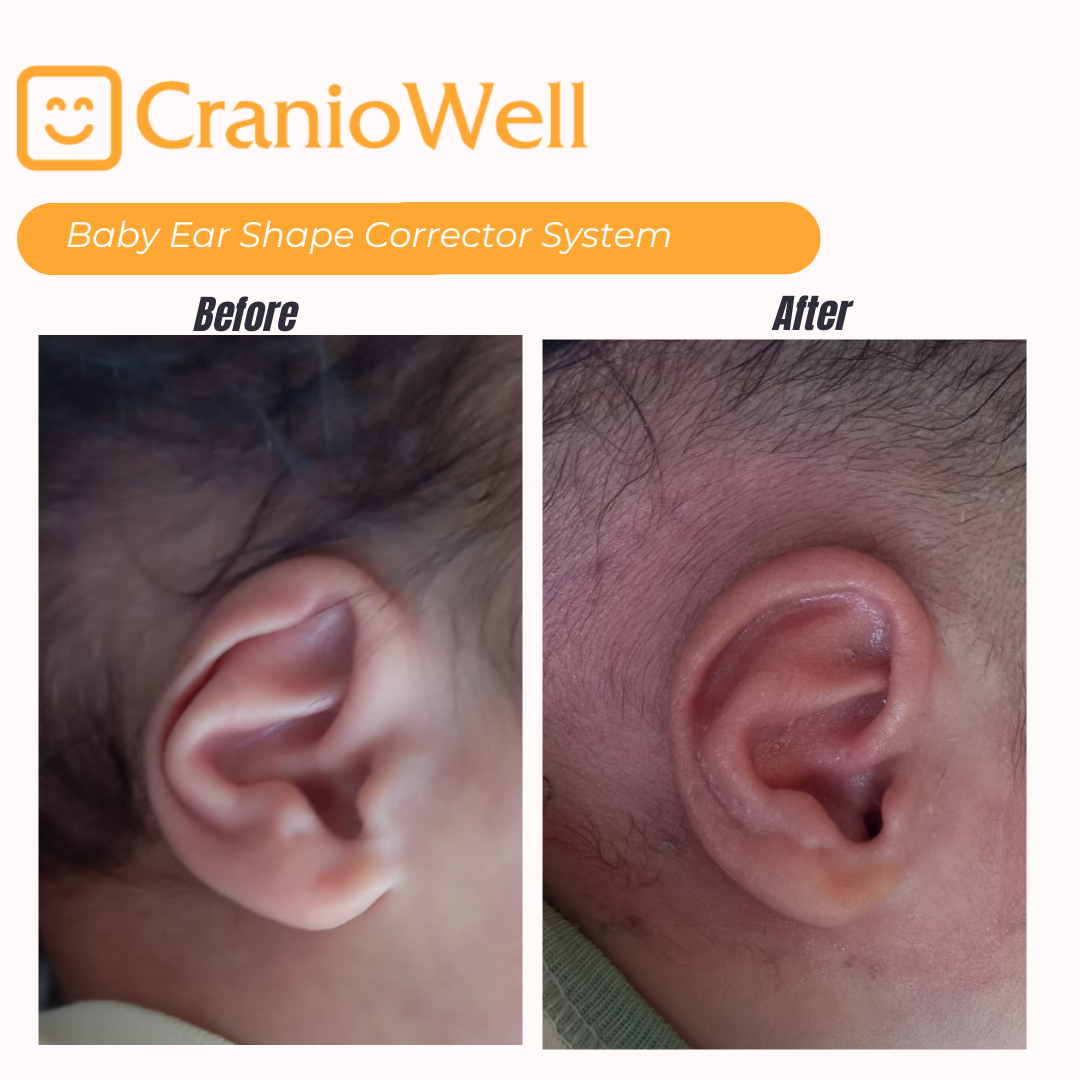
Ear Shaping
A simple checklist to help parents decide when to ask about ear molding: age, ear shape, skin and what the physician checks.
Not every unusual ear needs treatment, and not every ear can be molded. This checklist helps you decide when to ask a physician; the final decision is always made after an examination.
Short answer: A baby is usually a good candidate when the ear parts are present but folded, flattened or protruding, the shape is still there after the first week, and treatment can start in the first weeks of life. The physician confirms suitability after examining the ear and skin.

These are average planning guides; the treating physician sets the exact course.
Often yes; the physician considers the baby’s overall condition and skin before planning treatment.
Only affected ears are treated. Both ears are examined at the first visit.
The CranioWell baby ear corrector set is applied and followed only by treating physicians. Find the nearest one in our specialist directory. If there is no physician near you, send us a photo of your baby’s ear and your location, and we will tell you what options are available.
Related: baby ear molding guide, is my baby a candidate?, ear molding vs otoplasty.