
Ear Shaping
Newborn Ear Molding: A Step-by-Step Parent Guide
Six clear steps after you notice an unusual newborn ear: assessment, fitting, daily care, follow-up and when molding is too late. Parent guide.
Ear Shaping
Six clear steps after you notice an unusual newborn ear: assessment, fitting, daily care, follow-up and when molding is too late. Parent guide.
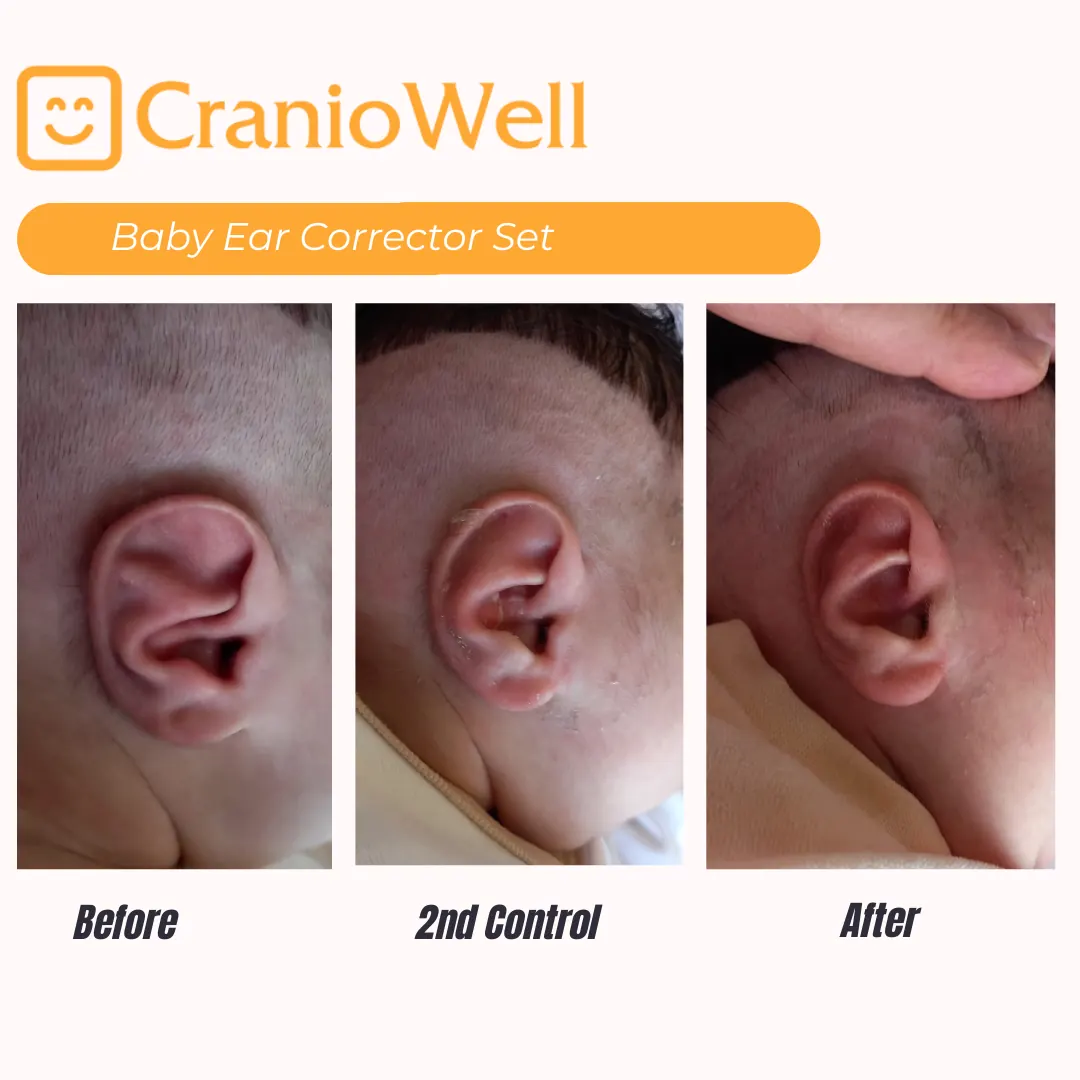
Noticing an unusual shape to your newborn's ear can be worrying. This guide walks you through what to do, what the assessment involves and what treatment with the CranioWell ear corrector set looks like.
The most important step is the fastest: if you notice an unusual ear shape, contact a physician as soon as possible. The window for non-surgical correction is the first weeks of life. Every day counts in the newborn period.
It is normal to notice the ear shape at birth or in the first few days. A shape that is still visible after the first week is unlikely to resolve on its own.
A physician trained in ear molding will:
To find a CranioWell specialist: specialist directory.
The CranioWell ear corrector set components are fitted to the ear at the appointment. The physician will show you how to care for the area and what to monitor at home. No anesthesia, no needles.
More on skin care: skin care during ear molding.
The physician will schedule regular visits to check progress and adjust the device. The number of visits depends on the severity of the deformity and how quickly the cartilage responds.
When the cartilage holds the corrected shape, the device is removed. The physician confirms the result at the final visit.
If the cartilage has already firmed (usually after about 3 months), ear molding is no longer effective. Surgical correction (otoplasty) is the main option after this point and is typically considered from age 5–6. More: ear molding vs otoplasty.
No CranioWell physician in your country yet? You can contact us about a distribution / partnership application for your region.