
Ear Shaping
How to Flatten Newborn Ears at Home — Safe Expectations for Parents
Parents ask how to flatten newborn ears at home. Learn why tape and DIY kits differ from physician ear molding and when to seek early assessment.
Search phrases like how to flatten ears naturally or “flatten newborn ears at home” usually mean a fold, cup, or sticking-out look in the first weeks. Soft cartilage can change — but home methods are not the same as clinician-applied molding.
Short answer: Do not force the ear with household tape, clips, or unguided devices. Positioning and avoiding pressure while sleeping can reduce temporary folds; lasting shape change in the newborn window is typically done with a physician-fitted molding system after an exam.

Newborns often leave the hospital with a rim that looks folded or pressed from birth position. Some folds soften in days; others stay. Parents hope for a gentle fix without surgery. That hope is reasonable — but the reliable window and method belong with a trained clinician. Background: do babies grow out of ear deformities?
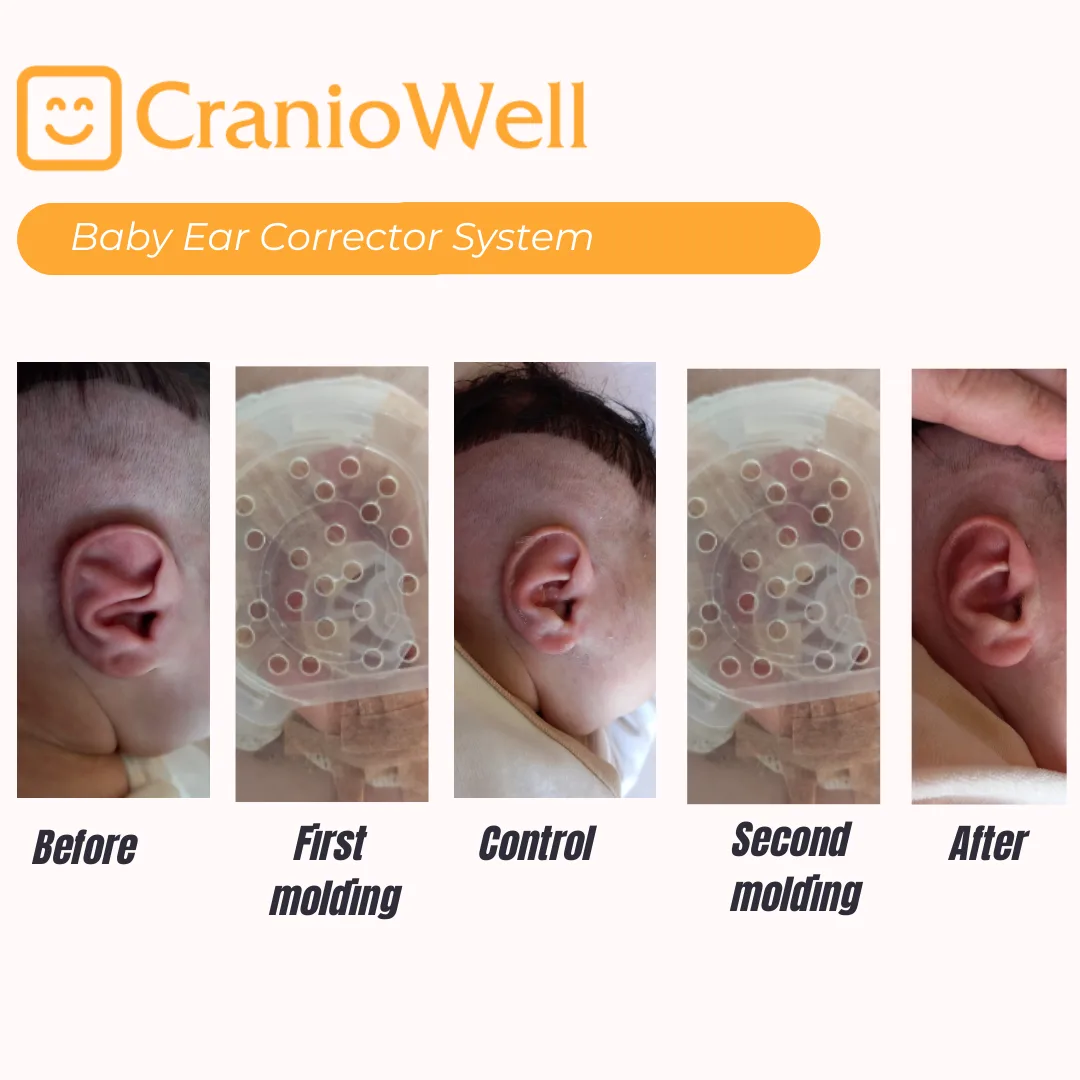
Professional molding uses a custom or clinician-selected system worn most of the day, with follow-up for fit and skin. Home “flatteners” sold online often lack individualized fitting and medical oversight. Compare: devices vs taping and risks and side effects.
Start with the candidacy checklist and the hub guide to ear molding for infants.
The CranioWell baby ear corrector set is applied and followed only by treating physicians. Find the nearest one in our specialist directory. If there is no physician near you, send us a photo of your baby’s ear and your location, and we will tell you what options are available.
Shape library: prominent ears, Stahl’s ear, lop ear, cup ear, ear lidding, flat ear helix / helical rim, cryptotia, constricted ear, conchal crus, mixed ear deformity. Hub: baby ear molding.
Related: keeping baby’s ears from sticking out, baby born with a folded ear, parts of the ear.
Gentle cleaning is fine; forceful massage is not a proven molding method and can irritate skin.
Safe sleep on the back is for breathing safety. It does not replace molding for established cartilage folds.
No. Unguided tape is not equivalent to a fitted molding protocol supervised by a physician.
No CranioWell physician in your country yet? You can contact us about a distribution / partnership application for your region.