
Ear Shaping
Ear Tags and Ear Pits in Newborns: Evaluation, Not Ear Molding
Ear tags and preauricular pits are common newborn findings. Learn how they are evaluated and why ear molding does not treat them.
Ear tags and ear pits are small findings usually just in front of the outer ear. They are common in newborns. They are not the same as ear shape differences such as lidding or Stahl’s ear, and ear molding does not remove tags or close pits.
Short answer: Point them out at the newborn exam. Your pediatrician checks hearing and the baby overall. Molding reshapes cartilage folds; tags and pits follow a different pathway if treatment is ever needed.
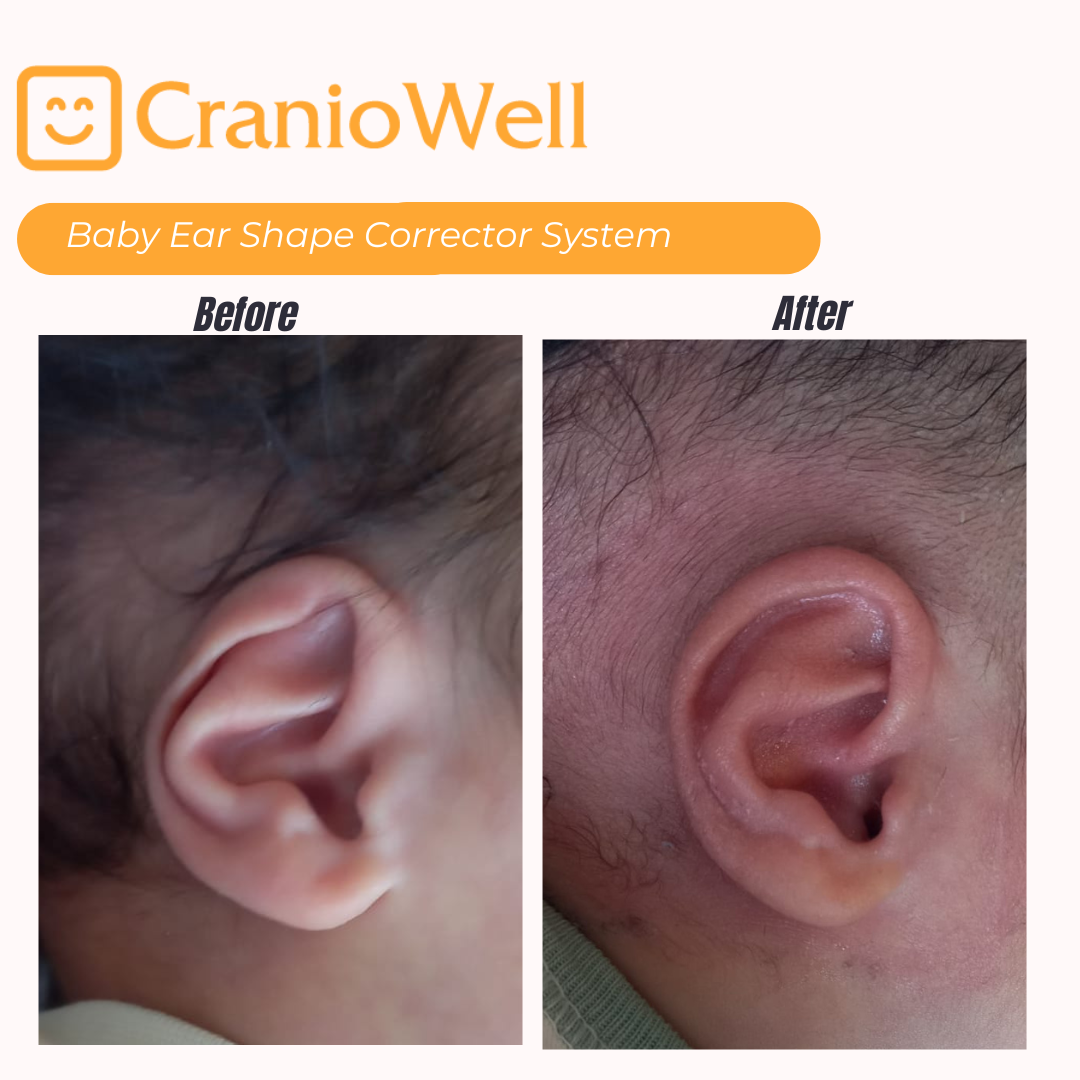
An ear tag is a soft bump of skin, sometimes containing a bit of cartilage, typically sitting in front of the ear (preauricular area). Tags can be on one side or both. Most are isolated findings. They can look alarming in photos but are often noticed first by parents or the nursery team.
An ear pit is a small dimple or pinpoint opening, usually near the front of the upper ear. It may be shallow or connect to a short sinus tract under the skin. Pits can become red or drain if infected later — that needs prompt pediatric care.
Related reading on hearing vs outer-ear shape: causes and treatment overview.

No. Molding gently guides soft outer-ear cartilage into a more typical curve. It cannot cut away a tag or seal a pit. If removal or surgical management is discussed later, that is usually with a pediatric surgeon or ENT specialist — separate from molding for folds such as lidding or Stahl’s ear.
Tags or pits can coexist with moldable shape differences. Molding may still be considered for the shape problem after an exam. The tag or pit itself stays on its own plan. Start with: mixed ear deformity if several shape features are present, or the candidacy checklist.
The CranioWell baby ear corrector set is applied and followed only by treating physicians. Find the nearest one in our specialist directory. If there is no physician near you, send us a photo of your baby’s ear and your location, and we will tell you what options are available.
Shape library: Other ear shapes: prominent ears, Stahl’s ear, lop ear, cup ear, ear lidding, flat ear helix / helical rim, cryptotia, constricted ear, conchal crus, mixed ear deformity. Full guide: baby ear molding.
Related: what ear molding is, home kits vs professional care, do babies grow out of ear deformities?.
Most are harmless isolated findings. Your pediatrician decides whether any extra tests are needed based on the whole exam and history.
No. Molding reshapes folds of the pinna; it does not remove tags.
Not automatically for an isolated pit. Guidelines emphasize looking for other risk markers first; your pediatrician makes that call.
No CranioWell physician in your country yet? You can contact us about a distribution / partnership application for your region.