
Ear Shaping
Non-Surgical Ear Correction in Newborns: A Complete Guide
Overview of non-surgical newborn ear correction options, early timing and how physician-applied molding devices fit the plan. Parent guide. Parent guide.
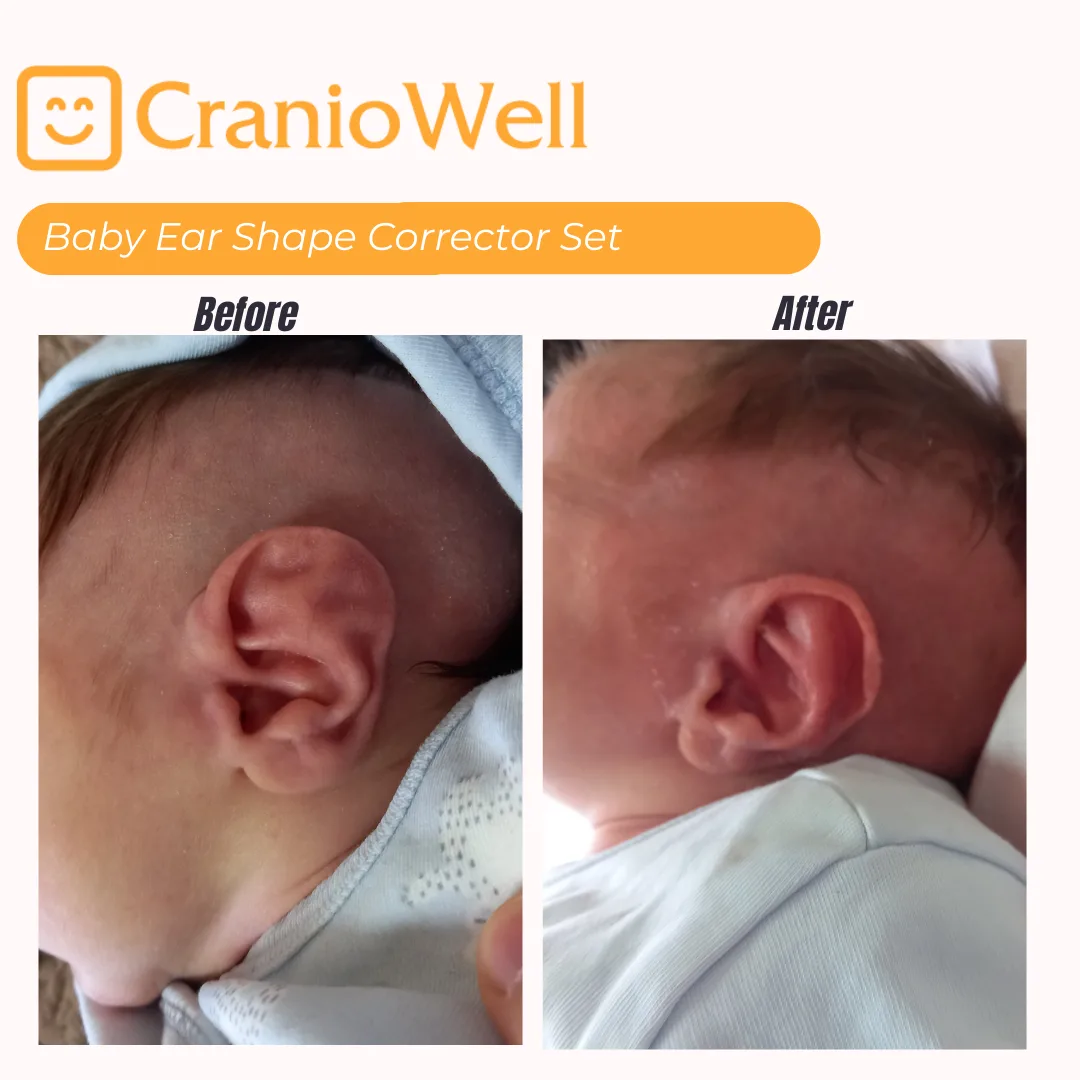
Ear Shaping
Overview of non-surgical newborn ear correction options, early timing and how physician-applied molding devices fit the plan. Parent guide. Parent guide.
Non-surgical ear correction — also called ear molding or ear splinting — is a method of reshaping a newborn's ear cartilage using a small, physician-applied device. It works by taking advantage of the brief window after birth when ear cartilage is unusually soft and responsive.
For a short time after birth, maternal estrogen keeps ear cartilage soft. As these hormone levels fall over the first weeks, the cartilage gradually firms and holds its shape. Ear molding uses this window: the softer the cartilage, the faster and more reliably it responds.
Molding reshapes existing cartilage. It cannot create tissue that is absent — it is not a treatment for microtia. More: ear deformities atlas.
The CranioWell baby ear corrector set is a registered medical device applied only by trained physicians. The physician examines both ears, selects the appropriate components and fits the device. No anesthesia or incision is needed.
Registered in ÜTS (Türkiye) and EUDAMED (EU medical device database). Developed at Hacettepe Teknokent, Ankara.
Parents are shown how to keep the area clean and dry. If the skin looks red or irritated where the device touches, contact the physician before the next scheduled visit. More: skin care during ear molding.
The CranioWell ear corrector set is applied by physicians in Türkiye and Baku, Azerbaijan. For your nearest specialist: specialist directory. For international enquiries: contact us.
No CranioWell physician in your country yet? You can contact us about a distribution / partnership application for your region.