
Ear Shaping
Stahl’s Ear in Babies: What Is It and Can It Be Molded?
Stahl’s ear gives the top of a baby’s ear a pointed, “elf ear” look. Learn what causes it, whether it corrects itself and how early molding can help.

Ear Shaping
Stahl’s ear gives the top of a baby’s ear a pointed, “elf ear” look. Learn what causes it, whether it corrects itself and how early molding can help.
Stahl’s ear is an ear shape in which an extra cartilage ridge (the “third crus”) runs across the upper part of the ear. The ridge makes the top of the ear look pointed, which is why it is sometimes called an “elf ear” or “Spock ear”.
Short answer: Stahl’s ear is a cartilage fold that is present at birth. It rarely corrects itself, but in newborns it can often be reshaped with ear molding started in the first weeks of life.
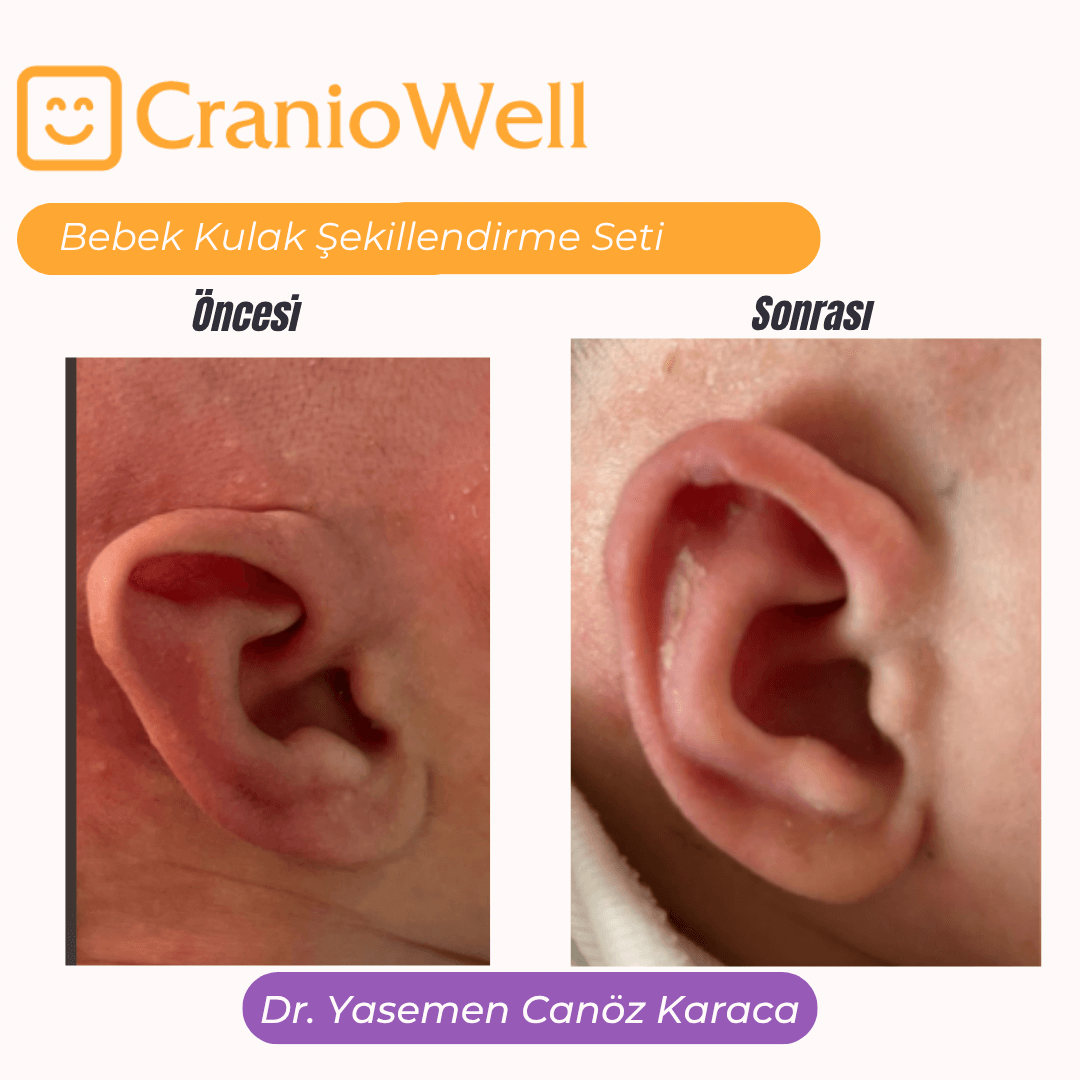
Stahl’s ear forms during development, when the cartilage of the upper ear creates an extra fold. It is not caused by sleeping position and is not linked to hearing problems.
Some mild folds caused by the baby’s position in the womb improve in the first days after birth. When the shape is still visible after the first week, it is less likely to correct itself, and waiting uses up the weeks when the cartilage is softest. An early examination lets the physician decide whether to watch or to start molding. More: do babies grow out of ear deformities?
Often, yes. The molding device flattens the extra ridge and supports a smooth upper rim while the cartilage is soft. Because the ridge is part of the cartilage structure, early timing matters even more than for simple folds.
Molding works best when it starts early, because the cartilage firms in the first weeks of life:
These are average planning guides; the treating physician sets the exact course.
Ear shape differences are usually cosmetic and do not affect hearing. Once the cartilage has firmed, the shape no longer responds to molding, and correction later in childhood usually means ear surgery (otoplasty). More: ear molding or otoplasty?
The CranioWell baby ear corrector set is applied and followed only by treating physicians. Find the nearest one in our specialist directory. If there is no physician near you, send us a photo of your baby’s ear and your location, and we will tell you what options are available.
Other ear shapes: prominent ears, Stahl’s ear, lop ear, cup ear, helical rim deformity, cryptotia, constricted ear, conchal crus. Full guide: baby ear molding.
In most babies it is an isolated ear shape. Your physician examines the baby and decides whether any other check is needed.
No. The device is soft and no needles, incisions or anesthesia are used. Some babies are briefly fussy while it is fitted and settle quickly.