
Ear Shaping
Ear Molding at Home vs Professional Care: What Parents Should Know
Home ear molding kits and tape differ from physician-fitted molding. Learn risks of DIY methods and when to seek professional newborn ear care.
Parents searching for a quick fix often find home ear molding kits, tape tutorials or putty splints. Wanting to act fast is understandable. This page explains how clinician-led molding differs from do-it-yourself methods — and what to do if you have already tried something at home.
Short answer: Professional ear molding starts with a diagnosis, uses a fitted device and includes skin and shape checks. Home kits and tape can miss the real pattern, irritate newborn skin and use up the weeks when cartilage is softest.

Hub guide: ear molding for infants. Process detail: newborn ear molding steps.
Tape-specific comparison: ear molding vs taping and devices vs taping.
No. Tape may hold a soft fold for a short time in selected cases, but it is not the same as a physician-fitted system that shapes helix, antihelix and concha together with planned follow-up. Online tutorials rarely match your baby’s exact anatomy.
That is okay — tell the clinician honestly. Stop DIY methods if you see redness, sores, swelling, discharge or a bad smell. Bring photos of what you used and for how long. The physician can assess the skin and the ear shape and advise next steps. Skin and device care: ear molding skin care; safety overview: risks and side effects.
Checklist: is my baby a candidate?
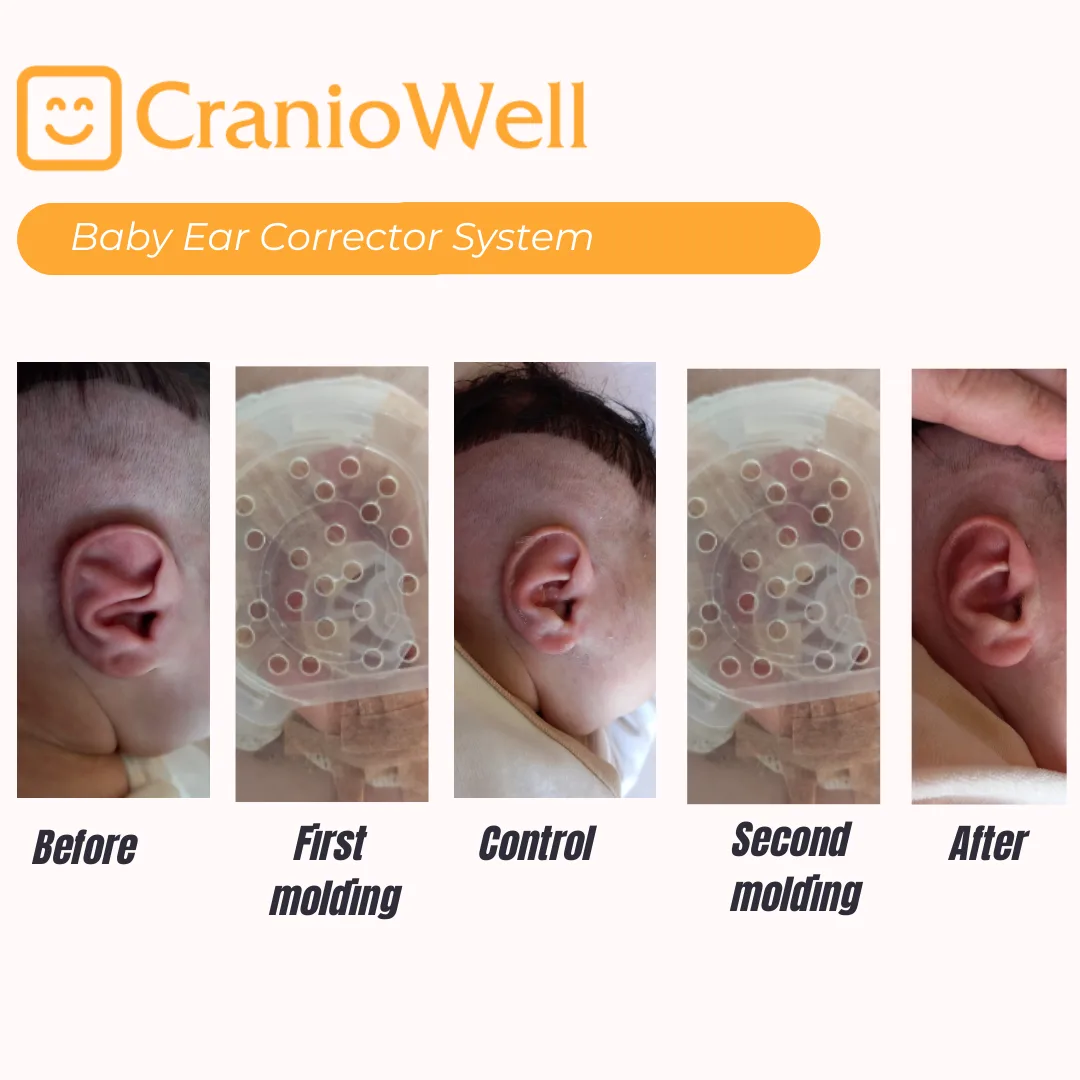
The CranioWell baby ear corrector set is applied and followed only by treating physicians. Find the nearest one in our specialist directory. If there is no physician near you, send us a photo of your baby’s ear and your location, and we will tell you what options are available.
Other ear shapes: prominent ears, Stahl’s ear, lop ear, cup ear, ear lidding, flat ear helix / helical rim, cryptotia, constricted ear, conchal crus, mixed ear deformity. Full guide: baby ear molding.
Related: Read the full parent guide to what ear molding is and when to start.
We recommend a clinician exam first. Home methods can miss the diagnosis and irritate skin. Early professional care protects both the ear shape and the soft-cartilage window.
A kit without diagnosis and follow-up is not the same as physician-guided molding. Fit, skin checks and feature-specific setup matter.
Not automatically. Skin must be healthy first. Tell the physician what was used so they can plan safely.
No CranioWell physician in your country yet? You can contact us about a distribution / partnership application for your region.