Which Doctor Should I See for My Baby’s Head Shape? A Step-by-Step Guide
Unsure which specialist to consult for your baby’s head shape? Paediatrician, neurosurgeon, or orthotist — this step-by-step guide helps parents navigate the right path.
Quick answer: Start with your paediatrician. If the deformity is positional (plagiocephaly, brachycephaly), the paediatrician may refer you to a paediatric orthopaedic specialist or certified orthotist (prosthetist-orthotist). If there is suspicion of craniosynostosis (premature suture fusion), a paediatric neurosurgeon is required. A 3D scan-based assessment at CranioWell provides an objective starting point for any pathway.
Who Is the Right Specialist?
Parents who notice that their baby’s head shape looks different often ask: "Which doctor do I go to first?" The answer depends on the type and severity of the deformity.
Step 1: Your Paediatrician
Your first point of contact should always be your paediatrician (child health and diseases specialist). The paediatrician:
Assesses the overall health status of the baby.
Checks neurological development.
Examines whether the cranial sutures are open (fontanelle assessment).
Determines whether the deformity is positional or synostotic.
Makes the appropriate referral based on their assessment.
If the paediatrician determines that the deformity is positional (i.e. it developed due to external pressure, without premature suture fusion), the following steps may be recommended:
Mild cases: Repositioning and tummy time exercises (guidance from a physiotherapist or paediatrician).
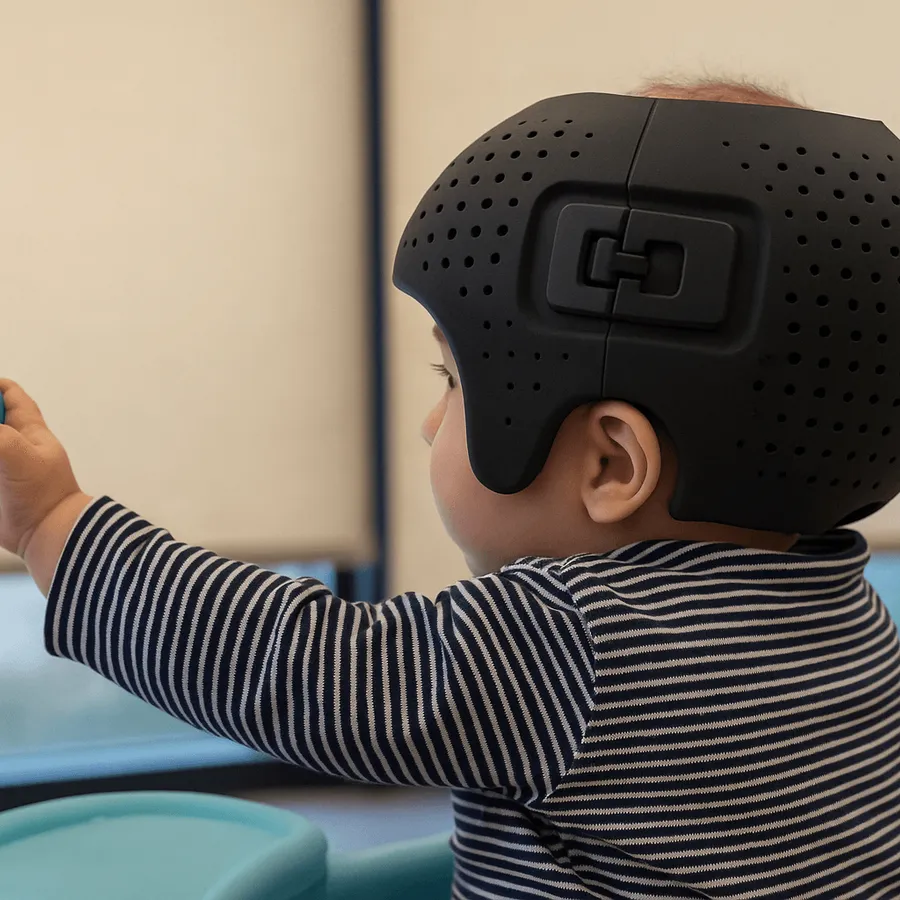
Moderate to severe cases:Cranial remodelling helmet therapy applied by a certified orthotist. In Turkey, this service is provided at CranioWell Orthopaedic and Prosthetic Centres.
The orthotist evaluates the baby’s head measurements using 3D scanning technology, calculates the cephalic index and cranial vault asymmetry index (CVAI), and prepares a custom helmet.
If there is suspicion of craniosynostosis (premature fusion of one or more cranial sutures), a paediatric neurosurgeon should be consulted urgently. Craniosynostosis requires surgical intervention, and the sooner it is treated, the better the outcomes.
Warning signs that require urgent neurosurgical referral:
Bulging or sunken fontanelle
Raised intracranial pressure (irritability, vomiting, eye movement problems)
Abnormally hard cranial suture lines on palpation
Rapid head circumference increase or sudden arrest of growth
Other Specialists Who May Be Involved
Paediatric Physiotherapist: Essential if torticollis (neck muscle tightness) accompanies the head deformity. Torticollis is one of the leading causes of plagiocephaly and must be treated alongside the head shaping intervention.
Paediatric Ophthalmologist: In cases of craniosynostosis, there may be pressure on the optic nerve; an eye examination may be required.
Paediatric Plastic Surgeon: In some craniosynostosis cases, surgery is performed jointly by a neurosurgeon and a plastic surgeon.
Summary: Step-by-Step Guide
Visit your paediatrician — obtain an initial assessment.
If positional deformity: orthotist (CranioWell) — 3D scan + helmet therapy planning.
If craniosynostosis suspected: paediatric neurosurgeon — imaging (CT) and surgical planning.
If torticollis accompanies: paediatric physiotherapist — stretching and exercise programme.
Can I go to CranioWell directly without a referral?
Yes. CranioWell Orthopaedic Centres provide 3D assessment without requiring a medical referral. However, for a diagnosis and treatment plan, working together with your paediatrician is always recommended.
At what age should I see a doctor for head shape?
The earlier the better. The ideal window for helmet therapy is 4–6 months. However, if you notice something that concerns you about your baby’s head shape from birth, you can visit your paediatrician at any time.
Is head deformity dangerous?
Positional deformities (plagiocephaly, brachycephaly) are generally not neurologically dangerous, but they can have aesthetic and functional long-term effects if untreated. Craniosynostosis is a more serious condition that requires surgical treatment.