Baby Ear Molding: A Parent’s Guide to Non-Surgical Newborn Ear Correction
What is baby ear molding, which newborn ear deformities can it correct, when should it start and do ear deformities fix themselves? Timing, process and how to find a physician.
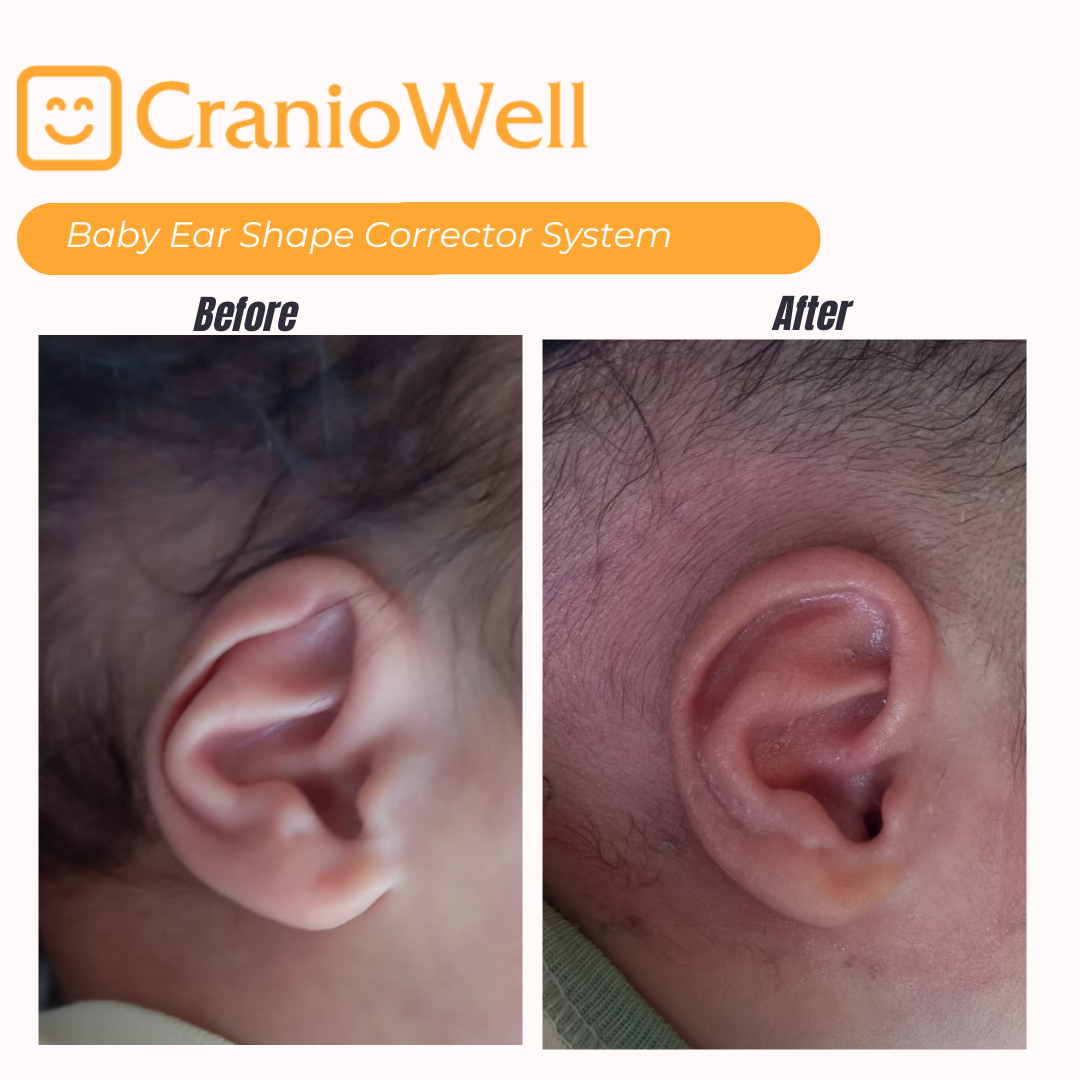
Baby ear molding is a non-surgical way to correct the shape of a newborn’s ear. In the first weeks after birth, ear cartilage is still soft enough to be reshaped; a small device holds the ear in a more natural form while the cartilage firms. This guide explains which ear shapes can be treated, why timing matters so much, what the process looks like and how to find a physician who applies the CranioWell baby ear corrector set.
Short answer: Ear molding gently reshapes a baby’s ear cartilage with a custom-fitted device, without surgery or anesthesia. It works best when started in the first weeks of life, while the cartilage is still soft; the earlier it starts, the shorter it usually lasts. The CranioWell set is applied and followed only by physicians.
What for? Prominent ears, Stahl’s ear, lop or folded ears, cup ears, helical rim and conchal deformities.
When? As early as possible, ideally in the first weeks after birth.
How long? About 3 weeks when started at 15–21 days; about 6 weeks when started at 6 weeks.
Ear molding (also called newborn ear correction or ear splinting) uses a small, soft device placed around and inside the baby’s ear. The device supports the parts of the ear that are folded, flattened or protruding and keeps them in a more natural position. Because the cartilage is still flexible, it gradually takes on the new shape and keeps it after treatment.
The CranioWell baby ear corrector set is a medical device developed for this purpose. It is not a home kit: the physician examines the ear, places the device and follows the baby until the treatment ends.
Why does ear molding have to start so early?
For a short time after birth, hormones passed from the mother keep the baby’s cartilage unusually soft. As these hormone levels fall in the first weeks, the cartilage becomes firmer and holds its shape. Molding works with this window: the softer the cartilage, the faster and more predictably it responds.
Started at 15–21 days: treatment usually takes about 3 weeks.
Started at 4 weeks: about 4 weeks.
Started at 5 weeks: about 5 weeks.
Started at 6 weeks: about 6 weeks.
These are average planning guides; the physician sets the exact course. If you notice an unusual ear shape, ask for an assessment as soon as possible rather than waiting.
Do babies grow out of ear deformities?
Some mild folds caused by the baby’s position in the womb or during birth improve on their own in the first days. When an ear deformity is still visible after the first week, it is less likely to correct itself, and waiting uses up the period when molding works best. This is why many physicians recommend an early check instead of “wait and see”.
Ear shape differences are usually cosmetic and do not affect hearing. Families still often choose to correct them early, because later correction usually means surgery.
Which ear deformities can ear molding correct?
Prominent (protruding) ears: The ear stands out from the head, often because the natural fold of the antihelix is missing.
Stahl’s ear (pointed or “elf” ear): An extra cartilage ridge gives the top of the ear a pointed shape.
Lop ear and lidding: The top of the ear folds forward or down over itself.
Cup ear: The ear is small, cupped and often protruding.
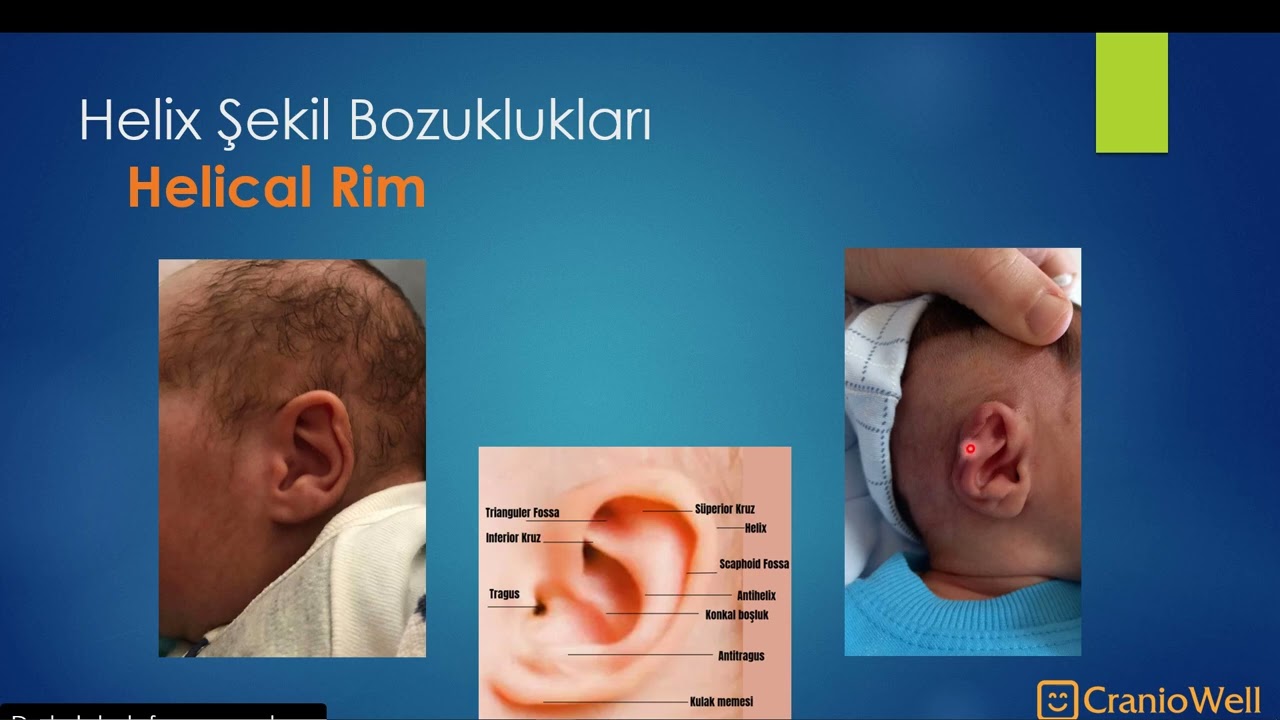
Helical rim deformity: The outer rim of the ear is flattened, folded or irregular.
Conchal crus deformity: An extra cartilage fold crosses the bowl of the ear and can push the ear outward. More: conchal crus deformity.
Cryptotia: The upper part of the ear is partly hidden under the scalp skin.
Constricted ear and mixed deformities: The rim looks tight or several features are combined; suitability is decided by the physician.
Molding reshapes existing cartilage; it cannot create missing tissue. In microtia, where part of the ear has not formed, molding is not a substitute for reconstructive care. For examples of each shape, see our baby ear deformities atlas.
How does treatment with the CranioWell set work?
Examination: The physician examines both ears, identifies the type of deformity and checks the skin.
Planning: A plan is made according to the baby’s age and the severity of the deformity.
Application: The device is fitted to the ear to guide the cartilage toward a natural shape. No anesthesia or incision is needed.
Follow-up: The physician checks the ear and skin at regular visits and adjusts the device when needed.
Completion: When the cartilage holds the new shape, the device is removed.
Parents are shown how to keep the area clean and dry and what to watch for between visits. If the skin looks red or irritated, contact the treating physician.
Is ear molding safe for newborns?
Ear molding is non-invasive: there is no surgery, no anesthesia and no stitches. The most common issue is mild skin irritation where the device touches the ear, which the physician monitors at each visit. Babies usually feed and sleep normally during treatment.
The CranioWell baby ear corrector set is a registered medical device and is applied only by physicians who know the method.
Ear molding, taping or surgery: what is the difference?
Ear molding: A device shapes the whole ear in the first weeks of life, under physician follow-up.
Taping or home splints: Tape can hold a simple fold for some mild cases, but it does not support every part of the ear. Ask a physician before trying it, especially on newborn skin.
Otoplasty (ear surgery): Usually considered from around 5–6 years of age, when the ear is close to adult size. It is an operation under anesthesia.
Who applies the set and where can I find a physician?
The CranioWell baby ear corrector set is applied only by treating physicians, typically pediatricians, ENT specialists, family physicians and plastic surgeons. Our treating physicians are currently in cities across Türkiye and in Baku, Azerbaijan. Find the nearest one in our specialist directory.
If you live in another country, contact us with a photo of your baby’s ear and your location, and we will tell you what options are available near you.
How much does baby ear molding cost?
The cost depends on the treating physician and the length of treatment, so there is no single price. Insurance coverage also differs by country and policy. For current information, contact us or ask the physician you choose in the directory.
Why CranioWell?
Developed in Türkiye: Designed through R&D at Hacettepe Teknokent in Ankara.
Registration: Protected by Turkish Patent; registered in ÜTS and EUDAMED as a medical device.
Physician-led: Applied and followed only by treating physicians.
Are you a physician interested in ear molding?
We offer training for physicians who want to apply the CranioWell baby ear corrector set in their practice. Contact us to learn about training and joining the specialist directory.
Frequently asked questions
Is ear molding painful for the baby?
No. The device is soft and no needles, incisions or anesthesia are used. Some babies are briefly fussy while it is fitted, and most settle quickly.
Can ear molding be done at 2 or 3 months?
The cartilage is firmer by then, so results are less predictable and treatment takes longer. A physician can still examine the ear and tell you whether molding is worth trying.
Does my baby wear the device all the time?
Yes, the device stays on continuously between follow-up visits so the cartilage is held in shape. The physician tells you how to care for it and when it can be removed.
Will the ear go back to its old shape after treatment?
Once the cartilage has firmed in the corrected position, the new shape is generally maintained. Your physician will check the result at the final visit.