
Ear Shaping
Ear Molding Risks and Side Effects: What Families Should Watch For
Does ear molding hurt? Learn common side effects such as skin irritation, pressure spots and loosening, and when to call your treating physician.
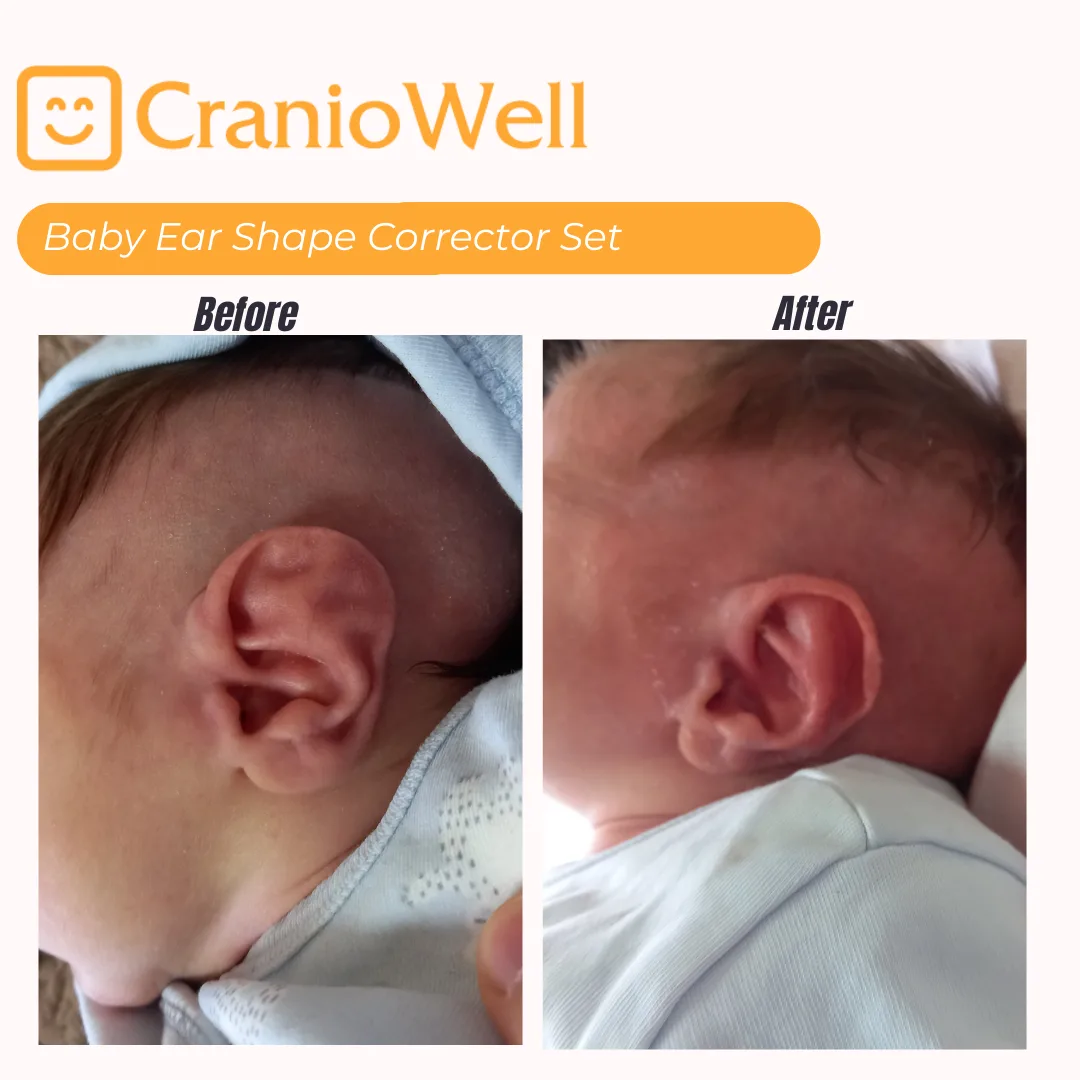
Ear Shaping
Does ear molding hurt? Learn common side effects such as skin irritation, pressure spots and loosening, and when to call your treating physician.
Ear molding risks and side effects are usually related to the skin under the device, not to surgery. Molding does not use needles, cuts or anesthesia. Families still need clear watch-outs so small problems are caught early.
Short answer: The most common concern is skin irritation where the mold or adhesive rests. Pressure spots, moisture changes and device loosening can happen. Follow-up visits exist so the physician can adjust, pause or stop treatment when needed.

There is no cutting and no injection. Many babies feed and sleep with the device in place. Some are briefly unsettled during fitting or adjustment — similar to any careful handling of a newborn. If your baby seems uncomfortable at home, contact the treating physician rather than removing parts on your own unless you were told to.
Published clinical series of infant molding systems report that skin problems are the main adverse events and usually settle after the device is adjusted or briefly paused. Exact rates vary by device, age and how closely follow-up is kept — your physician explains what to watch for with the system used for your baby.
Day-to-day care tips: ear molding skin care.
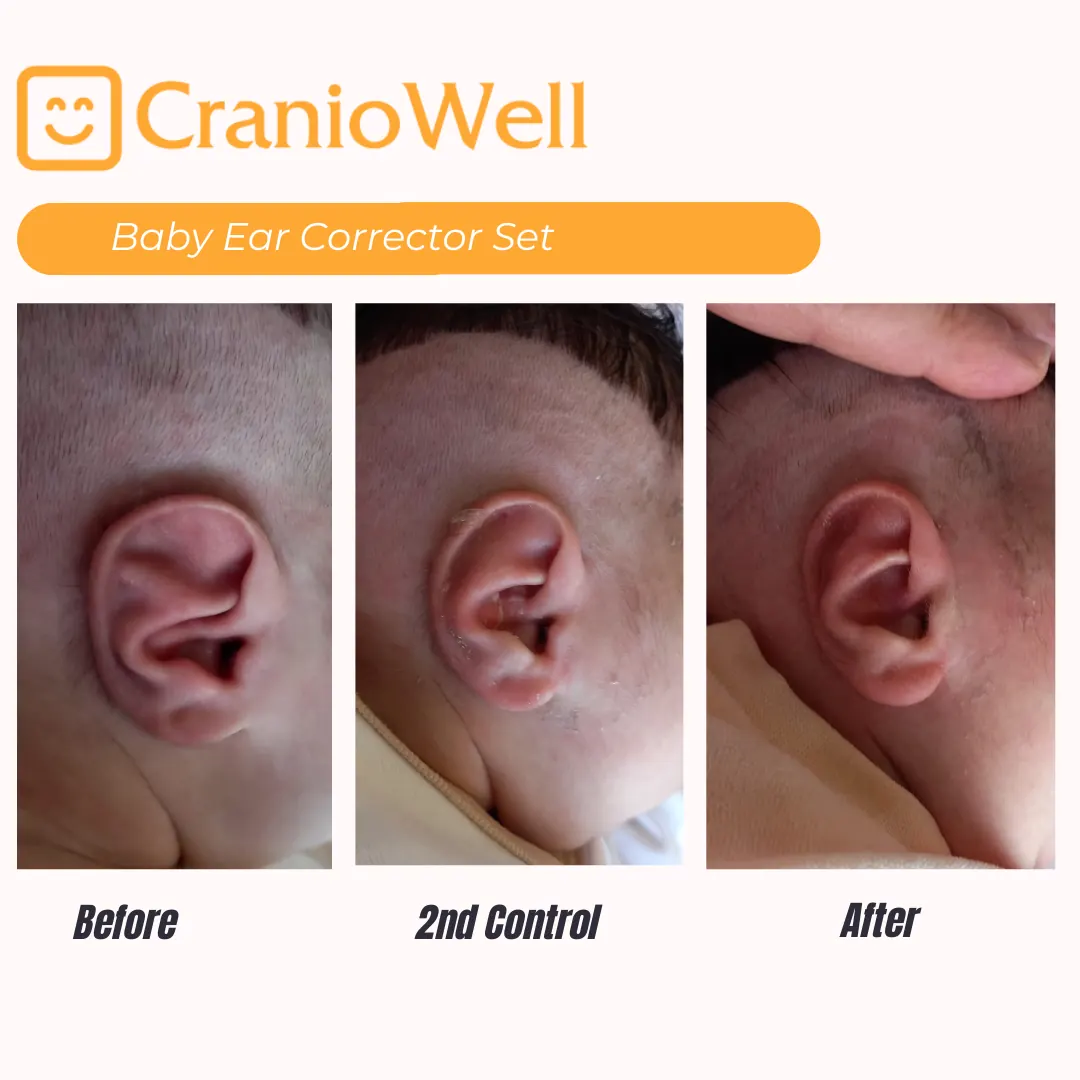
Compare DIY risks: home kits vs professional care.
For emergencies unrelated to molding (breathing, fever with lethargy, etc.), follow normal emergency care. Molding side effects are managed with the treating clinic.
The physician may adjust the fit, give the skin a short rest, change how adhesive is used, or stop molding. Do not keep a home tape job over broken skin. After the skin recovers, molding may restart if still appropriate for age and shape.
The goal is improvement. The team watches the response at each visit. If progress stalls or skin risk outweighs benefit, they discuss stopping and other options such as later otoplasty. Outer-ear molding does not create missing tissue (microtia pathways differ): microtia overview.
The CranioWell baby ear corrector set is applied and followed only by treating physicians. Find the nearest one in our specialist directory. If there is no physician near you, send us a photo of your baby’s ear and your location, and we will tell you what options are available.
Other ear shapes: prominent ears, Stahl’s ear, lop ear, cup ear, ear lidding, flat ear helix / helical rim, cryptotia, constricted ear, conchal crus, mixed ear deformity. Full guide: baby ear molding.
Related: Read the full parent guide to what ear molding is and when to start.
Skin irritation or redness where the device rests. Follow-up visits exist to catch and manage it early.
It does not involve needles or surgery. Brief fussiness during fitting is common; call if discomfort continues at home.
Contact the treating physician first unless they already told you to remove it for skin rest. Wrong DIY removal can leave adhesive residue or an uneven hold.
No CranioWell physician in your country yet? You can contact us about a distribution / partnership application for your region.