
Ear Shaping
Causes and Treatment of Infant Ear Deformities | CranioWell
Overview of common infant ear deformities, possible causes, non-surgical ear molding, and when otoplasty may be considered later.

Ear Shaping
Overview of common infant ear deformities, possible causes, non-surgical ear molding, and when otoplasty may be considered later.
Infant ear deformities are congenital conditions that often raise cosmetic concerns for families. They range from mild shape differences to more noticeable anomalies. Understanding possible causes and treatment options helps parents decide when to seek care. This article reviews common causes, signs, and modern treatment approaches.
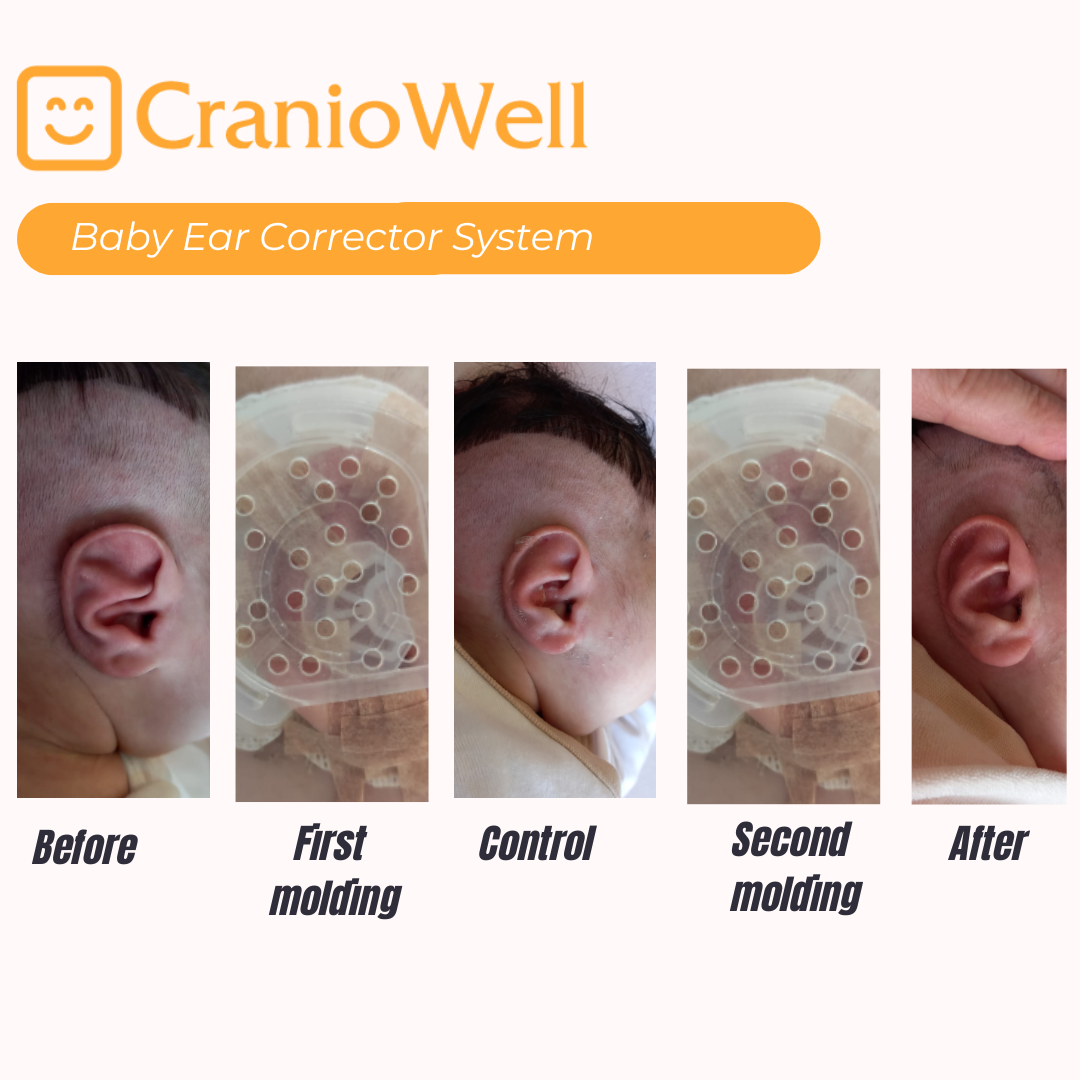
Ear deformities refer to various abnormalities in the development of the outer ear (pinna). The most common types include:
Exact causes are not always clear, but genetic factors and prenatal development often play a role:
Ear deformities are usually noticed at birth. The main finding is an outer ear that looks different from a typical shape. Diagnosis is generally made by physical examination. Physicians assess the type and severity of the difference and any associated findings.
Treatment decisions depend on severity, the baby’s age, and family goals. Options fall into non-surgical and surgical approaches:
When started in the first weeks of life, these methods gently guide ear cartilage without surgery. Specially designed ear molding systems are the main approach. Products such as the CranioWell baby ear shaping set use the ear’s early growth potential to guide it toward a more natural shape. They are applied by treating physicians. You can also read more about non-surgical infant ear molding.
For more marked or complex deformities—especially when non-surgical molding was not used early enough, or after the child has grown—otoplasty may be considered. Otoplasty reshapes the ears and can bring them closer to the head. It is usually performed in school-age children or adults.
Non-surgical ear molding depends heavily on timing. The first 4–6 weeks, when ear cartilage is most flexible and growth potential is high, are the preferred window. Starting early improves the chance of meaningful correction. When this window is missed, surgical options may become more relevant later.
Direct answer: Causes of infant ear deformities include genetic factors, intrauterine pressure, and cartilage development differences. Treatment options include non-surgical ear molding applied by treating physicians and, at older ages, otoplasty. Early assessment increases the usefulness of non-surgical methods.