Exercises for Baby Head Shape: Repositioning & Stretching Techniques
Gentle exercises and repositioning techniques can help improve mild head shape deformities in babies. Learn the most effective exercises to do at home.
Exercises for Baby Head Shape Deformity: The CranioWell Guide
Quick answer: Exercises for baby head shape deformity focus on repositioning (taking pressure off the flat area), tummy time (strengthening neck muscles), and stretching (if torticollis is present). These are most effective in the first 4–6 months. For moderate to severe deformity, helmet therapy is the evidence-based treatment.
Healthy development in babies is critically important — both physically and aesthetically. In some cases, head shape deformities observed in babies can be a source of concern for parents. Deformities such as plagiocephaly (one-sided flatness), brachycephaly (wide and short head), and scaphocephaly (long and narrow head) are common conditions in the first months of life. In this guide, CranioWell explains the causes, diagnosis, and most importantly the exercises and treatment methods for correcting these deformities.
Why Do Head Shape Deformities Occur?
Head shape deformities in babies typically appear in the first months when skull bones are still not fully hardened and remain flexible. The main causes include:
Positional Causes: Placing babies in the same position for extended periods — especially with the widespread adoption of back sleeping — has increased the frequency of positional deformities. Birth trauma or position in the womb can also contribute.
Premature Birth: Premature babies' skull bones are softer and more flexible, making them more susceptible to shape deformities.
Muscle Imbalance (Torticollis): Tension or shortening in neck muscles (torticollis) causes the baby to constantly turn their head in one direction, leading to flattening of that side.
Multiple Pregnancies: Limited uterine space in twin or higher-order pregnancies can affect head shape.
Types and Signs of Head Shape Deformities
Plagiocephaly: Visible flattening on one side of the skull with the opposite side appearing more rounded. The most common type.
Brachycephaly: The back of the head is wide and short. Typically characterised by bilateral flattening.
Scaphocephaly: The head is elongated on the front-to-back axis and narrowed side-to-side. Less common and potentially more complex.
Exercises and Treatment for Baby Head Shape Deformities
Early intervention provides the most effective outcomes. Treatment varies by severity of deformity and the baby's age. At CranioWell, we take a multidisciplinary approach to create the most appropriate treatment plan for each baby.
1. Positional Therapy and Exercises
This is one of the most commonly used and effective methods for mild to moderate head shape deformities. The goal is to avoid positions that keep the baby's head under pressure and encourage different head positions.
Tummy Time Activities: Placing the baby on their tummy while awake and supervised strengthens neck and back muscles and encourages the baby to turn their head in different directions. This also reduces pressure on the flattened area.
Starting out: Begin with just a few minutes of tummy time and gradually increase the duration. Repeat several times throughout the day.
Play and interaction: Talk to your baby and show them toys during tummy time. This will encourage them to lift and turn their head.
Repositioning: Place a soft folded towel or support under the side of the baby's head that receives the most pressure during sleep or seated time. Avoid keeping the baby in the same position continuously when sleeping.
Carrying and holding: When carrying in arms or a carrier, ensure the side of the head under pressure remains free. While feeding or holding, encourage the baby to turn their head in both directions.
Cot and environment arrangement: Position toys or objects that attract the baby's attention in places that encourage them to turn their head toward the less-favoured side.
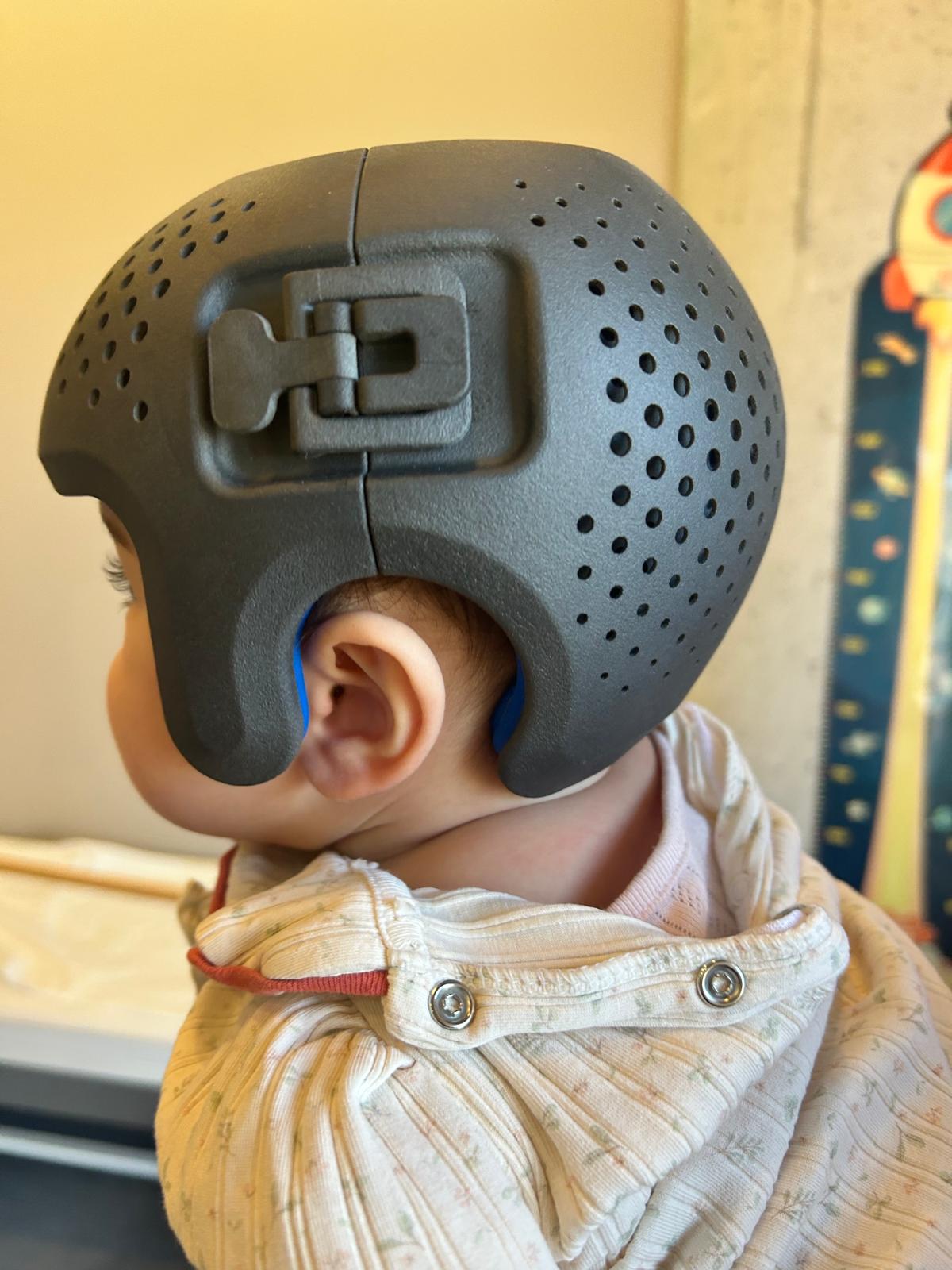
2. Cranial Orthosis (Helmet Therapy)
For moderate to severe head shape deformities, cranial orthosis (head-shaping helmet therapy) is one of the most effective and scientifically supported treatments. These specially designed helmets guide skull growth to gradually correct flattened or asymmetric areas.
How it works: Helmets restrict growth in certain skull regions while allowing other areas to grow freely, enabling the skull to naturally reshape toward a more symmetrical form. This is a pain-free, non-surgical treatment.
Treatment duration: Typically 4–6 months, depending on the baby's age, severity of deformity, and rate of growth. Helmets are generally worn for most of the day (18–23 hours).
CranioWell approach: We offer individually designed orthotic solutions based on each baby's specific needs. Our specialist team supports families at every stage — from measurement to fitting to follow-up.
3. Surgical Intervention
In very rare cases involving extremely severe deformities or an underlying medical condition (such as craniosynostosis), surgery may be considered. Such decisions are made by an experienced paediatric neurosurgeon.
Important Points to Remember
Consult a specialist first: Always consult your doctor or physiotherapist before beginning any exercise programme. Correctly identifying the cause of the deformity is essential.
Consistency: Performing exercises regularly and consistently improves the chance of success.
Baby's comfort: Ensure your baby is comfortable during exercises. If they show signs of distress, take a break.
Observation: Regularly monitor changes in your baby's head shape and report them to your doctor.
Head shape deformities in babies can be successfully corrected with correct diagnosis and appropriate treatment. At CranioWell, we use modern technology and specialist expertise to help your baby achieve a healthy head shape. If you are concerned about your baby's head shape, contact us for detailed information and a personalised treatment plan.
Remember: early diagnosis and correct intervention is the most valuable step for your baby's future health and appearance.