Dolichocephaly in Babies: Causes, Types & Helmet Therapy
Dolichocephaly: what it is, how it differs from scaphocephaly (craniosynostosis), causes, cephalic index, positional vs structural, and cranial helmet therapy options. CranioWell guide.
Dolichocephaly refers to a head shape that is disproportionately long and narrow relative to its width. The term comes from the Greek dolichos (long) and kephalē (head). In clinical practice, it describes a head where the front-to-back (anteroposterior) length is significantly greater than the side-to-side (biparietal) width.
Dolichocephaly can be positional (non-synostotic) or structural (caused by premature suture fusion, called scaphocephaly). Understanding the difference is essential because the management approaches are completely different.
Dolichocephaly vs scaphocephaly: what is the difference?
The terms dolichocephaly and scaphocephaly are sometimes used interchangeably, but they have distinct clinical meanings:
Positional dolichocephaly: The long, narrow head shape results from repeated pressure on the sides of the skull — most commonly seen in premature infants who spend prolonged time lying on their side in the neonatal intensive care unit (NICU). The skull sutures remain open. This form can improve with repositioning and, in some cases, cranial helmet therapy.
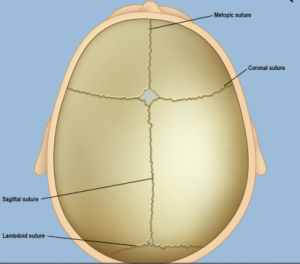
Scaphocephaly (sagittal synostosis): The sagittal suture — running from front to back at the top of the skull — closes prematurely. Because the skull cannot grow sideways, it compensates by growing longer. This is the most common form of craniosynostosis, accounting for 53–60% of cases. Surgery is typically required. Related: scaphocephaly guide, craniosynostosis types.
How is dolichocephaly measured?
Head shape is measured using the cephalic index (CI):
Formula: CI = (head width ÷ head length) × 100
Dolichocephaly threshold: CI below 76 (head is more than 32% longer than it is wide)
Normal range: CI approximately 76–85
Brachycephaly threshold: CI above 85
In clinical practice, 3D scanning provides more accurate measurements than a tape measure alone. Related: 3D head scanning vs tape measure.
What causes dolichocephaly in babies?
The cause depends on whether the dolichocephaly is positional or structural:
Prematurity: Premature infants have softer, more malleable skulls. Prolonged lateral positioning in the NICU can cause the skull to elongate. This is the most common cause of positional dolichocephaly.
Intrauterine constraint: Restricted space in the womb during pregnancy can affect skull shape development.
Sagittal synostosis: The premature fusion of the sagittal suture causes structural dolichocephaly (scaphocephaly). The cause of sagittal synostosis is often unknown; genetic factors play a role in some cases.
Muscle weakness or torticollis: Reduced ability to move the head freely can contribute to positional deformities.
How is dolichocephaly treated?
Treatment depends on the underlying cause:
Positional dolichocephaly — repositioning: Changing the baby's resting position to distribute pressure more evenly. Tummy time when awake and supervised is also encouraged. Related: repositioning guide, tummy time guide.
Positional dolichocephaly — helmet therapy: If the head shape does not improve sufficiently with repositioning, a custom cranial helmet can gently guide skull growth. Best results are achieved when treatment begins between 3–6 months of age. Related: helmet therapy guide, when to start helmet therapy.
Scaphocephaly (sagittal synostosis) — surgery: Craniosynostosis requires surgical intervention. Endoscopic surgery in the first few months of life is followed by cranial helmet therapy to support optimal reshaping. Open vault remodelling is an option for older infants. Related: craniosynostosis surgery options.
Is dolichocephaly common in premature babies?
Yes. Positional dolichocephaly is significantly more common in premature infants compared with term babies. The premature skull is softer and more susceptible to external pressure. Standard NICU care protocols increasingly include head-positioning strategies to reduce the risk of significant skull deformation.
The CranioWell HKM Pro is a custom cranial orthosis manufactured in Turkey with Hacettepe Technopark R&D, Turkish Patent registration, and ÜTS & EUDAMED medical device registration. It is applied exclusively at CranioWell Orthotics and Prosthetics Centres using 3D scanning — never by a general practitioner or over the counter.
For positional dolichocephaly, the helmet provides gentle, consistent contact around the widest parts of the skull while leaving space in the areas where growth is needed — encouraging a rounder, more symmetric head shape.
For post-endoscopic scaphocephaly surgery, the helmet is prescribed by the neurosurgical team to support optimal growth following suture release.
Not exactly. Dolichocephaly describes the long-narrow head shape; scaphocephaly specifically refers to the form caused by sagittal craniosynostosis (premature suture fusion). Positional dolichocephaly can look similar but has open sutures and responds to conservative management.
Can dolichocephaly correct itself?
Mild positional dolichocephaly may improve with repositioning and tummy time as the baby gains head control. Structural dolichocephaly (scaphocephaly/sagittal synostosis) does not self-correct and requires surgical treatment.
At what age should dolichocephaly be treated?
For positional dolichocephaly, helmet therapy is most effective when started between 3–6 months of age. For scaphocephaly (craniosynostosis), endoscopic surgery is ideally performed before 3–4 months; open surgery can be performed in the first year.
Does dolichocephaly affect brain development?
Positional dolichocephaly does not affect brain development. Sagittal craniosynostosis, if untreated, can increase intracranial pressure over time, potentially affecting brain development — which is why early surgical evaluation is important.
How is dolichocephaly diagnosed?
A specialist physically examines the skull shape, measures head circumference and cephalic index, and palpates for suture ridges. 3D scanning provides precise measurements. CT imaging is used when craniosynostosis is suspected.