Head Shape Exercises for Infants: A CranioWell Guide
Learn infant head shape exercises, tummy time tips, and when cranial remolding helmet therapy may help for plagiocephaly, brachycephaly, and scaphocephaly.
Head Shape Exercises for Infants: A CranioWell Guide
Healthy infant development matters both physically and aesthetically. In some cases, noticeable head shape differences can worry parents. Deformations such as plagiocephaly (flattening on one side), brachycephaly (a wide, short head), and scaphocephaly (a long, narrow head) are commonly seen in the first months of life. In this article, CranioWell reviews causes, diagnosis, and—most importantly—exercises and treatment options that can help improve infant head shape differences.
Why Do Infant Head Shape Differences Occur?
Infant head shape differences usually appear in the first months, when the cranial bones are still soft and flexible. Common causes include:
Positional factors: Spending long periods in the same position—especially with widespread back-sleeping—can contribute. Birth-related pressure or position in the womb may also play a role.
Premature birth: Premature infants often have softer, more flexible cranial bones and may be more prone to shape changes.
Muscle imbalance (torticollis): Tightness or shortening in the neck muscles can make an infant keep the head turned to one side, which may flatten that area of the skull.
Multiple pregnancy: Limited space in twin or higher-order pregnancies can affect head shape.
Types and Signs of Head Shape Differences
The most common infant head shape differences include:
Plagiocephaly: Clear flattening on one side of the head, often with a rounder appearance on the opposite side. This is the most common type.
Brachycephaly: A wide, short head, often with flattening across the back.
Scaphocephaly: Lengthening in the front-to-back axis and narrowing side to side. It is less common and can be more complex.
Early recognition supports timely care. Parents should observe the head regularly and consult a clinician if they notice asymmetry or flattening.
Exercises and Treatment Options for Infant Head Shape Differences
Early intervention often supports better outcomes. Options vary with severity and the infant’s age. CranioWell uses a multidisciplinary approach to help families choose a suitable plan. Main options include:
1. Positional Therapy and Exercises
This approach is frequently used for mild to moderate head shape differences. The goal is to reduce prolonged pressure on one area and encourage a variety of positions.
Tummy time: Supervised tummy time while the infant is awake strengthens neck and back muscles, encourages turning the head both ways, and reduces pressure on a flattened area.
Getting started: Begin with a few minutes and gradually increase. Repeat several times a day.
Play and interaction: Talk, show toys, and encourage the infant to lift and turn the head during tummy time.
Position changes: During sleep or sitting, gently redistribute pressure and avoid keeping the infant in the same orientation for long stretches.
Carrying and holding: When holding or using a carrier, keep the flattened side freer from pressure and encourage turning both ways during feeding and cuddling.
Environment setup: Place interesting toys or sounds on the side the infant looks toward less often to encourage head turning.
2. Cranial Orthosis (Remolding Helmet) Therapy
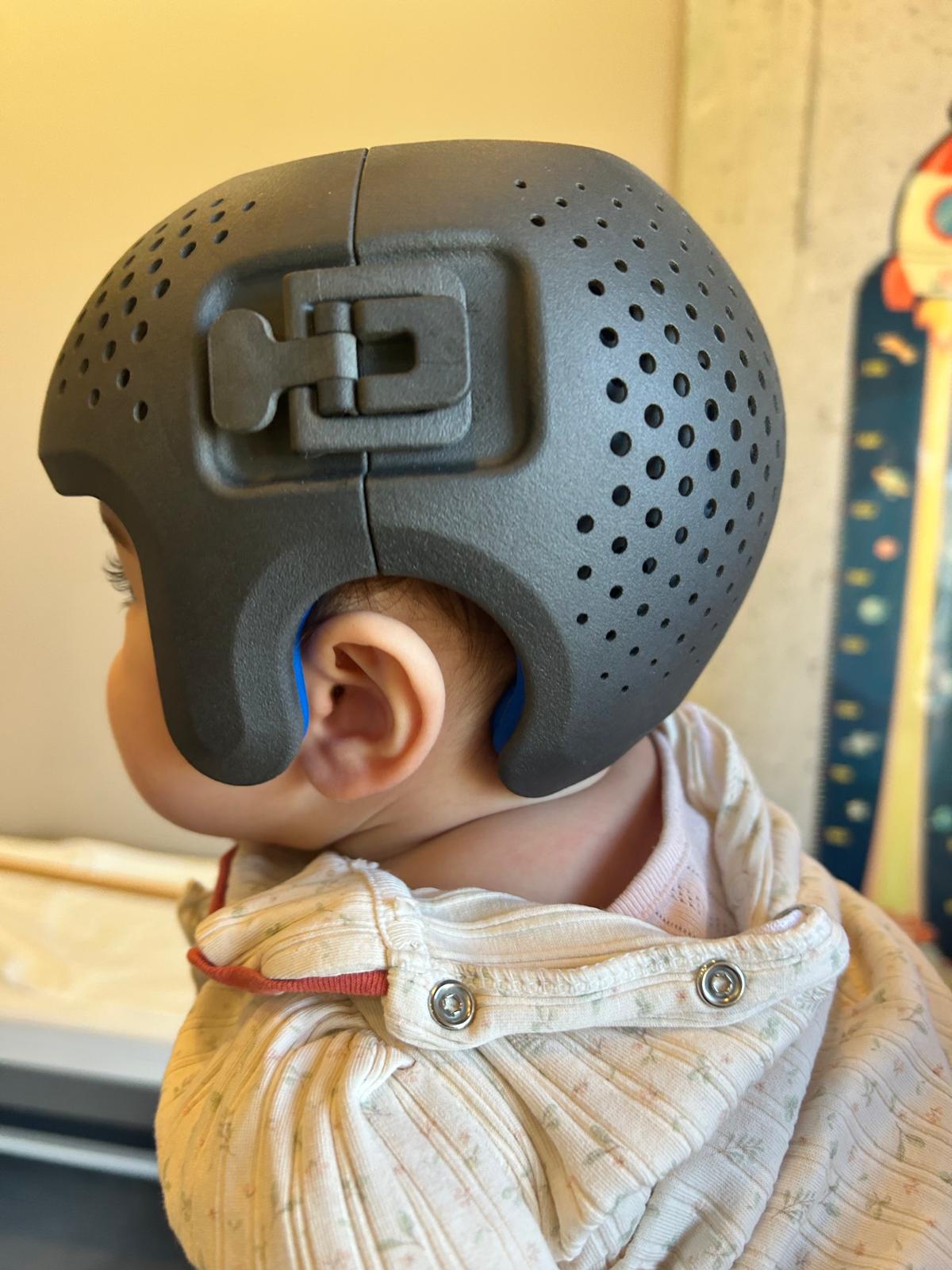
For moderate to severe head shape differences, a clinician-prescribed cranial orthosis (infant remolding helmet) can be an effective non-surgical option. Custom helmets help guide cranial growth so flattened or asymmetric areas can improve.
How it works: The helmet limits growth in selected areas and allows freer growth where more volume is needed, supporting gradual reshaping. It is a non-surgical approach.
Treatment course: Duration often ranges from about 4 to 6 months and depends on age, severity, and growth rate. Helmets are typically worn for most of the day (about 18–23 hours).
CranioWell approach: Custom orthoses are planned around each infant’s needs. Fitting and follow-up for the HKM Pro remolding helmet are provided at CranioWell Orthotics & Prosthetics Centers, from measurement through adjustments and monitoring.
3. Surgical Care
Surgery is rarely considered and is usually reserved for very severe differences or when another medical cause is present. Those decisions are made by an experienced pediatric neurosurgeon.
Important Points for Head-Shaping Exercises
Clinical guidance: Check with your physician or physical therapist before starting an exercise program so the cause of the head shape difference is assessed correctly.
Consistency: Regular practice supports progress.
Infant comfort: Stop and rest if the infant seems uncomfortable or distressed.
Observation: Note changes in head shape and share them at follow-up visits.
Supporting Healthy Development with CranioWell
Infant head shape differences can often be managed with timely assessment and an appropriate plan. CranioWell combines modern technology and clinical experience to support healthier cranial shape. If you are concerned about your infant’s head shape, contact us for information and a personalized evaluation plan.
Early recognition and appropriate care are valuable steps for your infant’s health and appearance over time.