Babies With Early Fontanelle Closure – CranioWell Orthotics & Prosthetics | CranioWell
What early fontanelle closure means, possible causes and signs, when to see a specialist, and how CranioWell HKM Pro may support head shape when growth potential remains.
Early fontanelle closure in babies is not always as alarming as it first sounds. Fontanelles are the soft areas where skull bones have not yet fused. They are important for brain growth and natural head shape development. In some cases, however, early fontanelle closure can affect head growth. CranioWell Orthotics & Prosthetics Centers explain causes, signs, and follow-up.
What Is a Fontanelle and When Does It Close?
Babies have two main fontanelles:
Anterior fontanelle: On the upper-front of the head; usually closes between 7 and 18 months.
Posterior fontanelle: On the back of the head; usually closes within the first 2 months after birth.
Fontanelles allow the brain to grow and the skull to flex during birth. If they close early, that flexibility decreases, which may raise the risk of restricted head growth or head shape differences.
Why Does Early Closure Happen?
Common associated factors include:
Craniosynostosis: Premature fusion of skull sutures
Metabolic issues: Thyroid imbalance or vitamin D deficiency
Genetic factors: Familial tendency or syndromic conditions
Mechanical factors: Intrauterine pressure or fixed postnatal head positions
Signs of Early Closure
Head appearing smaller than expected (microcephaly tendency)
Asymmetry or shape difference on part of the head
Fontanelle not palpable, or feeling like a hard ridge
Irritability; head circumference not growing as expected
Downward eye preference or other signs of raised intracranial pressure
If these signs appear, see a pediatrician or pediatric neurosurgery specialist without delay.
How Can Early Closure Affect Brain Growth?
In the first year, brain growth is reflected in head circumference. If a fontanelle closes too early, skull bones may not allow enough expansion. Over time this may contribute to:
Head shape differences (such as plagiocephaly or brachycephaly),
Developmental delay or signs of neurologic pressure in selected cases.
CranioWell HKM Pro: Monitoring and Shape Guidance
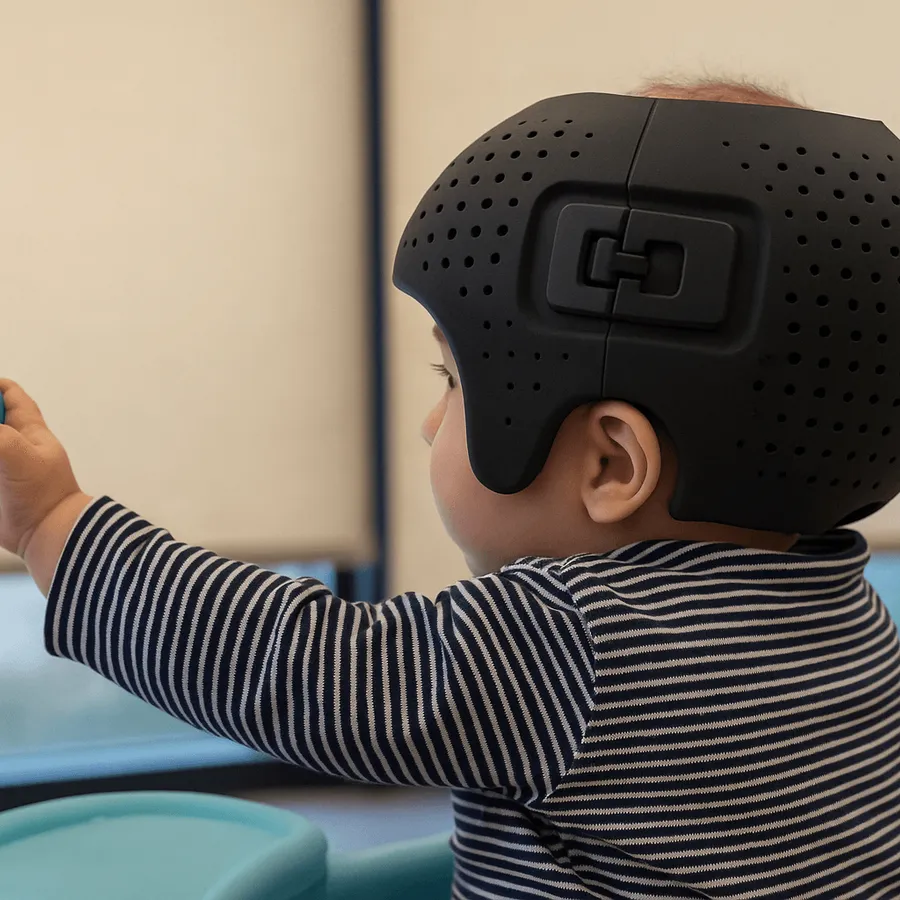
Surgery is not always the first option in early fontanelle closure. If head shape is affected but growth potential remains, CranioWell HKM Pro may be used to guide shape under appropriate medical direction:
Stage
Time
Description
1. 3D scan
15 min
Head circumference, asymmetry, and suture-related geometry are measured.
2. Design
3–5 days
A custom helmet model is created.
3. Fitting
Week 1
Helmet applied; family trained at a CranioWell center.
4. Follow-up
Every 2–3 weeks
Progress reviewed and adjustments made.
CranioWell HKM Pro is a UTS-registered medical device, supporting conformity with Turkiye and European registration frameworks.
When Is Intervention Needed?
If the fontanelle:
Has closed before 6 months,
Head-circumference growth is falling off the curve,
Asymmetry is clear,
Brain MRI shows compression findings,
surgery and/or helmet therapy may be discussed by the medical team.
Surgery is usually considered for multi-suture closures.
Monitoring Tips for Parents
Note head circumference at every pediatric visit.
Gently feel the fontanelle each month with fingertips.
If it feels hard or bulging, contact your physician.
Vary sleep head positions (while always placing the baby on the back to sleep).
Do regular supervised tummy time.
Frequently asked questions
Does early fontanelle closure stop brain development?
Not automatically—but skull volume can become limited. Early recognition and physician follow-up matter in these situations.
Can a closed fontanelle reopen?
No. Fused sutures do not reopen. Surrounding bones can still grow, so appropriate treatment can support ongoing head development.
What can I do at home?
Avoid always lying on one side, change positions often, and follow your physician’s guidance on feeding and hydration.