
Head Shape
Head Development in Babies with Early Fontanelle Closure
Early fontanelle closure can be a sign of craniosynostosis. Learn what to look for, when to seek medical advice, and what treatment options are available.
Head Shape
Early fontanelle closure can be a sign of craniosynostosis. Learn what to look for, when to seek medical advice, and what treatment options are available.
Short answer: Closure of the anterior fontanelle before 6 months is a finding that should be assessed for craniosynostosis — however, early closure does not always mean craniosynostosis. Head growth curve, the status of the sutures, and neurological development must all be evaluated together.
Head development in babies with early fontanelle closure is not usually a very alarming situation. The fontanelle — medically known as the fontanel — consists of the soft spots on a baby's skull where the bones have not yet fused. These areas are vital for brain growth and the natural development of head shape.
However, in some cases, early fontanelle closure can affect head development.
At CranioWell Orthotics and Prosthetics Centres, we explain the causes, signs, and monitoring process for this condition.
Babies have two main fontanelles:
The fontanelle allows the brain to develop and the skull bones to flex during delivery.
If it closes early, this flexibility is reduced, which can create a risk of restricted brain growth or head shape deformity.
The following causes are generally observed in babies with early fontanelle closure:
If these signs are noticed, a paediatrician or paediatric neurosurgery specialist should be consulted without delay.
Normally, a baby's brain growth in the first year is reflected in the head circumference.
If the fontanelle closes early, the skull bones may not allow enough room for the brain to expand.
In the long term, this can result in:
Surgery is not always the first option in cases of early fontanelle closure.
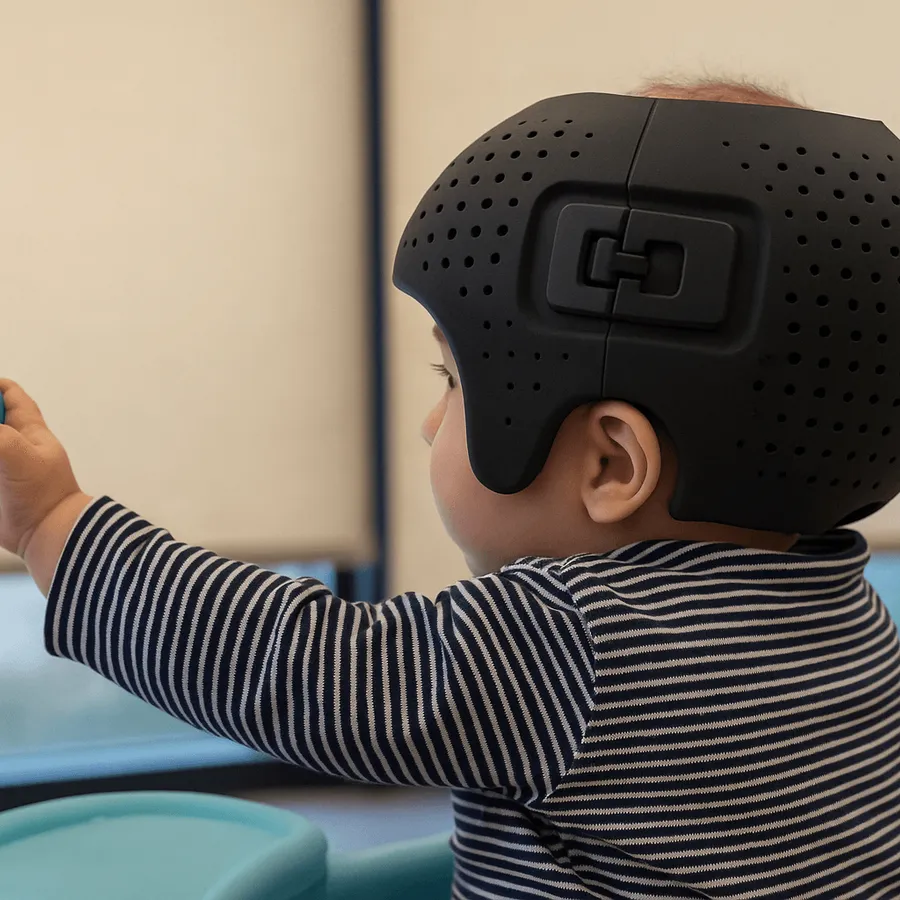
If the head shape has become deformed but growth potential continues, correction can be achieved with the CranioWell HKM Pro treatment process:
| Stage | Duration | Description |
|---|---|---|
| 1. 3D Scan | 15 min | Head circumference, asymmetry and suture directions are measured. |
| 2. Design | 3–5 days | A bespoke helmet model is created. |
| 3. Fitting | Week 1 | The helmet is fitted to the baby and the family is trained. |
| 4. Review | Every 2–3 weeks | Progress is monitored and adjustments are made. |
The CranioWell HKM Pro is a UTS-registered medical device. This confirms that the product complies with both Turkish and European regulations.
If the fontanelle:
surgery or helmet therapy may be considered.
Surgery is generally performed for multiple suture closures.
This belief is widespread but has not been medically confirmed. There is no direct causal relationship between early fontanelle closure and intelligence. On the contrary, if craniosynostosis is present and left untreated, increased intracranial pressure can adversely affect cognitive development. Early closure may therefore indicate a condition requiring prompt intervention — it is not an indicator of superior intelligence.
The most important signs of early closure are: the head appearing smaller than normal (microcephaly), a hard ridge or bump felt over the skull sutures, pronounced asymmetry or a pointed shape in the forehead or head, and the baby's growth curve slowing. These findings alone do not make a definitive diagnosis; a paediatric or craniofacial surgical evaluation is required.
Once a diagnosis of craniosynostosis is confirmed, surgical intervention is often recommended; the ideal window is usually within the first 6–12 months. The type of surgery (endoscopic or open) is determined by which suture is affected and the type of craniosynostosis. Isolated early fontanelle closure (when the sutures are healthily open) usually does not require surgery.
Causes include: craniosynostosis (genetic mutations or syndromic causes), excess thyroid hormone (hyperthyroidism), excess vitamin D, and microcephaly. However, in many cases no clear cause can be identified and early closure is considered within the range of normal variation.
No, but the head volume may be restricted. This is why early detection and medical monitoring is important in such cases.
No. Closed sutures do not re-open. However, because surrounding bones continue to grow, head development can be supported with the right treatment.
Avoid keeping your baby lying in one direction only — change position frequently and ensure adequate fluid intake.
Related: what is craniosynostosis, plagiocephaly and flat head syndrome.