
Helmet Therapy
Is Head Shape Difference Genetic or Positional?
What is inherited versus pressure-related in infant head shape, when craniosynostosis differs, and how helmet therapy fits positional—not familial—patterns.
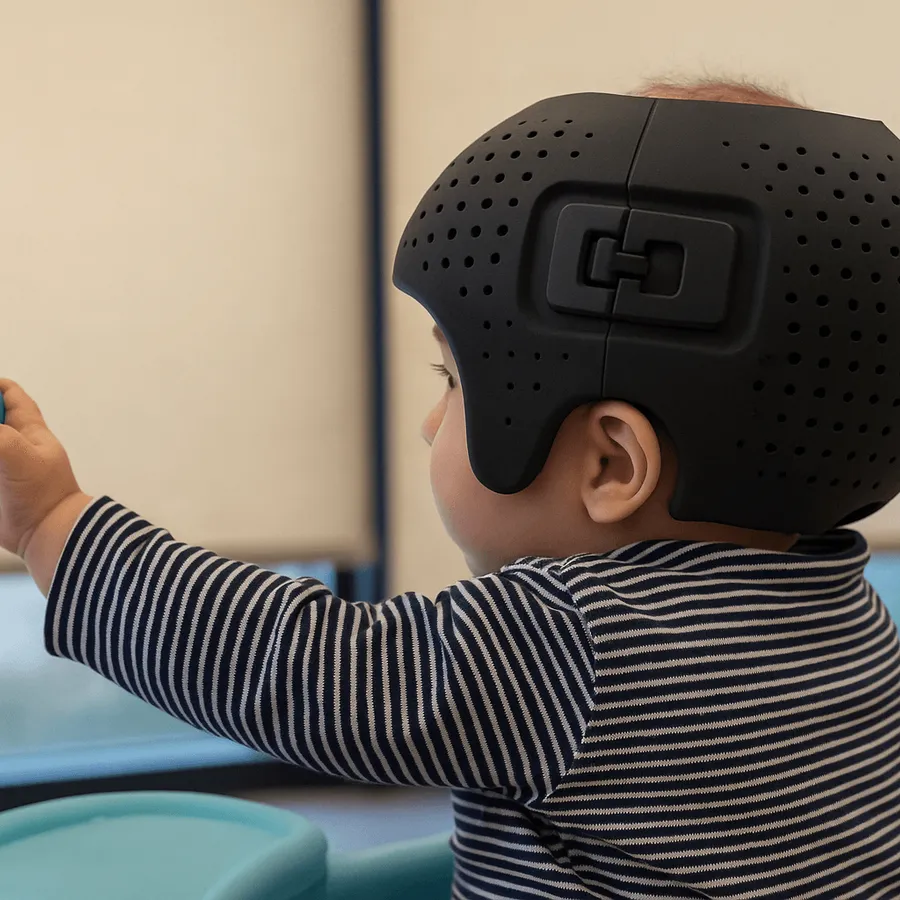
Helmet Therapy
What is inherited versus pressure-related in infant head shape, when craniosynostosis differs, and how helmet therapy fits positional—not familial—patterns.
When a baby is born, relatives often debate whose eyes or chin the baby inherited. What about head shape? Is flattening or asymmetry a family trait, or did it develop after birth?
Parents who notice asymmetry may blame themselves (“I always put the baby on the back”) or accept it as destiny (“Dad’s head was flat too”). CranioWell Orthotics & Prosthetics Centers clarify how much of head shape difference is genetic versus environmental (positional).
A simple distinction:
So a “large head” can be familial, while a “skewed” head is far more often positional.
Some head shape conditions are structural and do not form—or resolve—through sleep position alone.
Most plagiocephaly and deformational brachycephaly seen today are not genetically programmed. They follow physical rules of gravity and pressure.
Flat head syndrome itself is not typically genetic, but inherited traits can raise vulnerability.
Saying “Dad’s head was flat, so it must be genetic” is often wrong. A parent may simply have had untreated positional flattening in infancy.
| Feature | May be genetic/structural | Usually positional |
| Head circumference size | Yes (familial trait) | No |
| Symmetric width (population pattern) | Yes | No |
| One-sided flattening | Rarely syndromic | Yes (vast majority) |
| Ear shift / asymmetry | No | Yes |
| Fontanelle closure timing | Yes (metabolic/genetic) | No |
Risk relates more to care habits than inheritance. The same firm mattress, carriers, or positioning patterns can raise risk again—but experience also makes prevention easier.
No. Positional flat head syndrome is a shape difference and does not genetically impair brain development or intelligence.
No. Waiting for spontaneous “family resemblance” can delay the more responsive early months of remolding when care is needed. If you have concerns, ask for 3D measurement rather than genetic speculation alone.
Your baby’s head shape does not have to be left to chance—whether risk is partly familial or entirely positional. Modern assessment can clarify the source and outline next steps.
Leave self-blame and “it’s genetic, so accept it” thinking aside. A free pre-assessment at CranioWell Orthotics & Prosthetics Centers can help distinguish genetic/structural from positional patterns and map a clear plan.
This content is for information only and does not replace medical diagnosis or treatment.