
Helmet Therapy

Is Head Shape Deformity Genetic or Positional?

Head shape is largely genetic but head deformity is almost always positional. CranioWell explains the difference.
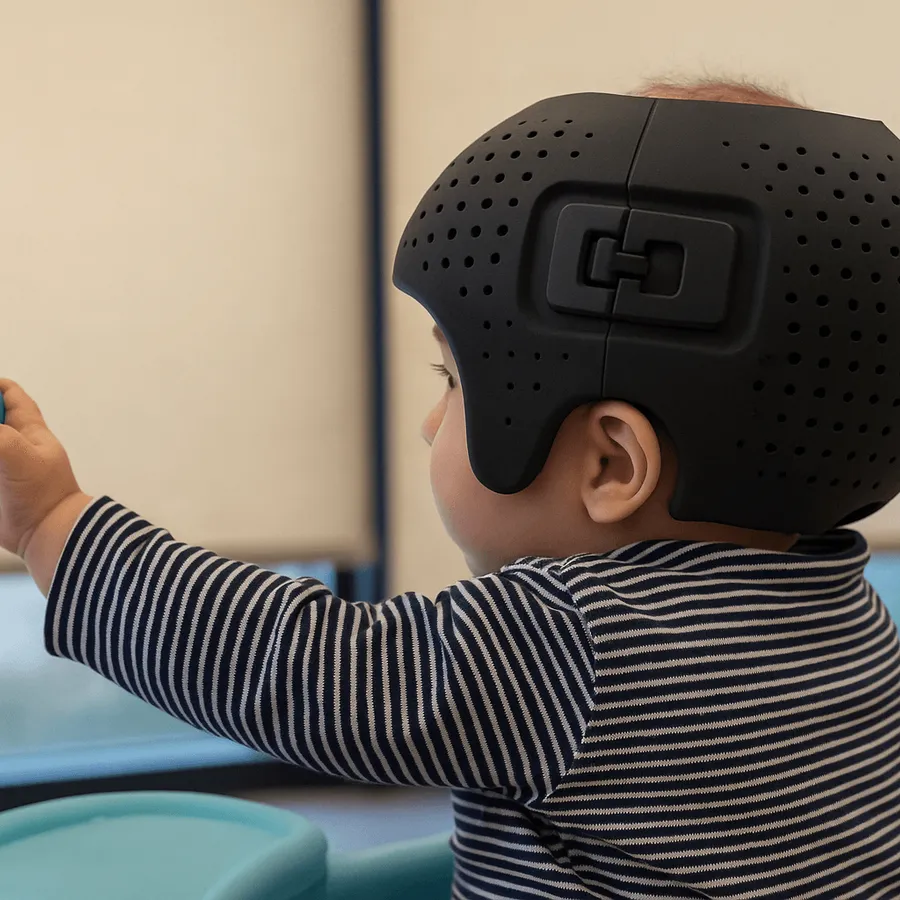
Is Head Shape Deformity Genetic or Positional?
Helmet Therapy


Is Baby Head Shape Deformity Genetic or Positional?

Quick answer: The general rule is: head shape (wide, narrow, round) is largely genetic, but head deformities (one-sided flattening, ear displacement, asymmetry) are predominantly positional — caused by pressure, not inheritance.

  • Genetic: Head circumference size, general shape, racial features (wider in East Asian, longer in European babies).
  • Positional: One-sided flattening (plagiocephaly), ear shifting, symmetric back flattening (brachycephaly).
  • Exception: Craniosynostosis — premature suture closure — can be genetic and requires surgical evaluation.

When a baby is born, family members quickly start noticing similarities: "She has her mother's eyes, his father's chin…" But what about the head shape? Is the flattening or asymmetry in your baby's skull an inherited trait — or something that developed afterwards?

The General Rule: Shape Is Genetic, Deformity Is Positional

  1. What Is Genetic (Hereditary): Your baby's head circumference, general proportions (rounded versus oval), and racial features (broader skull in East Asian babies, longer in European babies) are generally determined by genes inherited from parents.
  2. What Is Positional (Environmental): However, one-sided flattening (asymmetry), ear displacement, or a perfectly flat occiput are generally not present at birth. These are deformational conditions caused by external factors (sleeping position) after birth.

In other words: your baby having a "large head" may be genetic, but having an "asymmetric head" is most likely positional.

Which Conditions Are Genetic?

Some head shape deformities are structural and genetic. They are not produced by external positioning and will not resolve with repositioning.

  • Craniosynostosis: Premature fusion of skull bones in utero, which can be associated with genetic mutations or syndromes. Learn more: Craniosynostosis.
  • Familial Macrocephaly/Microcephaly: If everyone in the family has a larger or smaller head circumference, it is a genetic inheritance — not a pathology.

Which Conditions Are Positional? (The Common Ones)

The vast majority of deformities seen today (Plagiocephaly and Deformational Brachycephaly) are not coded into genetics. They are governed entirely by physical laws — gravity and pressure.

  • Back-lying sleep position: Necessary for safe sleep but flattens the back of the skull.
  • Intrauterine crowding: Space constraints in twin pregnancies.
  • Torticollis (Wry Neck): Muscle shortening causing the baby to always rest on the same spot.

Can Genetic Predisposition Create "Fertile Ground"?

Here is the most critical nuance. Flat head syndrome itself is not genetic — but genetic traits can increase the risk.

  • Example 1: If the baby is genetically predisposed to "softer bones" or a "larger, heavier head," they are more vulnerable to gravity and flattening develops faster.
  • Example 2: If the baby has inherited "deep, still sleeping" patterns, they apply sustained pressure to the same spot all night — increasing the risk.

Saying "Dad's head was flat too, must be genetic" is usually inaccurate. Dad was most likely also placed on his back as a baby (recall the swaddling culture of that era) — and because it was never treated, the shape became permanent.

Summary Table: Genetic or Positional?

FeatureMay Be GeneticUsually Positional
Head circumference sizeYes (familial)No
Symmetric width (racial)YesNo
One-sided flattening (asymmetry)No (rarely syndromic)Yes (99%)
Ear displacement (asymmetry)NoYes
Fontanelle closureYes (metabolic/genetic)No

Does Helmet Therapy Work for Genetic Conditions?

  • Positional Deformations: Helmet therapy (Cranial Orthosis) is the gold standard and delivers excellent outcomes.
  • Genetic/Structural Conditions (Synostosis): Helmet therapy alone is not effective. Surgical intervention is required first; a helmet may then be used to maintain the corrected shape.
  • Familial Head Shape (Width Only): If there is no asymmetry or deformity, helmet therapy is not applied purely for aesthetic reasons. CranioWell's ethical framework means we only intervene in medically indicated deformations.

Frequently asked questions

Will my second child also have flat head?

This is related to parenting habits rather than genetics. If the same hard mattress, baby gear, or positioning habits continue, the risk is the same. However, experience makes it much easier to take preventive measures this time.

Does positional flat head genetically affect intelligence?

No. Positional flat head syndrome does not genetically impair brain development or intellectual capacity. It is purely a shape issue.

Should I wait to see who the baby takes after?

No. Waiting with "she takes after her uncle, it will sort itself out" reasoning can cause you to miss the first 6 months — the optimal window for helmet therapy. If you are concerned, what you need is a 3D head measurement, not a genetic analysis.


Your baby's head shape does not have to be their "destiny." Whether there is a genetic predisposition or a purely positional cause, today's technology makes correction possible. Stop blaming yourself or accepting it as inevitable. At CranioWell Orthopedic & Prosthetic Centers, a free initial assessment can identify the source of the problem and chart the best course of action for your baby.

Helmet Therapy: The Critical Role of Families in Your Baby’s Healthy Head DevelopmentWhat is Helmet Therapy for Babies? A Guide to Flat Head Syndrome and Cranial OrthoticsHead Shaping Process with CranioWell HKM Pro HelmetHelmet Therapy Costs and Insurance Coverage: A Parent’s Guide