
Helmet Therapy
Head Shape Deformity in Premature Babies: Causes and Solutions
Premature babies are at higher risk of head shape deformity. Corrected age, NICU head, and helmet therapy explained.
Helmet Therapy
Premature babies are at higher risk of head shape deformity. Corrected age, NICU head, and helmet therapy explained.
Quick answer: Premature babies are at significantly higher risk of head shape deformity because of their exceptionally soft bones and prolonged NICU positioning. Assessment uses corrected age (not birth date), and helmet therapy shows excellent results due to the rapid head growth in these babies.
The tiny fighters… babies who started life a little early and a little in a hurry. Having a premature baby is a marathon full of worry and hope for parents. While in the Neonatal Intensive Care Unit (NICU), the priority is always breathing, feeding, and survival.
Once this challenging process is successfully navigated and the family arrives home, a common observation among parents is: the baby's head looks longer, narrower, or flatter on the sides than expected. Head shape deformity in premature babies is a frequent part of this journey. At CranioWell Orthopedic & Prosthetic Centers, we have compiled the reasons for this condition and safe solutions for your little fighter.
Compared to full-term babies, premature babies show higher rates of head shape deformity (particularly scaphocephaly/dolichocephaly). The underlying causes are biological and environmental:
Bone hardening (mineralisation) accelerates during the last three months of pregnancy (third trimester). Babies born prematurely arrive before completing this process. As a result, the skull bones are soft enough to be shaped like modelling clay — extremely vulnerable to external pressure.
During intensive care, babies are often placed on their sides to facilitate connection to breathing equipment or to breathe more comfortably.
Premature babies' neck muscles are not yet strong enough to move their heads. Once the baby places their head in one direction, they cannot turn it to the other side unaided — leading to prolonged pressure on the same spot.
For premature babies, corrected age (not chronological age) is used for both developmental assessment and helmet therapy decisions.
What Is Corrected Age? It is calculated by subtracting the number of weeks premature from the baby's birth date.
Why Does It Matter? When deciding on treatment, we consider your baby to be biologically 2 months old, not 4. This is reassuring for families worried they have missed the window — even if the calendar age seems large, the biological age may still be ideal for starting treatment.
Mild deformations can partially recover once the baby comes home, as neck muscles strengthen and more movement begins. However, spontaneous correction is less likely when:
The CranioWell approach to managing head shape deformity in premature babies:
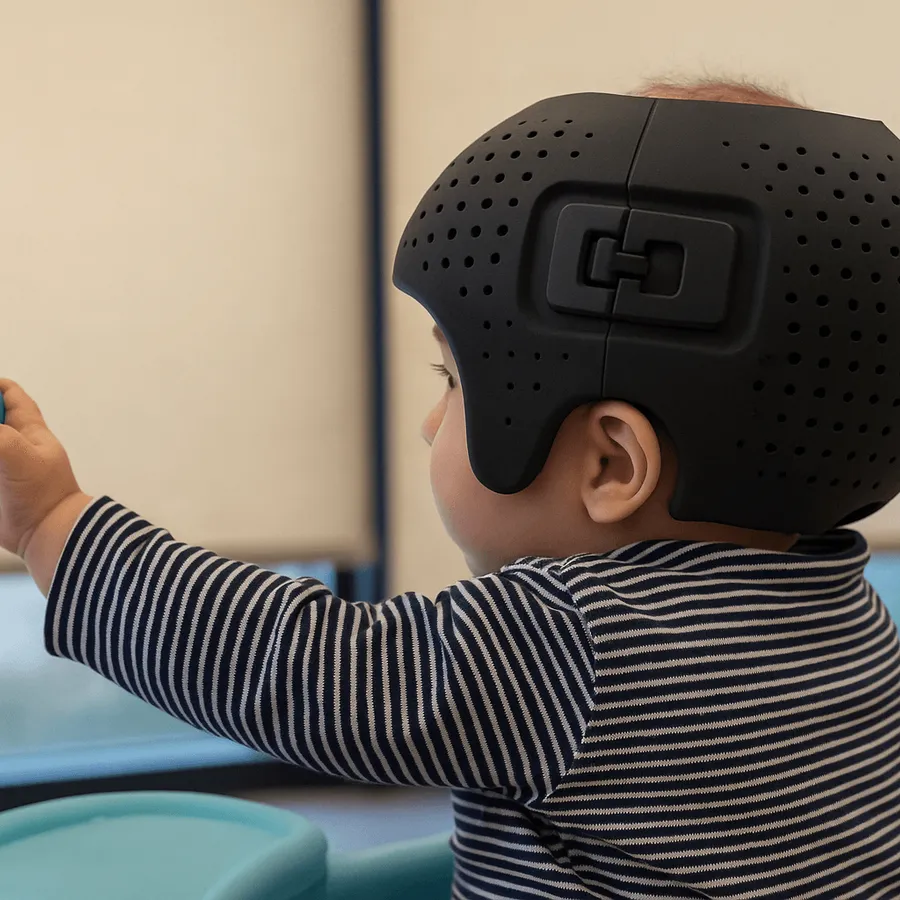
No. The helmets we use at CranioWell are made from advanced lightweight materials. They weigh within the range the baby's neck muscles can comfortably support (typically 150–200 g) and do not burden the baby.
No. The shape deformity (deformational condition) does not damage brain tissue or cause intellectual impairment. However, correction is recommended for aesthetic concerns and potential functional issues such as future glasses or helmet use.
For premature babies, the ideal time for assessment is around the 3rd or 4th corrected month. Early intervention means a shorter treatment course.
You have left the hard days behind — now is the time to enjoy your baby's development. Head shape deformity in premature babies is a manageable condition with a solution. At CranioWell Orthopedic & Prosthetic Centers, we can carry out a tailored assessment based on corrected age. Our 3D scanning technology takes measurements in seconds — without touching or alarming your baby.