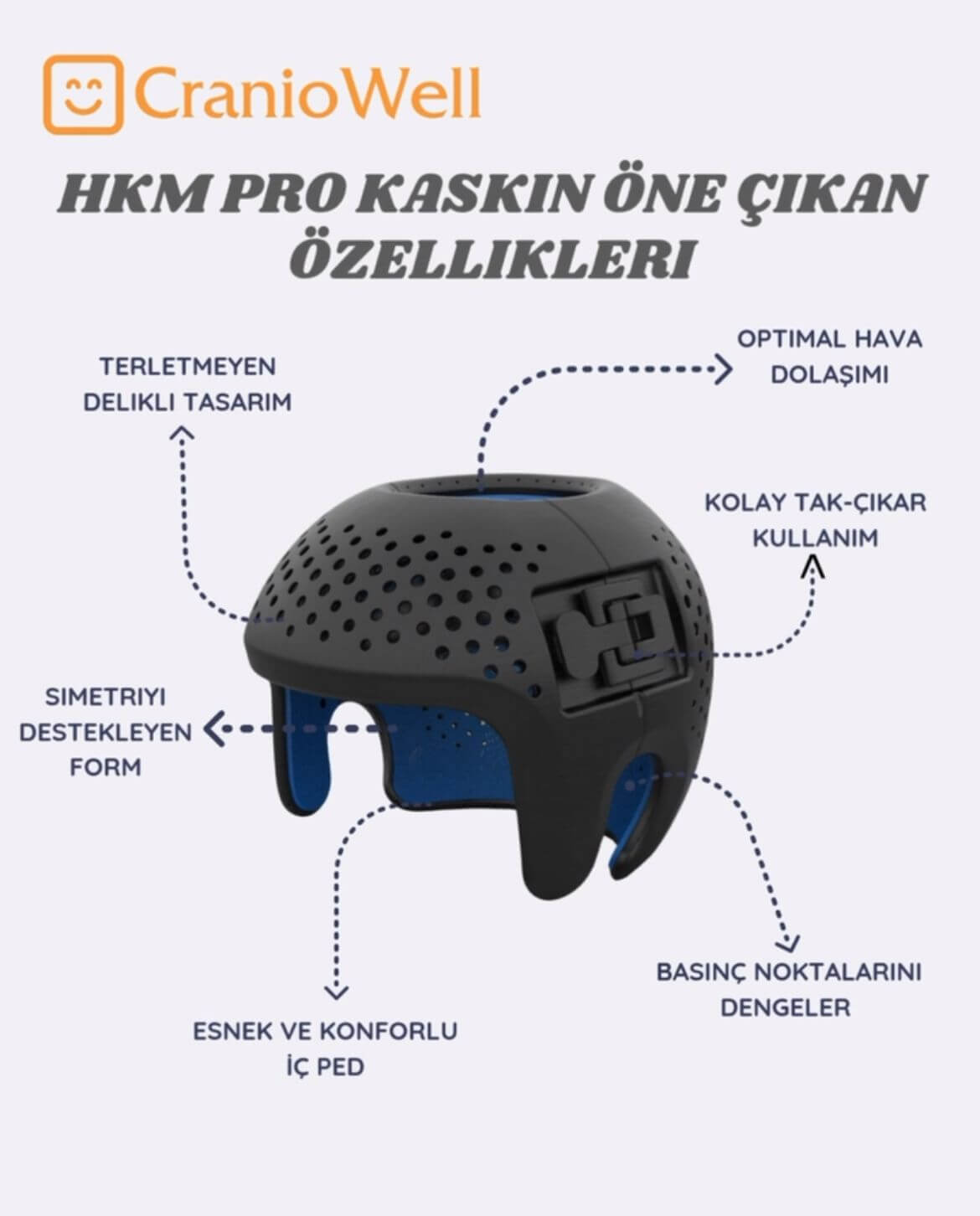
CranioWell HKM Pro custom cranial helmet: breathable design, ethical indication criteria, 3D follow-up, and application only at CranioWell Orthotics & Prosthetics Centers.
A Scientific, Comfortable, and Ethical Option for Infant Head Shape Differences
Infant skull shape differences (plagiocephaly, brachycephaly, scaphocephaly) are among the most common concerns for parents in the first months. Many families assume the issue is only cosmetic, yet asymmetries noticed early can often be improved with the right approach. The CranioWell HKM Pro helmet was developed to support a science-based, comfort-focused, and ethical treatment process.
CranioWell HKM Pro is a cranial orthosis system developed in the Hacettepe Technopolis ecosystem, with R&D completed at Ankara University and refined through clinical observation. The goal is not to sell an expensive device, but to guide potential shape differences during the growth window and offer families a reliable care option. This helmet is applied only at CranioWell Orthotics & Prosthetics Centers with planned specialist follow-up.
Why CranioWell HKM Pro?
1. Breathable perforated shell: baby comfort comes first
Many helmets on the market have closed surfaces that can increase heat and sweating. HKM Pro takes the opposite approach. Thanks to its wide perforation pattern:
Heat build-up is kept low,
Sweating and odor are reduced,
The risk of skin problems is lowered.
2. Soft plastazote liner: pressure management for sensitive skin
The HKM Pro inner surface uses a specially selected medical plastazote structure.
This provides two core advantages:
It distributes pressure softly and evenly to help prevent skin irritation.
It adapts to growth dynamics so shape guidance stays controlled.
In early infancy, when the skull is especially sensitive, this soft liner supports both safety and treatment comfort.
3. Manufacturing and treatment approach
Our aim is not to pressure families into buying a helmet, but to support correct evaluation, diagnosis, and timing. Bu nedenle:
Helmets are not recommended for babies who do not need one.
Mild differences are managed with positioning exercises and follow-up.
Treatment starts only when it is truly indicated.
Every infant skull is different, and planning is fully individualized. Ethics are foundational to this work.
4. Clinical use across many real patients
HKM Pro did not remain a theoretical drawing during development. At Ankara University and CranioWell Orthotics & Prosthetics Centers:
Plagiocephaly of varying severity,
Brachycephaly,
Asymmetric mixed deformities,
Early- and later-presenting infants
it was used in dozens of babies, with progress tracked through serial measurements.
Observed progress was clear and clinically meaningful. This shows HKM Pro is useful not only as a design concept but in clinical practice.
5. Follow-up system and clinical data
CranioWell does not treat helmet care as simply putting on a device and walking away. The core strength of treatment is regular follow-up.
First check: day 15 (critical assessment)
Later checks: monthly
Measurements: CVA, head circumference, width–length ratio, symmetry analyses
Digital assessment with a software-based helmet follow-up system
This system keeps progress grounded in objective data and helps families see that care follows a structured clinical framework.
Why Families Choose HKM Pro
Hesitation is understandable. Choosing helmet therapy is a serious decision. Reasons families often choose HKM Pro include:
University-supported R&D development
A product concept supported by TUBITAK
Clinical experience validated in real patients
Comfort-focused design
Ethical treatment approach
Locally developed technology in Turkiye
These features support confidence in both the product and professional process management.
Summary: CranioWell HKM Pro Is More Than a Helmet
This helmet is not only a device; it reflects a scientific approach, an ethical care process, and a commitment to healthy infant development.
When applied correctly in the early growth window, infant shape differences can often improve substantially. Reducing family worry, supporting the baby’s development, and keeping treatment comfortable are priorities for CranioWell HKM Pro.
Treatment Course and Outcomes
Cranial helmet outcomes depend on early recognition and timely care. When used in younger infants—especially under about 6 months—asymmetry often responds more readily. Correct wear and regular follow-up matter. Clinical studies have reported substantial improvement in deformational cranial differences among suitable candidates.
Aftercare and Follow-up
Effectiveness improves with careful follow-up and skin care. During treatment, check the skin regularly to prevent irritation or pressure sores. After the course ends, physician follow-up should continue, and parents should receive guidance on sleep positioning and overall cranial development. Helmet fitting remains at CranioWell Orthotics & Prosthetics Centers.
Points to Consider Before Starting
Before starting cranial helmet therapy, keep these points in mind:
Specialist opinion: Consult a pediatrician and, when needed, neurosurgery or pediatric neurology before starting.
Accurate diagnosis: Confirm the type and severity of the skull shape difference.
Treatment timing: Earlier starts within the growth window generally support better remodeling.
Family education: Parents should be informed about the treatment process and helmet use.
In summary, cranial helmet therapy is a reliable option for many deformational infant skull shape differences. Early evaluation and care support meaningful improvement for many babies.