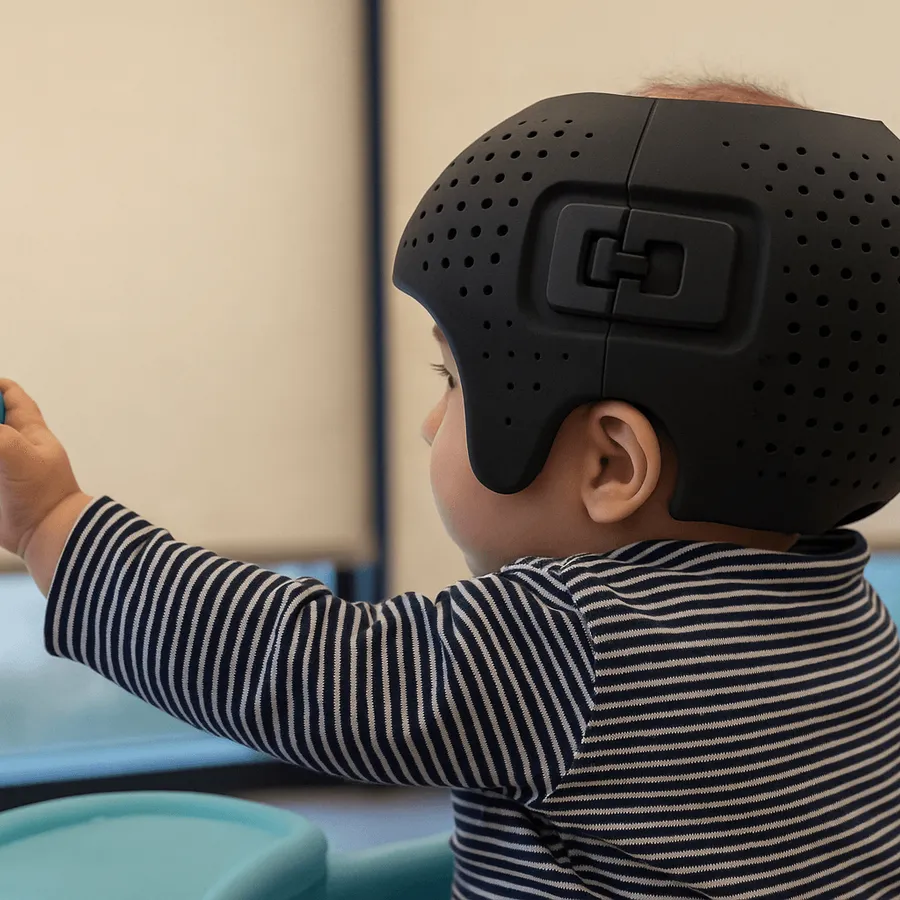
Infant head shape differences are common and can often improve substantially with early intervention. Understanding causes, prevention, and modern options such as the CranioWell HKM Pro helmet supports healthy development.
Causes of Infant Head Shape Differences
The most common cause is spending long periods in the same position. This pattern is often called plagiocephaly (flat head syndrome). Other factors may include:
Birth-related pressure: Forces on the infant’s head during delivery.
Intrauterine position: How the baby was positioned in the womb.
Premature birth: Incomplete muscle development in premature infants.
Torticollis: Neck muscle shortening that makes it hard to turn the head both ways.
Genetic factors: Rare predisposition in some cases.
How Common Are Head Shape Differences?
Infant head shape differences are quite common. Roughly 2 to 3 in every 100 infants may show them to varying degrees. Plagiocephaly is the type seen most often and can usually be managed with early recognition and care.
Prevention Approaches
Steps that may help reduce risk include:
Tummy time: Increasing supervised tummy time while the infant is awake.
Sleep orientation changes: Alternating the direction the infant faces in the crib while still following safe back-sleep guidance.
Feeding positions: Alternating the side used during breastfeeding or bottle feeding.
Play-area setup: Placing toys in different directions to encourage head turning.
CranioWell HKM Pro Helmet Therapy
The CranioWell HKM Pro helmet is an effective option used in treating infant head shape differences. This custom-designed helmet guides growth so flattened or asymmetric areas can gradually improve. Each HKM Pro helmet is measured and made for the infant’s head and can be adjusted during treatment as the baby grows. Fitting and adjustments are provided only at CranioWell Orthotics & Prosthetics Centers.
Timing and Duration
Timing matters for cranial remolding. Helmet therapy is typically considered after 4 months of age, and a common course lasts about 4–6 months. Duration varies with age, severity, and response. Average recommended wear is about 16–23 hours per day.
Advantages of CranioWell HKM Pro Helmet Therapy
Effectiveness: A method supported by clinical experience and published research on cranial remolding.
Safety focus: Designed with infant comfort and careful clinical follow-up in mind.
Custom fit: Produced from individual measurements.
Comfort: Made with breathable materials to support daily wear.
Cost and Insurance
Cost can vary by materials, helmet type, and location. Discuss coverage and payment options with your clinician or provider.
Side Effects
Cranial remolding helmets are generally well tolerated. Less common issues include skin irritation, redness, or discomfort, often improved with fit adjustments or skin care. Regular follow-up at the fitting center helps detect problems early.
Frequently Asked Questions
How common are infant head shape differences?
They are quite common. Roughly 2 to 3 in every 100 infants may show them to varying degrees. Plagiocephaly (flat head syndrome) is the type seen most often and can usually be managed with early recognition and care.
How long does cranial remolding therapy last?
Helmet therapy is typically considered after 4 months of age, and a common course lasts about 4–6 months. Duration depends on age and severity. Recommended wear is often about 16–23 hours per day.
When should helmet therapy start?
Helmet therapy is typically considered after 4 months of age, with a common course of about 4–6 months.
Is cranial remolding therapy expensive?
Cost varies by materials, helmet type, and location. Ask your clinician or provider about insurance coverage and payment options.
Do remolding helmets have side effects?
They are generally well tolerated. Occasional skin irritation, redness, or discomfort can occur and is often managed with fit adjustments or skin care. Regular follow-up helps catch issues early.
What can help prevent infant head shape differences?
Helpful steps include more supervised tummy time while awake, changing head orientation during sleep within safe sleep rules, and alternating feeding positions.