
Helmet Therapy
Infant Helmet Therapy: Step-by-Step Guide and Specialist Perspectives
How cranial remolding helmet therapy works for plagiocephaly and brachycephaly, from 3D scanning and custom fabrication to wear time, follow-up, and care tips.
Helmet Therapy
How cranial remolding helmet therapy works for plagiocephaly and brachycephaly, from 3D scanning and custom fabrication to wear time, follow-up, and care tips.
Infant head shape differences are among parents’ top concerns. Position in the womb, birth, or sleep posture can create mild or more noticeable cranial differences. Common positional patterns include plagiocephaly (flat head syndrome) and brachycephaly (a wide head). Today, helmet therapy (cranial orthosis) is a widely used non-surgical option. This guide explains what helmet therapy is, how it is applied, benefits, the care process, and specialist perspectives.
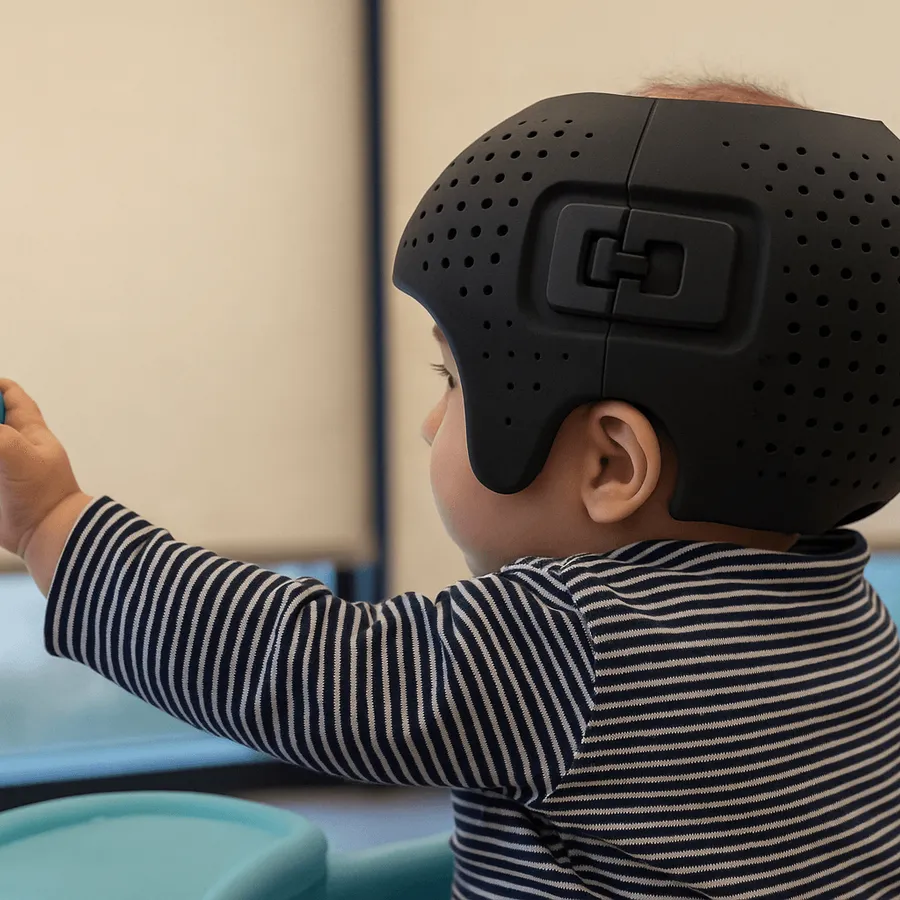
Helmet therapy uses a lightweight, breathable orthopedic helmet designed to improve cranial shape differences. It works with the infant’s natural growth potential: limiting growth where needed and directing growth into open areas so the head becomes more symmetric. Helmets are custom-made with 3D scanning and fabrication technologies.
Direct answer: Helmet therapy is a non-surgical method that aims to improve plagiocephaly, brachycephaly, and other positional head shape differences by guiding the natural direction of cranial growth.
Multiple factors can contribute:
Intrauterine position: Long periods in one prenatal posture.
Birth process: Difficult deliveries or vacuum/forceps use.
Postnatal positional pressure: Repeatedly lying or being carried in the same orientation.
Prematurity: Softer cranial bones may be more prone to shape change.
Torticollis: Neck tightness that limits turning and flattens the opposite side.
Twin pregnancy: Mutual pressure between fetuses.
Helmet therapy is especially useful for positional deformities. Commonly treated patterns include:
Plagiocephaly: Flattening on one side, often with a bulge on the opposite side.
Brachycephaly: A short front-to-back diameter with a relatively wide head.
Scaphocephaly: A long, narrow head (rarely positional).
Asymmetry: An overall unbalanced cranial appearance.
Care begins with careful evaluation and custom fabrication. When a clinician determines that therapy is appropriate, typical steps include:
A pediatrician, orthopedist, or cranial orthosis specialist examines the infant, measures head circumference, and defines type and severity. 3D scanning may map the skull in detail. This stage also helps distinguish positional differences from craniosynostosis (early suture closure), which may need surgical care.
A precise 3D scan creates a digital model. Designers plan inner and outer geometry so growth is guided where needed. Contact and clearance zones are calculated carefully.
After digital design, the helmet is fabricated (often with advanced manufacturing methods). Materials are typically lightweight, durable, and hypoallergenic, with soft inner lining for comfort.
Initial fitting is performed by the orthotics team. Correct fit and comfort are checked. Wear is often about 23 hours a day, removed mainly for bathing and cleaning. Follow-up every 2–4 weeks is common because infants grow quickly. Fitting and adjustments for CranioWell helmets are provided at CranioWell Orthotics & Prosthetics Centers.
Duration depends on age, growth rate, and severity—often about 4 to 6 months. Outcomes relate to consistent wear and keeping appointments. The goal is a substantially more symmetric, aesthetically balanced shape.
Helmet therapy is an effective option for many positional differences. As with any medical care, benefits and risks should be weighed.
Meaningful improvement potential: Especially when started in a responsive growth window.
Non-surgical method: No anesthesia or operative intervention.
Custom design: Matched to each infant’s cranial shape.
Psychosocial consideration: A more balanced head shape may reduce later appearance-related self-esteem concerns.
Efficient courses: Rapid early growth often supports relatively short treatment windows.
Serious side effects are uncommon. Possible issues include:
Skin irritation and redness: Usually managed with cleaning and fit adjustments.
Increased sweating: Regular hygiene and breathable clothing help.
Adjustment discomfort: Often settles within a few days.
Infection risk: Poor hygiene can raise skin infection risk.
Direct answer: The main benefit of helmet therapy is non-surgical improvement of positional head shape differences. Possible risks include skin irritation and sweating, usually manageable with proper care and adjustments.
Clinicians experienced in cranial orthosis emphasize early recognition and starting care in the right window. Cranial growth is fastest in roughly the first 6–12 months, and therapy started then often progresses more efficiently.
Common recommendations include:
Early recognition: Consult a specialist as soon as you notice a difference.
Consistent wear: Follow the prescribed schedule (often about 23 hours a day).
Hygiene: Clean the helmet and the infant’s scalp regularly.
Follow-up: Keep appointments so adjustments match growth.
Patience: Progress takes time; consistency matters.
A commonly discussed window is about 4 to 7 months, when bones are still soft and growth is rapid. Earlier or later starts may be considered in selected cases. Your physician decides timing based on the individual assessment.
Prices vary with materials, fabrication technology (such as 3D scanning and manufacturing), location, and scope of care. Coverage by public or private insurance depends on the policy. For details, contact specialized centers such as CranioWell.