
Helmet Therapy
Helmet Therapy for Infant Head Shape Differences: What You Need to Know
A practical guide to cranial orthosis therapy: who it suits, how custom helmets work, typical wear time, follow-up, and how it compares with repositioning.
Helmet Therapy
A practical guide to cranial orthosis therapy: who it suits, how custom helmets work, typical wear time, follow-up, and how it compares with repositioning.
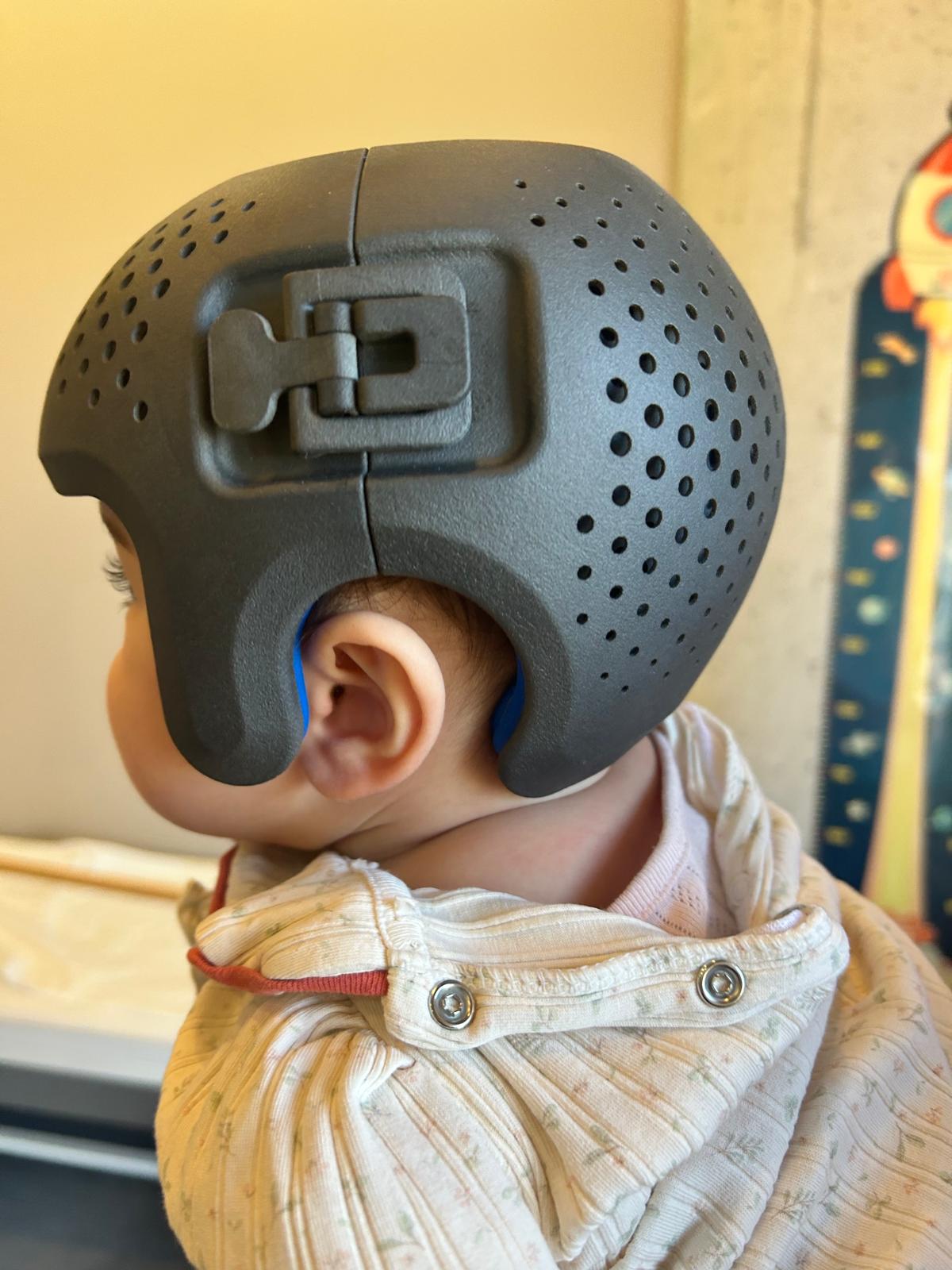
Infant head shape differences can worry parents. Today, most positional cases can be managed with safe, effective approaches. Among them, helmet therapy (cranial orthosis) aims to improve cranial asymmetry toward a more balanced appearance. This guide covers what helmet therapy is, why it may be needed, who it suits, how the process works, and other common questions.

Infant cranial asymmetries can arise from several factors, usually grouped as:
Helmet therapy uses the growth potential of cranial bones to guide shape improvement. Infant skulls remain flexible especially in the first 1–2 years. Therapy aims to:
Care is delivered with lightweight, breathable custom orthoses designed from 3D scanning. Fitting is provided at CranioWell Orthotics & Prosthetics Centers.
Helmet therapy is often most useful for infants roughly 3 to 18 months old, when the skull is still growing quickly and remains moldable. Starting after about month 4 is commonly discussed. Suitability depends on overall health, type, and severity, and should be assessed by a clinician.
Important note: When surgery is required for craniosynostosis, helmet therapy alone is not the appropriate primary treatment, and early diagnosis of synostosis is critical.
The process needs careful planning:
Duration often ranges from about 4 to 6 months, depending on age, severity, and growth rate. Earlier appropriate start is linked with clearer progress.
Potential benefits include:
Possible side effects are usually mild and manageable with good care:
Remember: Properly fitted helmets are not meant to cause pain or stop development. Guided reshaping can help reduce later physical and aesthetic concerns.
Prices vary with materials, custom design, 3D scanning and measurement, adjustments, and follow-up frequency. Contact a trusted treatment center for accurate quotes.
Insurance coverage differs by country and policy. In some cases, documented medical need may allow partial or full coverage. Check with your insurer.
Other methods exist, but helmet therapy is often considered for moderate and severe positional differences when repositioning alone is not enough.
| Feature | Helmet Therapy (Cranial Orthosis) | Repositioning Methods | Physiotherapy (Torticollis Care) |
|---|---|---|---|
| Main use | Moderate and severe positional differences | Mild positional differences, prevention | Torticollis-related asymmetry, mild positional differences |
| How it is applied | Custom remolding helmet | Position changes, tummy time | Neck and body exercises |
| Typical duration | About 4–6 months | Ongoing daily attention | Weekly sessions plus home exercises |
| Age range | About 3–18 months (often most useful) | From birth | Any age as indicated |
| Cost | Higher (custom fabrication) | Lower (parent-led) | Moderate (session fees) |
| Expertise needed | High (clinician + orthotics team) | Moderate (parent education) | High (physiotherapist) |