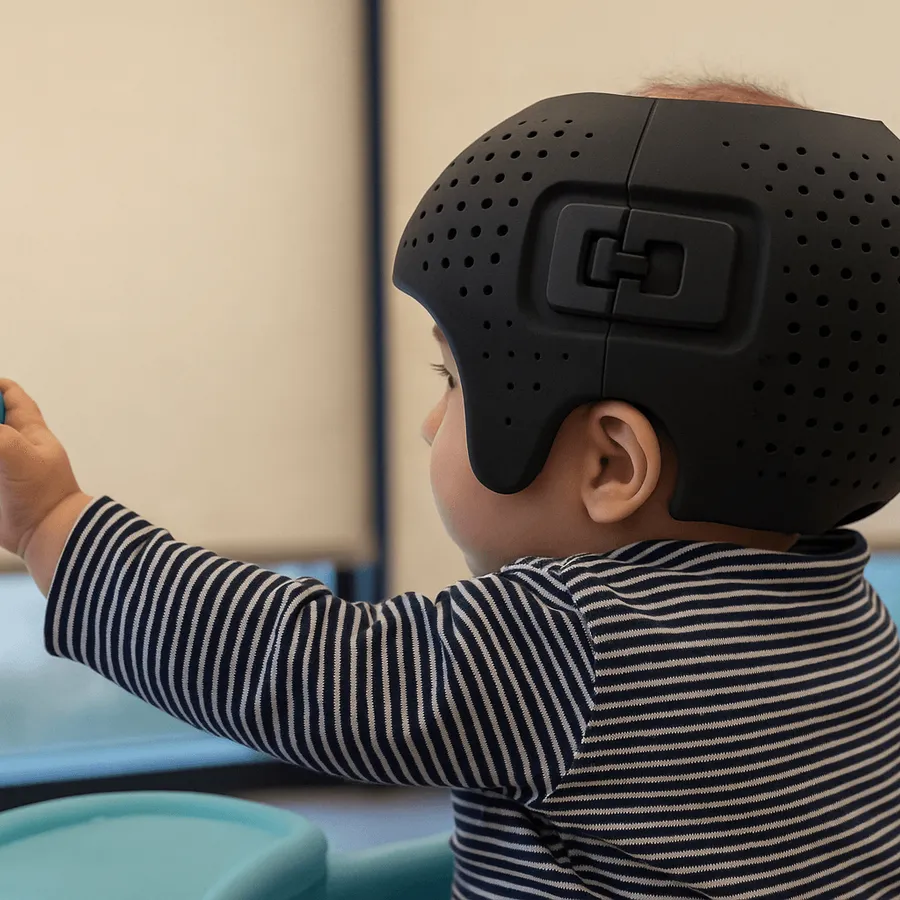
Infant head shape differences are frequently seen in the first year. They often develop from physical factors during or after birth and are usually treatable. Parents need clear information and timely access to appropriate care. This article reviews causes, effects, and the helmet therapy process offered at CranioWell Orthotics & Prosthetics Centers.
What Are Infant Head Shape Differences?
Head shape differences are conditions in which an infant’s head takes a shape that differs from typical proportions. They usually result from pressure on specific areas of the head. Common categories include positional plagiocephaly (flat head syndrome) and craniosynostosis. Positional plagiocephaly develops when an infant remains in one position for long periods; craniosynostosis occurs when cranial sutures close too early, which can restrict normal head growth and may require different medical management.
Causes of Head Shape Differences
Causes can include genetic factors, birth-related pressure, and prolonged time in one position. Sleep position plays a major role in how the head develops. Clinicians note that back sleeping—while essential for safety—can place sustained pressure on certain areas. In some cases, maternal health issues during pregnancy may also contribute.
About CranioWell Orthotics & Prosthetics Center
Mission and Vision
CranioWell Orthotics & Prosthetics Center specializes in care related to infant head shape differences. The center uses modern clinical approaches and individualizes treatment plans to support healthy development. Its mission is to help families access appropriate services and clear education. Its vision is to reduce the impact of infant head shape differences through careful assessment and well-managed care pathways.
Team and Services
CranioWell works with experienced clinicians and therapists. The team evaluates head shape differences and coordinates care plans. Services include comprehensive assessment, treatment planning, and management of the helmet therapy process. Educational support for parents is also part of care. Helmet fitting itself is performed at CranioWell Orthotics & Prosthetics Centers.
The Helmet Therapy Process
Goals and Benefits
Helmet therapy is an effective method used to improve positional head shape differences. Custom helmets apply gentle guidance so the head can develop toward a more symmetric form. Therapy is often discussed for infants roughly 3–18 months old, when the head shape can still change meaningfully. Earlier appropriate intervention is closely linked to better progress.
Stages of Care
The process usually has several stages. First, the infant receives a detailed examination and head-shape assessment; parent concerns and goals are included. Second, a custom helmet is fabricated to fit the infant’s head. Third, wear begins for the prescribed daily hours. Progress is checked regularly and the helmet is adjusted as needed.
Effects of Helmet Therapy
Physical Development
When applied appropriately, helmet therapy aims for a more symmetric head shape by the end of the course. That can improve overall appearance and may reduce later concerns related to marked asymmetry. Early care also supports more typical cranial growth during a period of rapid development.
Psychological and Social Aspects
Beyond physical change, families sometimes worry about appearance-related social concerns later in childhood. Improving marked asymmetry can ease those worries. Parent education and support during treatment also help the family’s overall experience.
Conclusion
Why Early Intervention Matters
Early intervention is important in infant head shape differences. Parents should monitor development and seek specialist advice when needed. Early recognition and care support healthier long-term outcomes. Intervention within the first six months often improves the efficiency of treatment. Following professional recommendations helps infants stay on a healthy path.
Contacting CranioWell Orthotics & Prosthetics Center
CranioWell Orthotics & Prosthetics Center specializes in care for infant head shape differences. Contact us for information or an appointment. The center provides solutions tailored to family needs and support at every stage of treatment.
Frequently asked questions
1. How long does helmet therapy last?
Helmet therapy often lasts about 3 to 6 months. The exact duration depends on the infant’s age and the severity of the head shape difference.
2. Is helmet therapy painful?
Infants usually do not experience pain. The helmet works with gentle guidance, and most babies adapt during an adjustment period.
3. Are there side effects?
Side effects are usually mild. Temporary skin irritation can occur and can typically be managed with fit adjustments and care guidance from the fitting team.
4. When is helmet therapy recommended?
Helmet therapy is commonly considered for positional plagiocephaly and related positional differences when clinically indicated. Craniosynostosis requires different medical evaluation and is not managed the same way as positional flattening.
5. How should the helmet be worn?
Wear schedules are individualized; many plans aim for most of the day (often up to about 23 hours), with breaks for hygiene. Parents should confirm correct fit and attend scheduled checks.