
Helmet Therapy
Infant Cranial Remolding Helmet: A Comprehensive Guide
A parent guide to infant head-shaping helmets: causes of plagiocephaly, ideal timing, treatment steps, skin care, and how helmets differ from shaping pillows.
Helmet Therapy
A parent guide to infant head-shaping helmets: causes of plagiocephaly, ideal timing, treatment steps, skin care, and how helmets differ from shaping pillows.
Healthy, balanced development is a top priority for parents. During this stage, shape differences in a baby’s still-flexible skull can feel worrying. With modern care options, these concerns can often be managed thoughtfully. An infant cranial remolding helmet is one of the established approaches used when clinically indicated. This guide covers what the helmet is, why it is used, how treatment works, key practical points, and current care considerations.
In the first months after birth, a baby’s skull grows quickly and remains flexible. That flexibility helps the head pass through the birth canal and supports brain growth—but it also means external pressure or certain internal factors can contribute to uneven shapes. Common causes include:
This appears when babies spend long periods in the same position. Back sleeping for safe sleep has rightly become common, and with it positional flattening of the back or side of the head is seen more often. Preferential head turning can contribute.
Position in the womb before birth can affect skull shape and contribute to asymmetries.
Preterm babies may have softer, more sensitive skulls and can be more prone to shape differences.
Neck tightness or shortening (torticollis) makes a baby prefer one direction. Repeated pressure on that side can lead to flattening.
This rarer condition involves early closure of one or more sutures. Because it can affect brain growth space, it usually requires surgical evaluation. An infant cranial remolding helmet is used mainly for positional head shape differences—not as primary treatment for craniosynostosis (though helmets may be used after certain surgeries when prescribed).
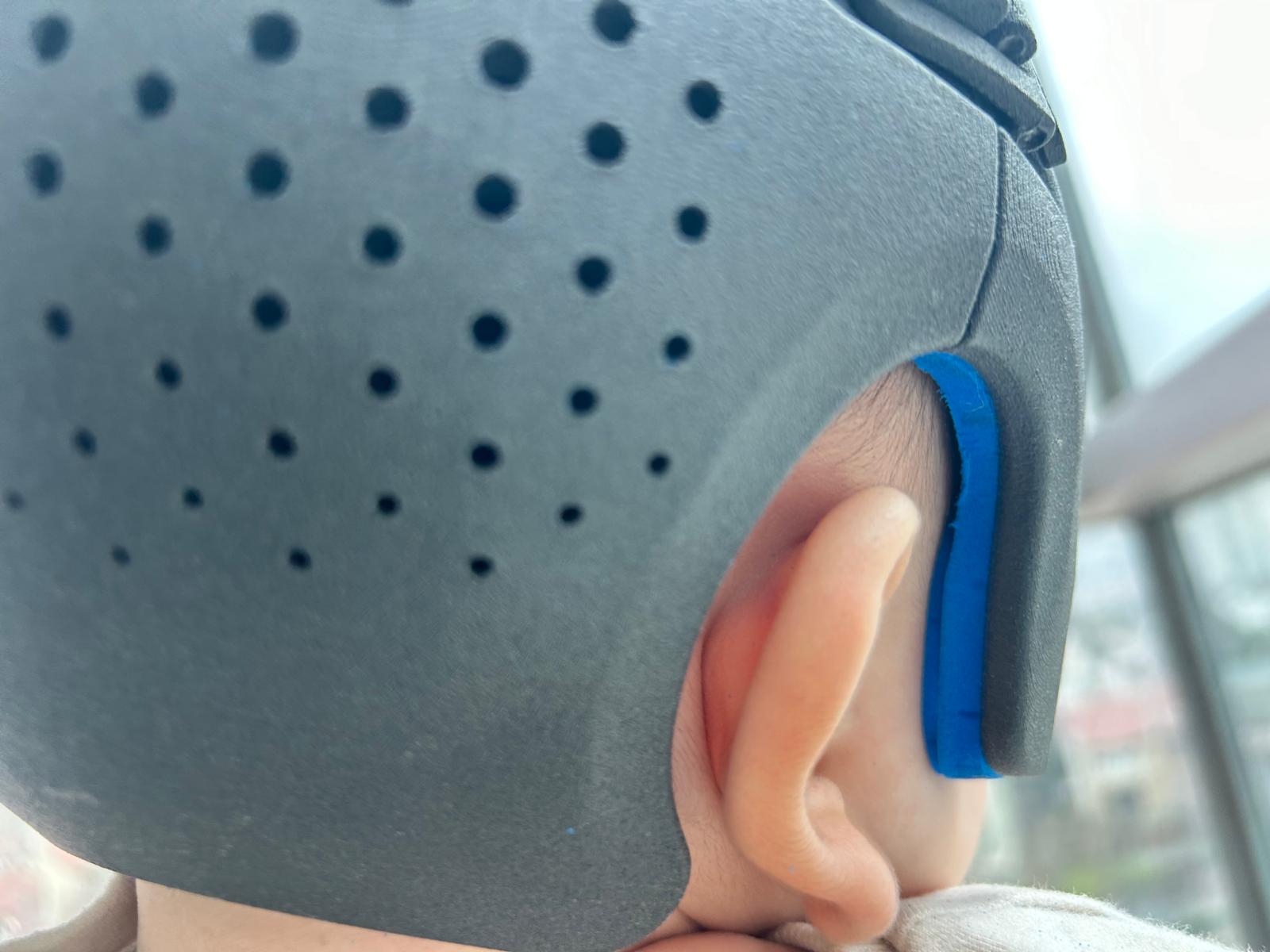
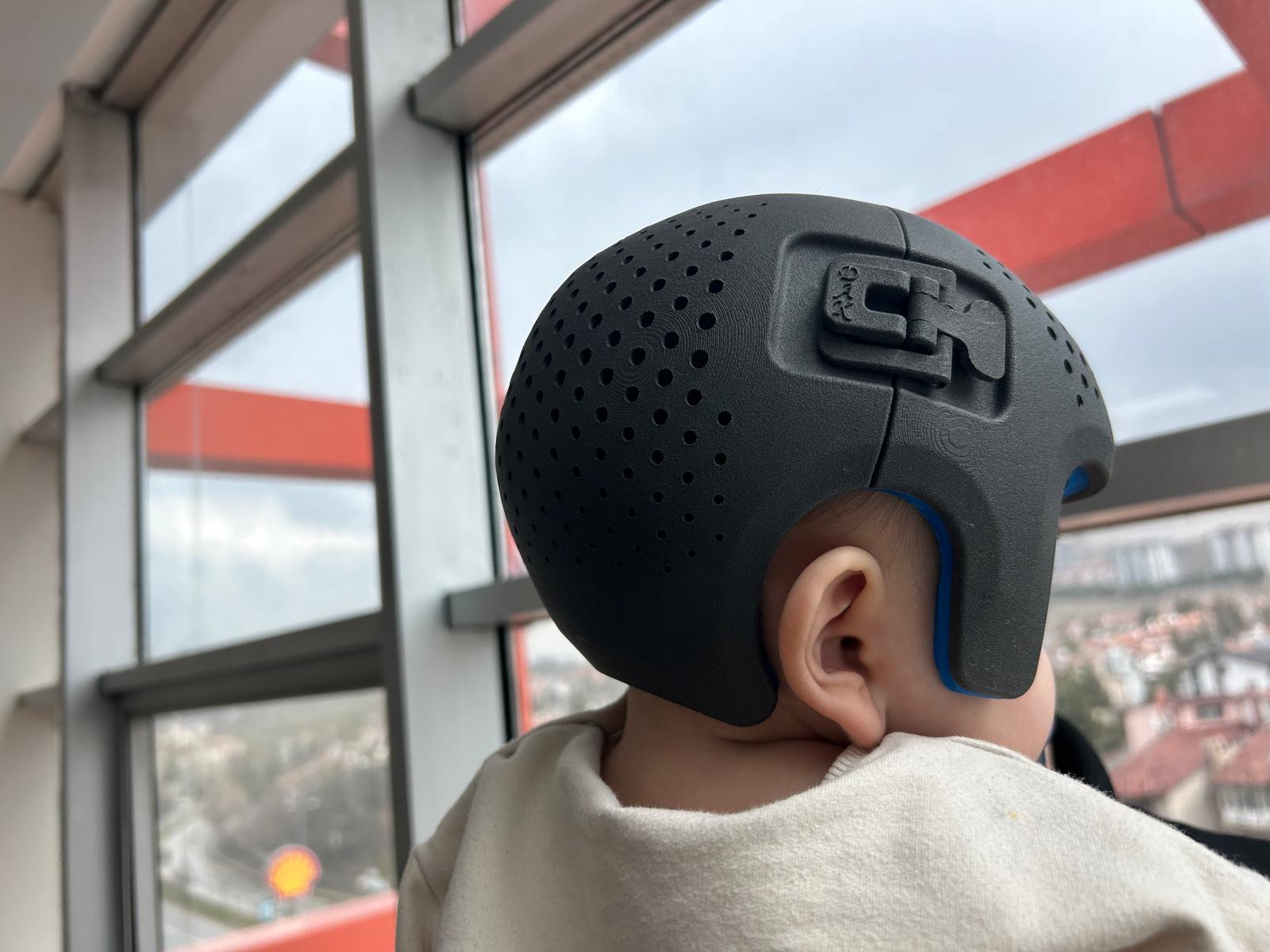
An infant cranial remolding helmet is a lightweight, breathable, medical-grade orthosis made for the individual baby. Its goal is to use natural growth potential to gently guide a more symmetric shape—allowing more growth in flatter areas while limiting further growth in more prominent areas. This approach is generally most responsive in the first 12 months, especially around 4–6 months of age.
Timing strongly influences how responsive treatment is. After a physician diagnosis, starting around 4–6 months is often discussed, when the skull is still flexible and growth potential is high. Every baby is different; start timing depends on overall health, deformity type, and severity, and should be decided with a clinician.
In short: Helmet therapy often begins around 4–6 months and may continue into the 12–18 month window as growth slows. Duration and timing are individualized. The HKM Pro cranial helmet is fitted only at CranioWell Orthotics & Prosthetics Centers.
Helmet care typically follows structured steps:
For comfort and safety, keep these in mind:
Many products are marketed for head shape. Special pillows and medical helmets work differently and have different clinical roles.
| Feature | Infant Cranial Remolding Helmet | Specialty Shaping Pillows |
|---|---|---|
| Mechanism | Guides bone growth pattern with controlled, directed contact during active growth. | Aims to reduce pressure and improve comfort on a softer surface. |
| Clinical role | Used for moderate to more advanced positional differences when indicated; supported by clinical practice pathways. | May play a supportive role only in very mild flattening; not considered a standalone medical treatment. |
| Wear consistency | Usually requires high daily wear (often about 18–23 hours). | Often used only during sleep, so contact time is limited. |
| Custom design | Measured, designed, and made for each baby. | Usually standard sizes; may not match every head. |
| Medical oversight | Prescribed after clinician assessment; fitted and adjusted at CranioWell Orthotics & Prosthetics Centers. | Often used by parents without a medical treatment pathway. |
Centers that specialize in infant head shape use advanced scanning to analyze skull structure and create custom, comfortable remolding helmets when indicated. Close collaboration with parents supports healthier head growth. Comfort and skin health remain priorities throughout care.
If you notice asymmetry or an unusual head shape, consult a clinician without delay. A preliminary evaluation can help clarify your baby’s situation and whether a personalized care plan—including helmet therapy fitted at CranioWell—may be appropriate.