
Head Shape
Flat Head Signs in Babies – Brachycephaly Causes | CranioWell
How to recognize brachycephaly (symmetric flat head), why it happens, prevention tips, and when cranial helmet therapy at CranioWell Orthotics & Prosthetics Centers may help.
Head Shape
How to recognize brachycephaly (symmetric flat head), why it happens, prevention tips, and when cranial helmet therapy at CranioWell Orthotics & Prosthetics Centers may help.
Brachycephaly is symmetric flattening of the back of an infant’s head with widening toward the sides. Known medically as brachycephaly and commonly called “flat head syndrome,” parents often notice that the back of the head looks “board flat” and that the head widens sideways instead of rounding upward.
Unlike plagiocephaly (asymmetric slanting), brachycephaly usually shows overall occipital flatness rather than a shift to the right or left.
Infant skull bones are soft in the early months. The main cause of brachycephaly is prolonged back sleeping. The “Back to Sleep” campaign of the 1990s greatly reduced sudden infant death syndrome (SIDS), but a side effect has been more positional head shape differences.
Additional factors include:
Simple home observation can reveal flat head signs. Watch for:
ol start="1" class="wp-block-list">Severity is measured by clinicians using ratios such as the cephalic index.
In mild brachycephaly, repositioning and tummy time support improvement. If occipital flatness is clear and the baby is older (especially after month 4), more structured care may be needed.
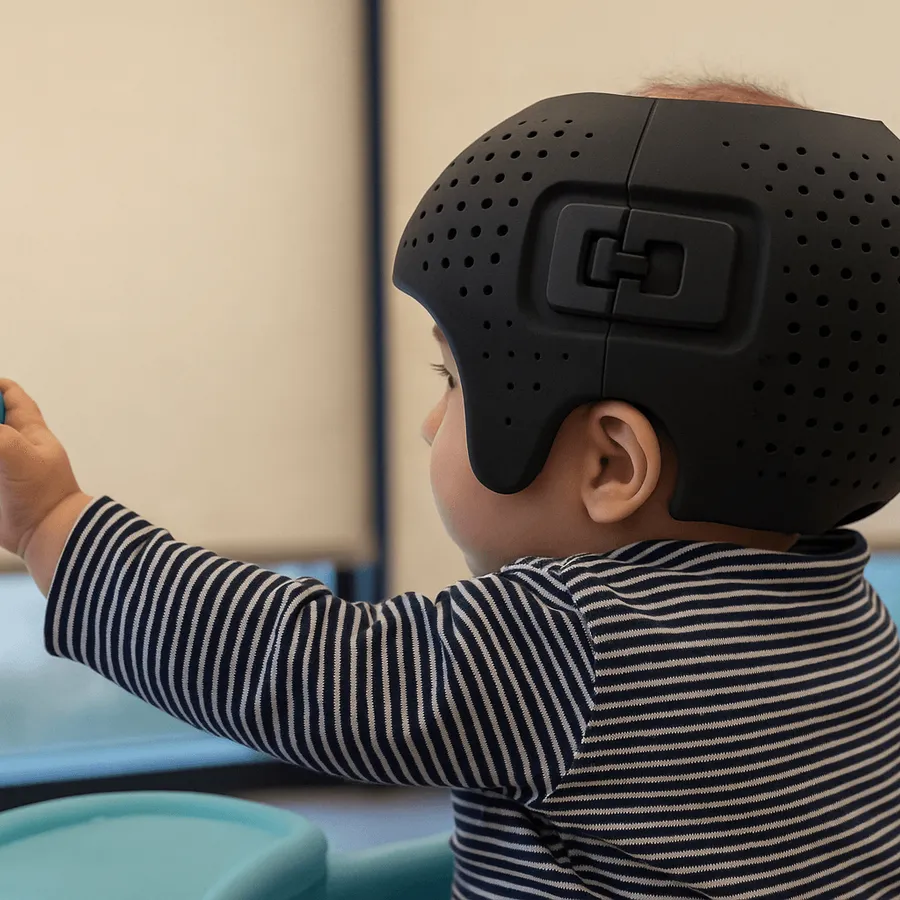
In more advanced cases, a cranial orthosis (helmet) can help guide proportions toward a rounder shape by limiting side expansion and encouraging posterior fill-in. CranioWell helmets are fitted only at CranioWell Orthotics & Prosthetics Centers.
For AAP guidance on safe sleep and head shape, see the American Academy of Pediatrics. (External resource)
To compare plagiocephaly and brachycephaly, see What Is Plagiocephaly?
No. Brachycephaly is not a disease that directly impairs brain development or intelligence. Untreated, it can leave lasting widening and cosmetic concerns.
When babies roll and sit with less support (around month 6), occipital pressure decreases. Mild cases may improve then. Moderate to severe cases are less likely to resolve fully on their own.
Yes—helmets are often used in brachycephaly to limit side widening and encourage posterior growth so the head becomes rounder.
Summary
Brachycephaly may look purely cosmetic, yet lasting shape change can affect later comfort with hats, glasses, or sports helmets. If you notice clear occipital flatness, visit a CranioWell Orthotics & Prosthetics Center for 3D scanning and cephalic index assessment.
Legal notice: This content is for information only and does not replace diagnosis or treatment. Follow your physician’s advice.