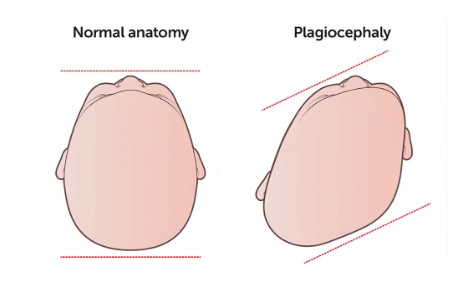
Infant cranial shape differences are a common parental concern. The most frequent type is plagiocephaly—flattening on the back or side of the head. Without timely management, it can raise cosmetic concerns and, in some cases, contribute to developmental care needs. This article reviews causes, signs, diagnosis, and current treatment approaches, including helmet therapy provided at CranioWell Orthotics & Prosthetics Centers.
What Is Plagiocephaly?
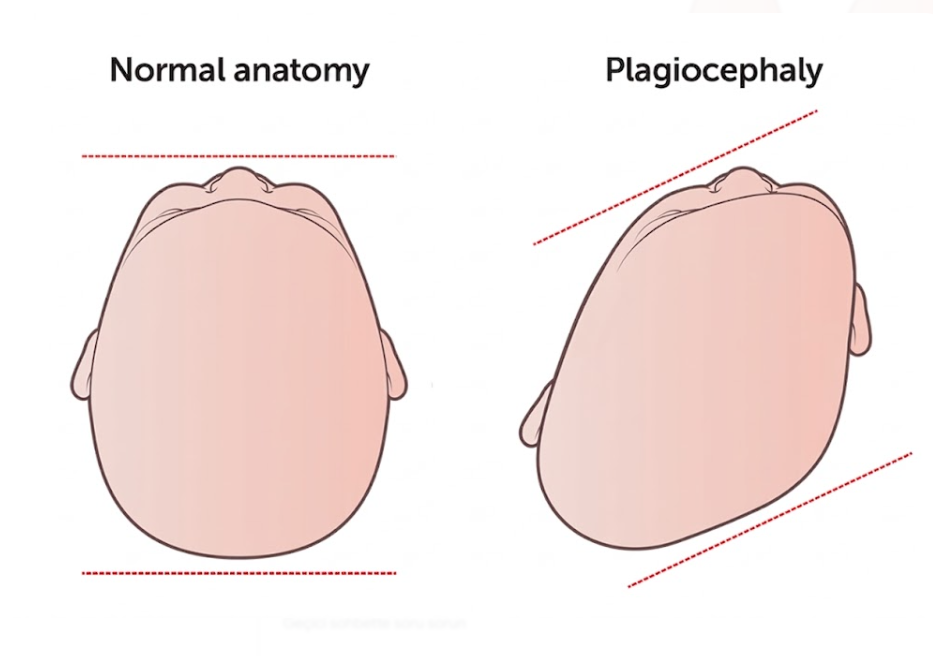
Plagiocephaly comes from Greek roots meaning “oblique head.” It is the most common positional cranial deformity in infants: one side of the skull is flatter than the other, usually from sustained pressure on that area. Infant skull bones remain soft and flexible for a period after birth, which allows this remodeling. Untreated asymmetry can also affect facial balance over time.
Types of Infant Head Shape Differences
Plagiocephaly is the most common, but other patterns also occur:
-
Plagiocephaly: Flattening on one side of the skull.
-
Brachycephaly: A short front-to-back dimension and a wider side-to-side dimension; the head looks short and broad from above.
-
Scaphocephaly: A long, narrow head. This pattern may relate to premature suture closure and can require surgical evaluation.
-
Combined shapes: More than one pattern together (for example, plagiocephaly with brachycephaly).
What Causes Plagiocephaly?
Several factors can contribute. Causes are often grouped as positional or structural:
Positional causes (most common)
-
Consistent sleep position: Back sleeping is safest for SIDS prevention, but always turning the head the same way can flatten that area.
-
Intrauterine constraint: Limited space or a fixed position in the womb.
-
Prematurity: Softer skull bones can increase susceptibility to shape change.
-
Torticollis (wry neck): Tight or short neck muscles make it hard to turn the head both ways, so the baby stays on one side.
-
Low-stimulation environment: Few cues to encourage head turning.
-
Car seats and carriers: Long, frequent use of rigid seating.
Structural causes (less common)
-
Craniosynostosis (early suture fusion): Restricts growth and can create abnormal shapes; often needs surgery. It should not be confused with positional plagiocephaly.
-
Metabolic bone conditions: Rare genetic or metabolic disorders that affect skull growth.
What Are the Signs?
The clearest sign is visible flattening on the back or side of the head. Other findings may include:
-
One side of the head looking wider or more compressed than the other.
-
Ear position asymmetry.
-
One side of the forehead appearing more prominent.
-
A preference for looking one direction (especially with torticollis).
-
Mild facial asymmetry in advancing cases.
Direct answer: Signs of plagiocephaly are usually noticed in the first months of life—flattening on the back or side of the head, ear asymmetry, and a strong head-turn preference.
Diagnosis
Evaluation usually begins with a physical exam of head shape, symmetry, and bone structure. If a structural problem is suspected, CT or MRI may be considered. Most positional plagiocephaly cases do not need advanced imaging. CranioWell Orthotics & Prosthetics Centers can support assessment with 3D scanning when helmet therapy is being considered.
Treatment: Helmet Therapy and Other Options
Care depends on severity, age, and cause. Earlier intervention generally supports better remodeling while the skull is growing quickly.
1. Positional changes and exercises
For mild differences, repositioning and exercises may help:
-
Tummy time: Supervised prone play while awake strengthens neck and shoulder muscles and reduces pressure on the back of the head.
-
Varying sleep head direction: Alternating which way the baby faces in the crib while still always placing the baby on the back to sleep.
-
Directed stimulation: Placing toys or activity on the flatter side to encourage turning that way.
-
Torticollis care: Physiotherapy and stretching when wry neck is present.
2. Cranial orthosis (helmet therapy)
For moderate to severe plagiocephaly, helmet therapy is a commonly used non-surgical option. A custom, lightweight, breathable cranial orthosis guides growth toward better symmetry. CranioWell HKM Pro helmets are fitted and followed only at CranioWell Orthotics & Prosthetics Centers.
How helmet therapy works
Helmets work by guiding growth. Skull bones remain flexible with rapid growth in the first 1–2 years. The orthosis limits expansion in already prominent areas and allows flatter areas more room to fill in.
Wear time and duration
Wear is often about 23 hours per day. Duration commonly ranges from about 4 to 6 months and depends on age, severity, and growth rate. Earlier starts often shorten the course. The typical treatment window is about 4–12 months of age, when growth is fastest.
Potential advantages
-
Supportive correction when started at an appropriate age.
-
Non-surgical approach.
-
Custom fit for each infant.
-
Most babies adapt within a short time.
3. Surgical methods
Some structural conditions, such as certain scaphocephaly patterns or craniosynostosis, may need surgery. Surgery is not the first-line approach for positional plagiocephaly.
Timing for Helmet Therapy
Timing matters. Between about 4 and 12 months, growth is rapid and bones are still malleable, so remodeling tends to respond more readily. After 18 months, growth slows and helmet effect may diminish.
Cost and Insurance
Because helmets are custom-made, costs vary by materials, design, and center policies. In Turkiye, some private insurance plans or public support programs may cover part or all of care under specific conditions. Ask your physician and the treatment center for current details.
After Helmet Therapy
After treatment ends, continuing sensible positional habits is recommended. Follow-up visits help monitor development. Mild reshaping after treatment is uncommon and usually minimal when it occurs.
Clinical Perspective
Information on this page is prepared for parents seeking reliable guidance on infant head shape differences and helmet therapy. CranioWell provides individualized evaluation and custom cranial orthoses at its Orthotics & Prosthetics Centers, based on each baby’s needs.