
Head Shape
Infant Head Shape Differences: Deformational Plagiocephaly
What deformational plagiocephaly is, why flat head patterns form, home signs to watch for, and when repositioning or helmet therapy may help.
Head Shape
What deformational plagiocephaly is, why flat head patterns form, home signs to watch for, and when repositioning or helmet therapy may help.
Infant head shape differences are among the concerns parents notice most often in the newborn period. If you see flattening or asymmetry on one side of your baby’s head, you are not alone—this is common today and can often be managed with the right approach. In the medical literature it is called deformational plagiocephaly, and early parental awareness helps keep it under control.
Also known as “flat head syndrome,” deformational plagiocephaly is a change in skull shape caused by external forces when soft cranial bones stay against the same surface for long periods. Infant skull bones are flexible at birth so the head can pass through the birth canal and accommodate rapid brain growth. That flexibility also means the head can be more vulnerable to external pressure.
This is not a brain disease that directly affects intelligence; it is usually described as a cosmetic and physical shape difference. Left untreated, however, it may contribute to facial asymmetry or jaw alignment concerns.
The main driver of infant head shape differences is prolonged contact of the same area of the head with a surface. Other contributing factors include:
Parents often notice asymmetry during baths or while brushing hair. When checking for infant head shape differences at home, look for:
If you notice any of these, consult a clinician. Objective tools such as 3D scanning can help measure severity.
For mild differences, repositioning exercises and tummy time are often recommended. For moderate and more advanced deformation, repositioning alone may not be enough.
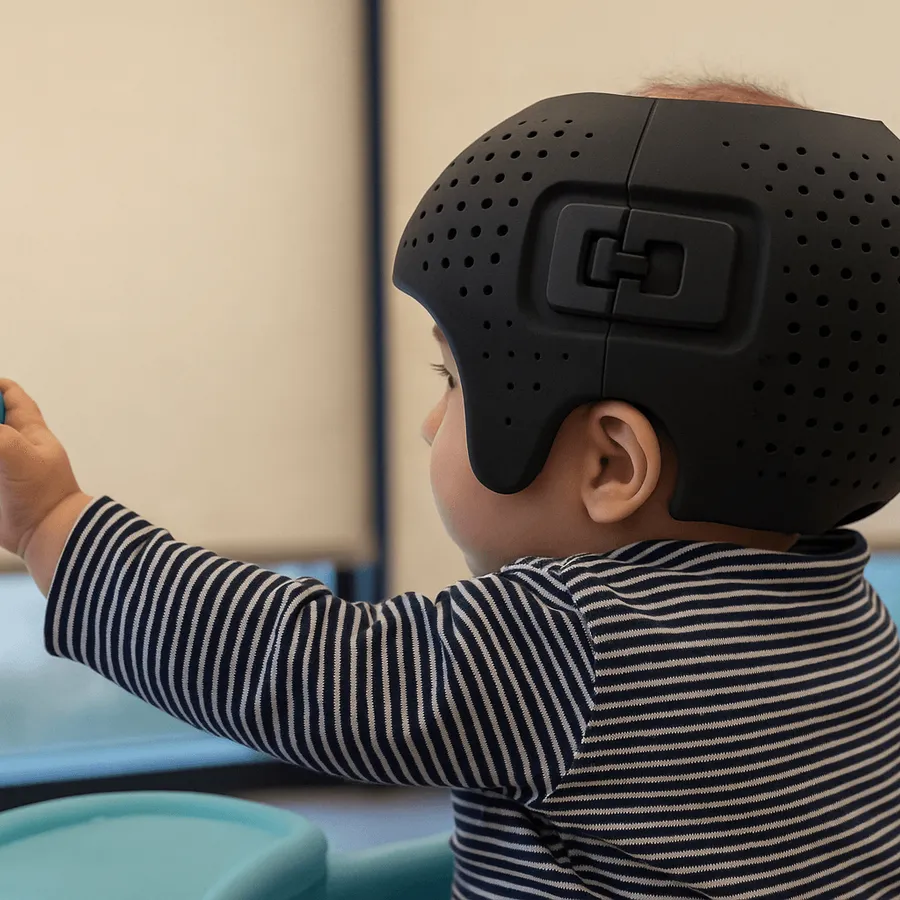
At that point a cranial orthosis (helmet therapy) may be considered. Helmet therapy uses a custom medical device designed to guide rapid cranial growth toward a more balanced shape. It does not crush the head; it helps redirect growth into flatter areas.
For scientific background, you can review sources via the U.S. National Library of Medicine (PubMed). (External source)
CranioWell aims to give families a clear, science-based roadmap from the start. Helmet fitting for the HKM Pro remolding helmet is provided at CranioWell Orthotics & Prosthetics Centers. For more information, see our page on What Is Helmet Therapy?
In mild cases, some improvement may occur once the infant rolls and sits and pressure decreases. In moderate and advanced asymmetry, waiting for full spontaneous correction can mean lost time.
Deformational plagiocephaly does not directly affect brain development or intelligence. It usually raises aesthetic concerns, though advanced cases can affect facial symmetry.
A commonly discussed window is around months 4–6, when head growth is rapid. Earlier appropriate care can make the process smoother.
Summary and Recommendation
Infant head shape differences are manageable when recognized early. If you notice flattening or asymmetry, rather than only waiting for time to pass, contact CranioWell for a free pre-assessment and measurement appointment.
Legal notice: This content is for information only. For diagnosis and treatment decisions, please consult your physician.