
Helmet Therapy
Fontanel Development and Baby Helmet Therapy
When does the fontanel close? Can a baby with an open fontanel wear a helmet? Fontanel timing guide and cranial helmet therapy explained.
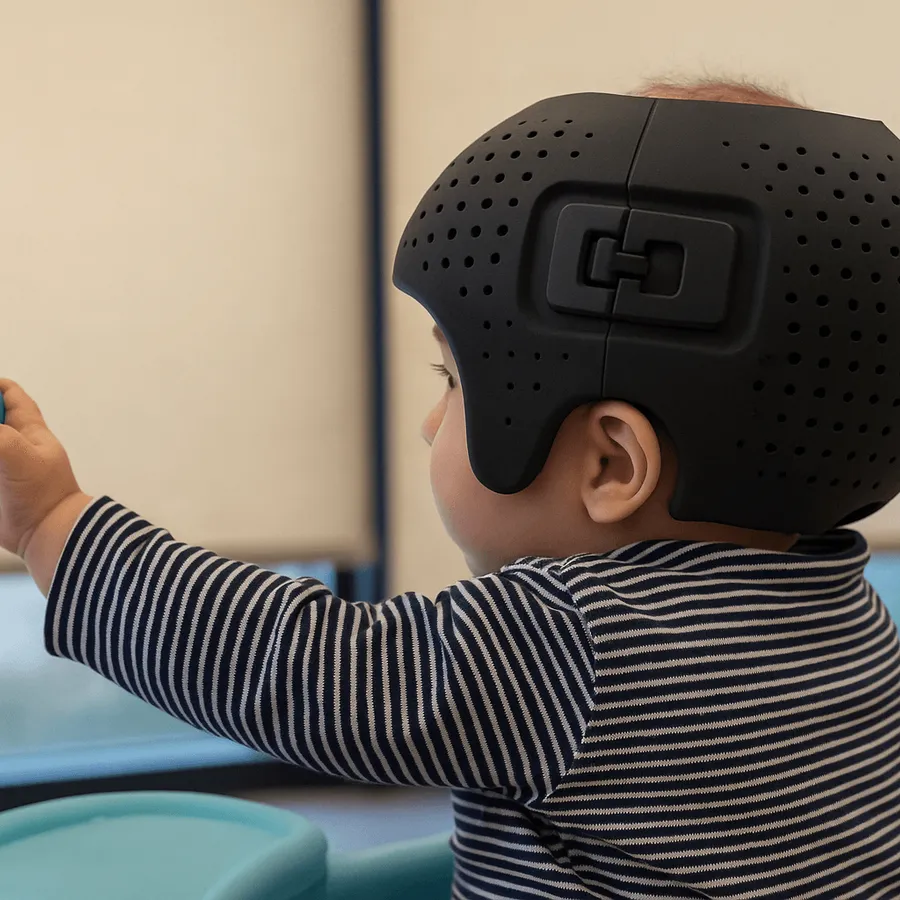
Helmet Therapy
When does the fontanel close? Can a baby with an open fontanel wear a helmet? Fontanel timing guide and cranial helmet therapy explained.
The fontanel (soft spot) is the gap between the skull bones of a newborn's head. Understanding its normal closing timeline is important — and many parents wonder whether helmet therapy is safe with an open fontanel.
Short answer: The anterior (front) fontanel usually closes between 9–18 months; the posterior (back) fontanel closes by 1–2 months. A baby can safely wear a cranial helmet while the fontanel is still open — the helmet does not press on it. If the fontanel closes before 6 months, a physician should evaluate for craniosynostosis.
A newborn's skull is made of several bone plates that are not yet fully joined. The soft areas between these plates are called fontanels. The largest, the anterior fontanel, is at the top of the head. A smaller posterior fontanel is at the back.
These gaps allow the skull to flex during birth and give the brain room to grow rapidly in the first years of life.
If the anterior fontanel closes before 6 months, this can sometimes indicate craniosynostosis — premature fusion of skull sutures. This requires physician evaluation. Not all early closures are pathological, but the finding should not be ignored.
In most cases, a fontanel still open after 24 months is a normal variation. It is worth mentioning to your paediatrician, who may order routine checks. Most children with late-closing fontanels are healthy.
Yes. The HKM Pro cranial helmet is designed not to put pressure on the fontanel. The helmet redirects skull growth by restricting protrusions and leaving space at flat areas — it does not rest on or compress the soft spot. CranioWell specialists check the fit carefully at each visit.
Yes — this is normal. The fontanel will close on its natural schedule regardless of whether a helmet is being worn. The closing of the fontanel during treatment does not mean therapy must stop; the treating team will assess progress at each visit.
Helmet therapy is most effective between 4–12 months. At 18 months skull growth has slowed, so results are more limited. A specialist assessment will give you the clearest picture. Contact us.
A fontanel that bulges or feels tense when the baby is calm and upright should be assessed by a physician promptly.