
Helmet Therapy
Can Babies Have Helmet Therapy After Age 1?
After 12-18 months, skull bones fuse and helmet therapy becomes less effective. Learn what options remain and when to seek an assessment.
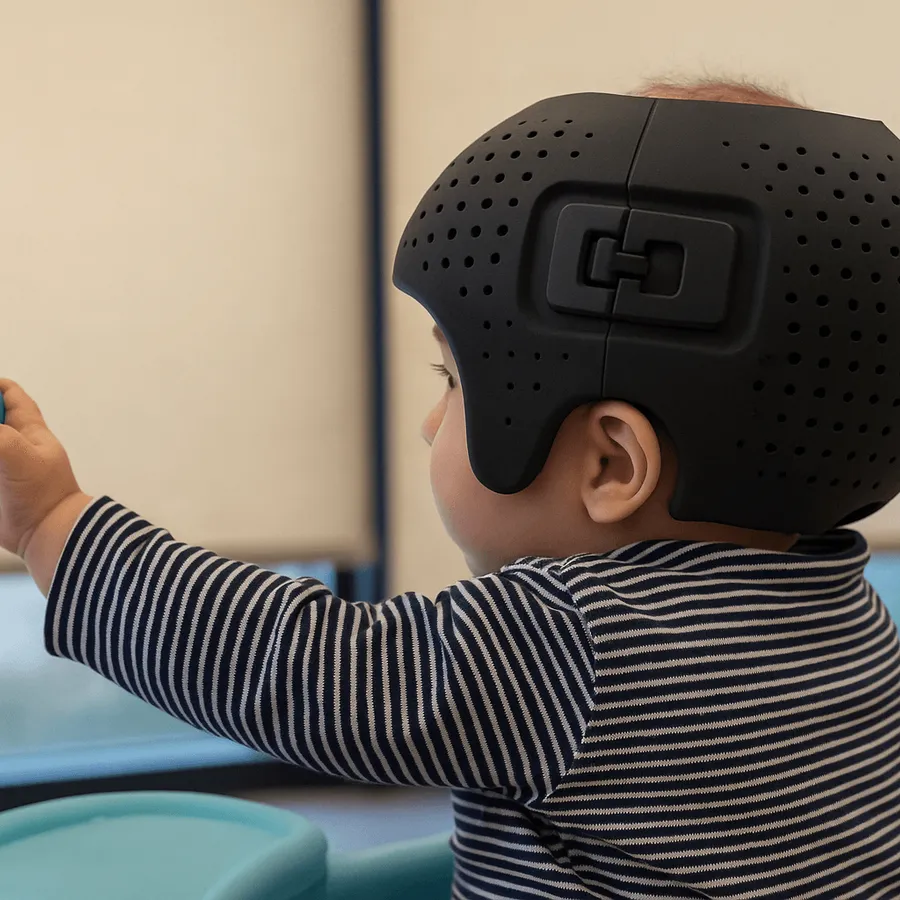
Helmet Therapy
After 12-18 months, skull bones fuse and helmet therapy becomes less effective. Learn what options remain and when to seek an assessment.
This is one of the most common questions parents ask — usually after noticing a head shape concern later than they wished. The honest answer is: it depends on the age and the individual case, but time is a critical factor.
In the first year of life, a baby's skull is highly malleable because the sutures (the flexible joints between skull bones) remain open and the bones are still soft. This is what makes helmet therapy effective during this window.
After 12 months, skull growth slows significantly. The skull is still growing, but at a much slower rate, which means the helmet has less natural growth to redirect. Results become less predictable and the treatment window narrows.
After approximately 18 months, helmet therapy is generally not effective. By this age, the skull sutures have largely closed, the bone has become considerably less malleable, and there is insufficient remaining growth to bring about meaningful correction through a helmet.
This does not mean nothing can be done — but the treatment options change at this stage.
If helmet therapy is started after 12 months, results are possible but are typically more limited compared to starting at 4–6 months. The degree of improvement depends on:
We will always give you an honest assessment of what is achievable before recommending treatment.
Even if your baby is past the ideal window, an assessment is always worthwhile. Our specialists can evaluate the remaining skull growth potential and advise whether helmet therapy is still a realistic option in your baby's specific case.
For children where the window has passed entirely, other considerations (such as how the deformity may be affected by continued natural growth, or whether specialist follow-up is needed) can be discussed at the assessment.
If you have any concerns about your baby's head shape — at any age — the right step is to seek an assessment as soon as possible. Do not wait to see if it resolves on its own. The earlier the assessment, the more options are available.
Request a pre-assessment online or call us at 0551 706 87 19.