
Helmet Therapy
After Helmet Therapy: Does Head Shape Rebound?
Why remolding gains are usually lasting once bones harden and growth slows, how weaning works at CranioWell, and rare exceptions families should understand.
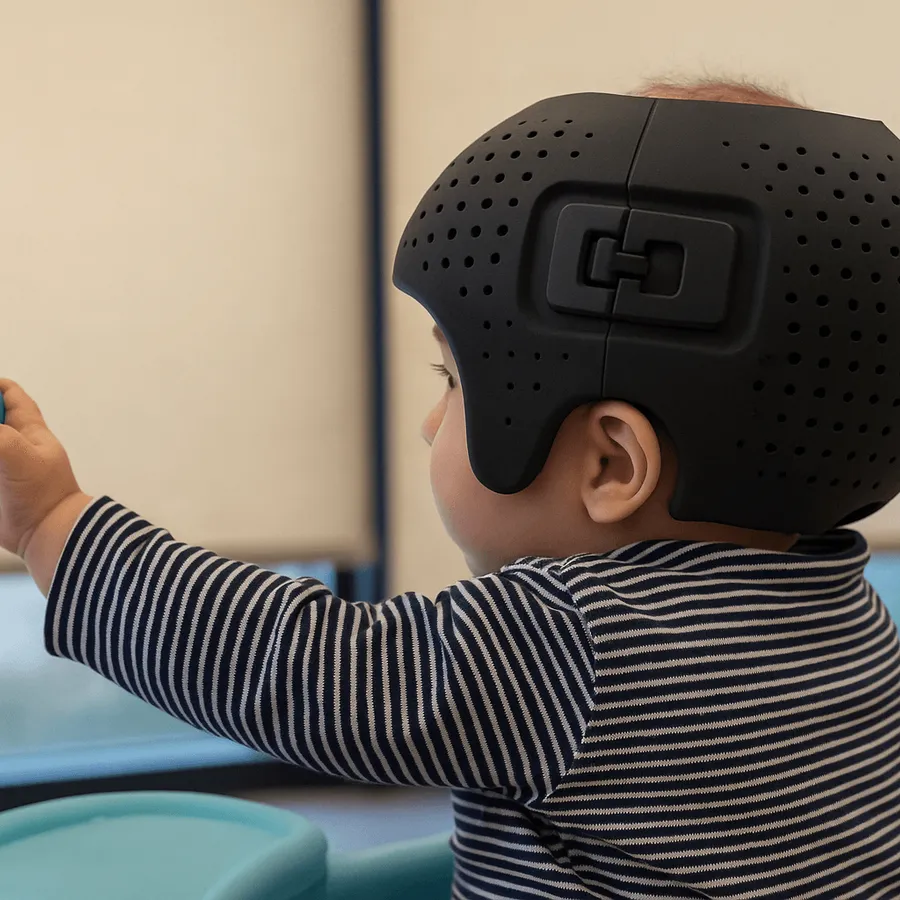
Helmet Therapy
Why remolding gains are usually lasting once bones harden and growth slows, how weaning works at CranioWell, and rare exceptions families should understand.
Months of careful wear, visits, and measurements—and then graduation day: helmet therapy is complete and the head has reached the planned balance.
Joy is often mixed with worry: “Will the shape revert when the helmet comes off?” Families compare it to teeth shifting after braces. CranioWell Orthotics & Prosthetics Centers explain the biological answer.
Improvement from remolding is generally lasting. The skull is not a rubber ball that springs back. Stability relates to ossification and slower later growth.
The helmet guided growth into a new form. By the end of care, that form has become the baby’s developed bone shape.
Treatment that starts early usually ends around the first birthday. Cranial bones are no longer as soft as in the newborn period; they are more mineralized and thicker, so they resist casual reshaping.
After about age one, head growth slows markedly. There is usually not enough rapid, directional growth left to recreate the old flattening pattern.
Toddlers walk, turn, and change sleep positions. Constant occipital pressure from back-lying newborns is gone.
Teeth sit in soft periodontal tissue and can drift. Remolding reshapes bone. Once bone has formed and hardened in a new contour, that contour becomes the new baseline.
At CranioWell we do not usually stop wear abruptly. A short weaning plan supports confidence and confirmation:
Meaningful rebound after completed positional remolding is uncommon. Rare medical exceptions can include:
Note: In an otherwise healthy baby treated only for positional deformation, shape typically does not revert.
When bones have hardened, dramatic further bony change is limited. Thicker hair often makes mild residual asymmetry less noticeable.
No. Return to age-appropriate safe sleep surfaces without positioning devices that restrict movement.
Many families keep it as a keepsake. Medically, reuse is not required.
Remolding aims to give your child a lasting, balanced head shape—not a temporary cosmetic fix.
On graduation day, set the helmet aside and enjoy stroking your baby’s hair. The CranioWell team is glad to be part of that milestone.
This content is for information only and does not replace medical diagnosis or treatment.