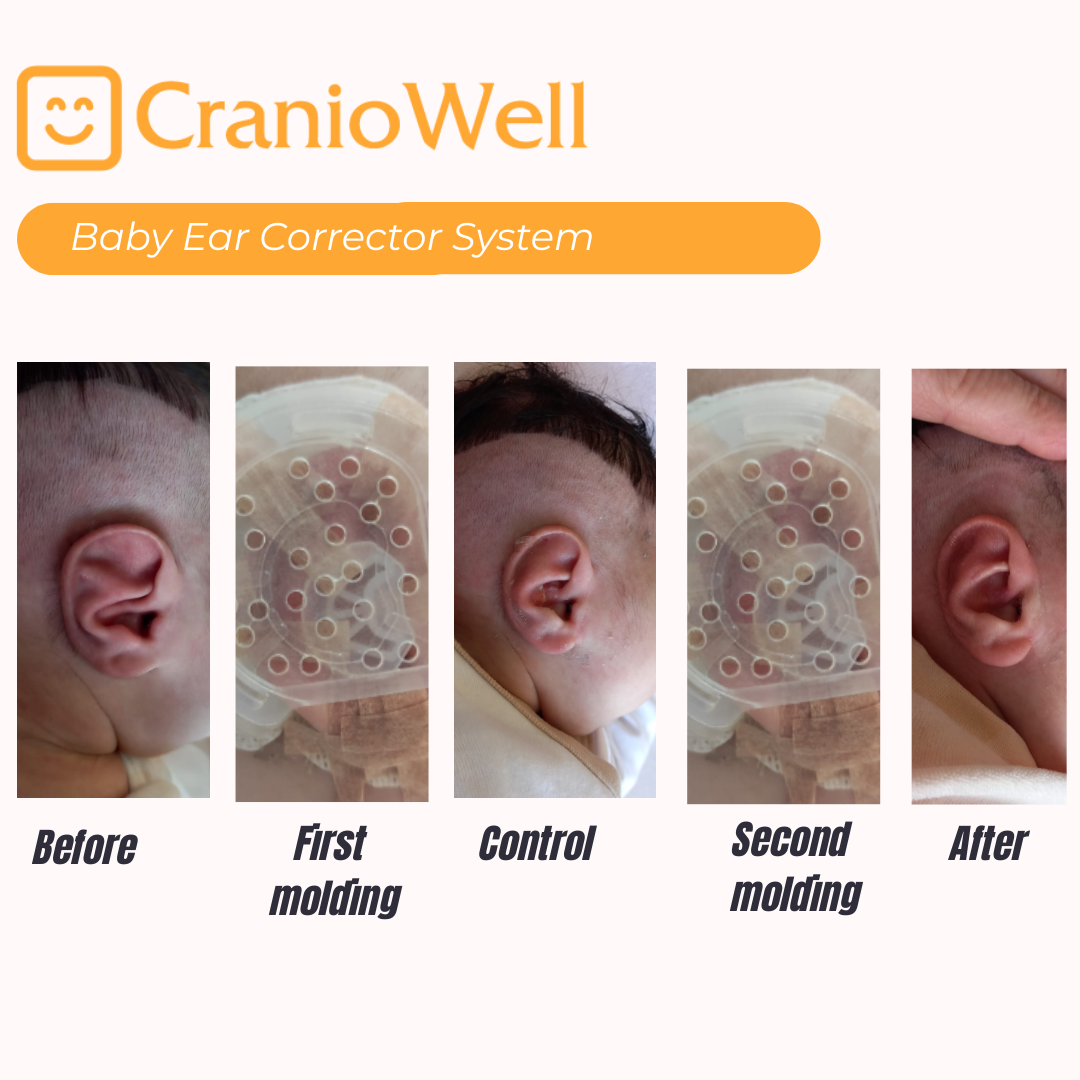
Infant Ear Shape Differences: Non-Surgical Solutions and the CranioWell Ear Molding Device
Causes and types of newborn ear deformities, how CranioWell ear molding works, why early weeks matter, and why application is done by treating physicians.
Congenital ear shape differences can affect appearance and worry parents. Modern medicine offers effective non-surgical methods. Ear molding systems can be especially useful in the newborn period. This article reviews causes, types, and how non-surgical ear molding works.
Why Do Infant Ear Shape Differences Occur?
Ear shape differences may relate to prenatal position or genetic factors. A common contributor is a constrained ear position, especially in late pregnancy, which can permanently shape cartilage. Patterns may include a folded upper helix (lop ear), tragus abnormalities, or earlobe shape differences.
Common Types of Ear Shape Differences
Lop ear: Upper helix markedly folded toward the head.
Prominent ear (protruding ear): The ear stands farther from the head than usual.
Helix crinkling: A wrinkled or folded upper rim.
Conchal crus: A cartilage ridge extending toward the earlobe region.
Microtia: Incomplete, small, or absent external ear development (usually more complex).
Besides aesthetic concerns, some differences can later complicate hearing-aid use.
Non-Surgical Ear Molding Systems: Advantages of the CranioWell Infant Ear Molding Device
Non-surgical ear molding systems use natural cartilage flexibility—especially in the first weeks—to guide ears toward a desired shape.
How Does the CranioWell Infant Ear Molding Device Work?
The CranioWell infant ear molding device is a specially designed product applied gently to the ear. It reshapes cartilage with continuous, light guidance. The system generally:
Comprehensive molding: Preserves natural form while guiding desired contours.
Gentle, continuous guidance: Uses cartilage remodeling potential to move the ear gradually into position.
Clinician application: Applied and monitored by treating physicians; parents receive care and hygiene instructions.
A major advantage is effective results without surgical risks, anesthesia, or long recovery. Response is typically strongest in about the first 4–6 weeks, when cartilage is most flexible.
Treatment Course and Outcomes
Duration with the CranioWell infant ear molding device varies by deformity type and severity—often several weeks. Regular use and physician follow-up matter. Early recognition shortens courses and supports better outcomes. Clinical experience shows many selected deformities respond well to early molding.
When Should Treatment Start?
Timing is critical. The first weeks after birth are when cartilage remains most flexible under residual intrauterine hormonal effects. As soon as an ear difference is noticed, consult a clinician. See our article When should protruding-ear treatment be done in infants? for more detail.
Specialist Perspective and the CranioWell Approach
CranioWell focuses on non-surgical methods for infant head and ear shape differences. Our goal is healthy development and reliable options for families. The CranioWell infant ear molding device is part of that approach. Treating physicians create individualized plans for each infant. For related reading, see infant head shaping methods.
In summary, infant ear shape differences are often manageable with early recognition and appropriate care. Non-surgical ear molding systems offer a safe, effective option in suitable cases.