
Ear Shaping
Infant Ear Shape Differences: Non-Surgical Solutions with CranioWell
Common newborn ear deformities, why early molding matters, CranioWell non-surgical ear molding benefits, FAQs, and comparison with later surgical otoplasty.

Ear Shaping
Common newborn ear deformities, why early molding matters, CranioWell non-surgical ear molding benefits, FAQs, and comparison with later surgical otoplasty.
Infant ear shape differences can worry parents. Today, many can be addressed effectively without surgery. CranioWell supports healthy development with non-surgical, carefully designed options for various ear shape differences. This article covers causes, common types, diagnosis and care, and advantages of the CranioWell infant ear molding device.
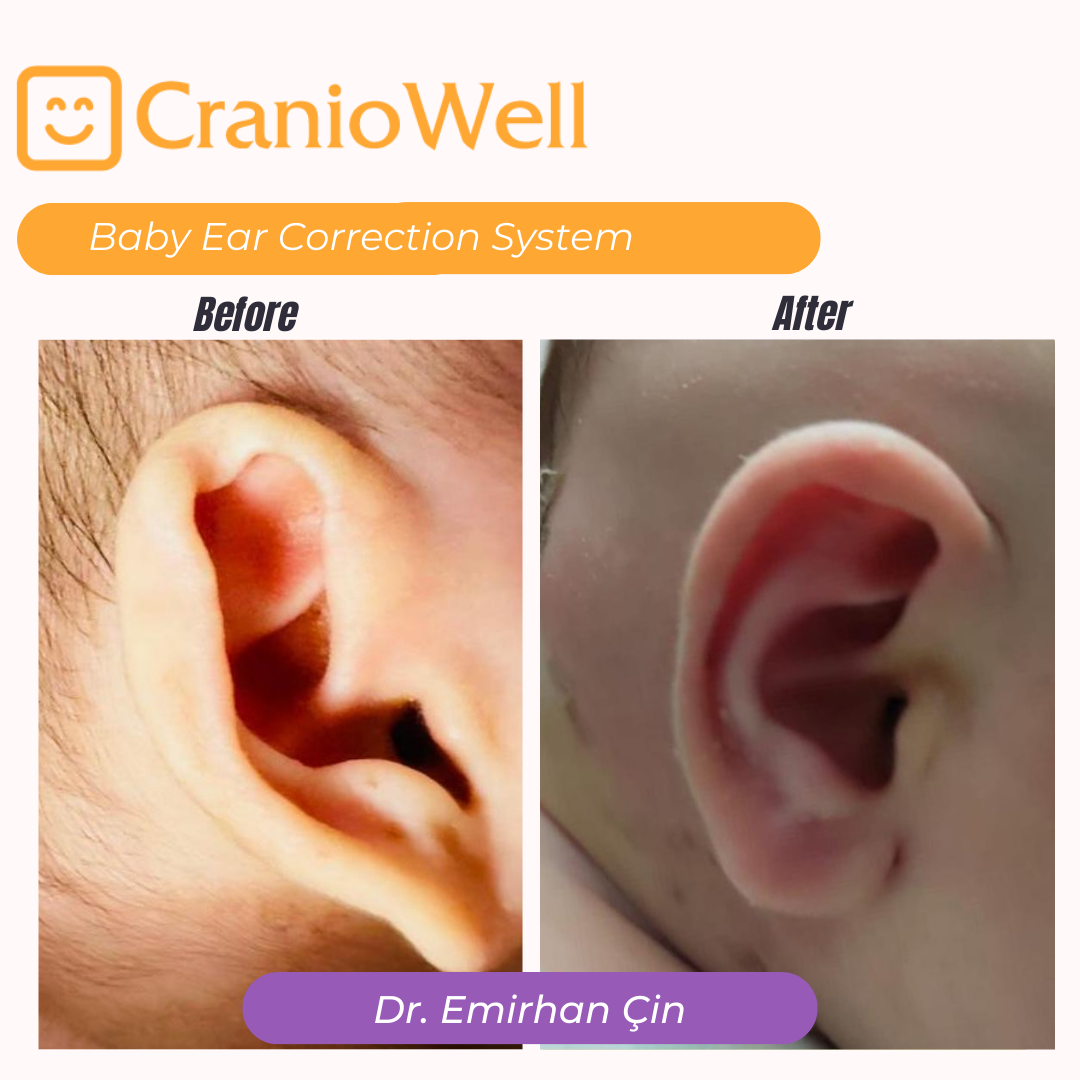
Differences may appear during prenatal development or soon after birth. Main contributors include:
Direct answer: Infant ear shape differences usually arise from a mix of genetic predisposition, intrauterine position, and birth factors. With early recognition and care, many can be improved.
Frequently seen patterns include:
Beyond aesthetics, ear differences can affect psychosocial development. By school age, teasing or reduced self-confidence may appear. Some shapes can also make hearing-aid use harder or, rarely, relate to hearing concerns. Early intervention therefore matters both physically and psychologically.
CranioWell offers a modern approach that aims for a natural aesthetic appearance without surgery. The system is most responsive when started in the first weeks of life. Application is performed by treating physicians.
The CranioWell infant ear molding device is a soft, flexible custom molding solution. It gently guides cartilage toward the desired shape over time. Materials are lightweight, breathable, and skin-friendly. Duration depends on type and severity and often lasts several weeks.
Key advantages include:
The earlier care starts, the more favorable results tend to be. The first month is usually when ear cartilage is most flexible and molding is most responsive. After the first month, response may decrease, though molding can still be considered into the second month. During use of the CranioWell infant ear molding device:
Answer: They are fairly common; roughly 2–3 in every 100 infants may show differences to some degree. Early intervention helps many cases improve.
Answer: Earlier is better. Ideally start within the first month. After that, response may decrease, though molding can still be considered into the second month.
Answer: No—when used correctly, the soft, flexible, skin-friendly design is intended to be safe and comfortable.
Answer: Duration depends on type, severity, and age—often several weeks—with gradual change during the course.
Answer: After 3 months cartilage flexibility decreases, so response may be more limited. Physician-supervised attempts may still help some infants partially.
Answer: Tapes or homemade methods usually do not provide adequate, lasting correction. Clinician-approved medical devices are the appropriate approach.
| Feature | CranioWell Infant Ear Molding Device | Surgical Intervention |
|---|---|---|
| Method | Non-surgical, painless molding | Operative correction |
| Age window | First months after birth (most responsive) | Usually around school age or later |
| Risks | Very low (possible mild skin irritation) | Anesthesia risks, infection, bleeding, scarring |
| Recovery | Quick return to daily life | Post-op recovery, dressings, follow-up |
| Durability of results | Intended lasting improvement | Intended lasting improvement |
| Cost | Often more affordable | Typically higher |
| Comfort | High comfort with infant-adapted design | Possible post-op pain and discomfort |
Early recognition and choosing the right method matter. CranioWell collaborates with physicians and engineers to offer solutions grounded in current clinical practice. The infant ear molding device aims not only to improve ear shape but also to support a confident start. Treating physicians evaluate each infant individually and create personalized plans.
Infant ear shape differences are often manageable when addressed at the right time with the right method. The CranioWell infant ear molding device offers a non-surgical, painless, carefully designed option that helps guide natural correction. Contact our team for detailed information and to begin care. Early intervention is key to lasting, healthy results.