
Head shape deformities in babies are common concerns for parents. Plagiocephaly, the most frequent type of these deformities, involves the formation of a flat or asymmetrical area on the baby's skull. Fortunately, it is possible to overcome this condition with effective treatment methods offered by modern medicine. In this article, we will delve into the causes, symptoms of flat head syndrome in babies, and current head shaping methods for babies, including the innovative solutions provided by CranioWell.
What is Plagiocephaly and Why Does it Occur?
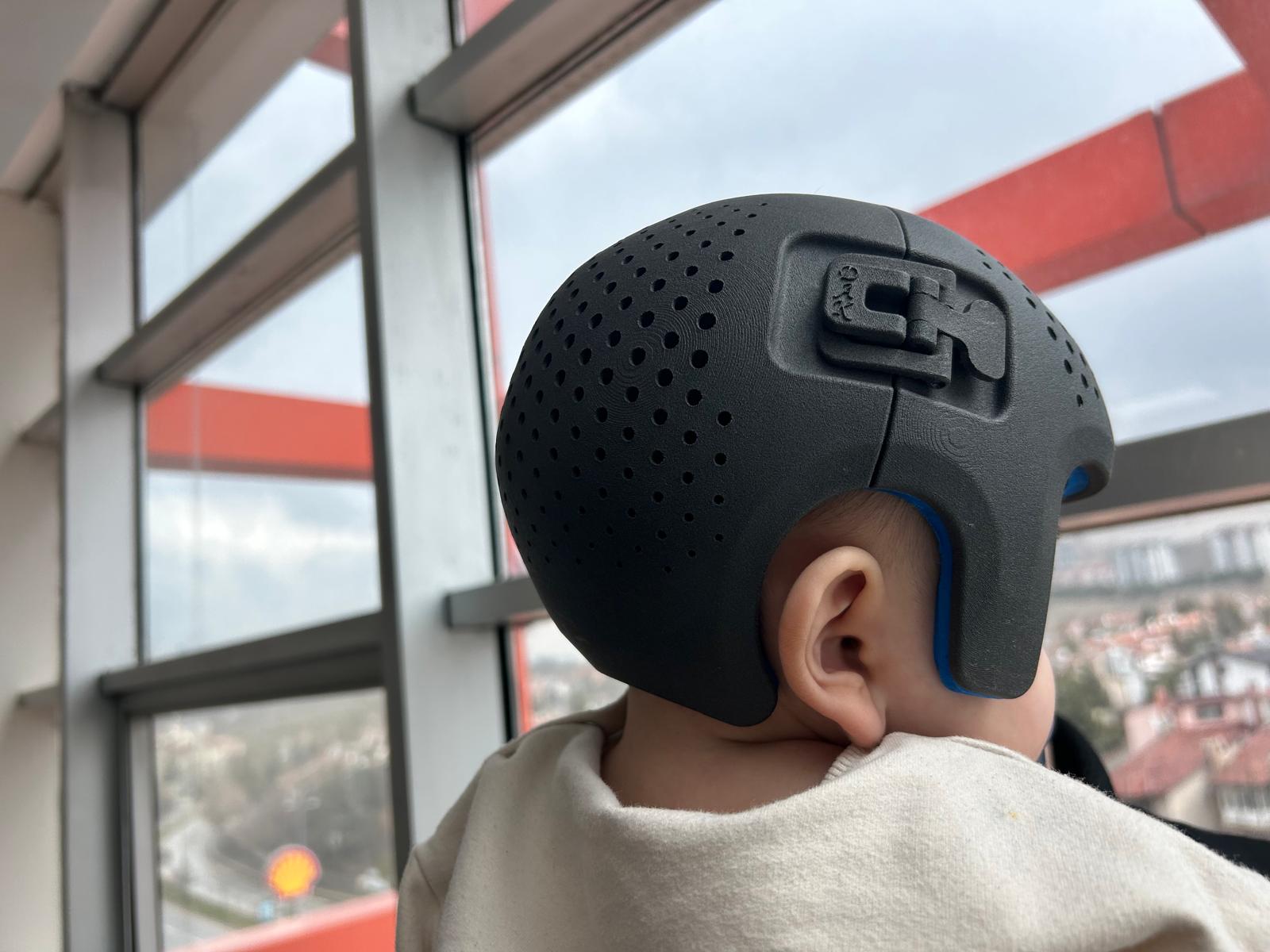
Plagiocephaly is derived from the Greek words "plagio" meaning "oblique" or "slanted" and "kephale" meaning "head." Also referred to as "deformational plagiocephaly" in medical literature, this condition means one side of the baby's skull is flatter than the other. This typically develops in the first few months after birth, when the skull is soft and flexible.
The primary causes of plagiocephaly development include:
- Intrauterine Constraint: Prolonged positioning of the baby in a specific posture within the womb can create pressure on the skull, leading to flattening. This is particularly common in multiple pregnancies.
- Premature Birth: Babies born prematurely may have softer skulls that are more susceptible to shaping.
- Prone or Side-Lying Position (Positional Plagiocephaly): While modern sleep safety recommendations advise placing babies on their backs, prolonged pressure on the same spot on the head can occur. The risk increases if babies are not consciously supported in prone or side-lying positions (under supervision) or if their positions are not frequently changed.
- Torticollis (Wry Neck): Shortening or tightness in the neck muscles can cause the baby to consistently turn their head in one direction, leading to flattening in that area. This is one of the most common causes of plagiocephaly as it affects the baby's comfort in turning their head.
- Mechanical Factors: Spending extended periods in a crib or car seat can increase constant pressure on the baby's head.
Head Shaping Methods for Babies: The CranioWell Approach
At CranioWell, we offer personalized treatment methods utilizing the latest technology to correct head shape deformities in babies. The head shaping process for babies is customized based on the baby's age, the severity of the deformity, and its cause. Our primary methods include:
- Positional Therapy and Exercises: For mild head shape deformities, frequently changing the baby's position and incorporating exercises like tummy time are recommended. This reduces pressure on the baby's head and promotes natural development.
- Custom-Designed Shaping Devices (Cranial Orthoses): For moderate to severe head shape deformities, specially designed orthoses such as the CranioWell HKM Pro Helmet are used. These devices limit growth in the flattened areas of the baby's skull while allowing growth in the prominent areas, guiding the skull to achieve an ideal shape. The ideal starting time for this treatment is around 4 months of age. While the success rate decreases after 4 months, molding can still be done up to the second month.
Symptoms of Plagiocephaly: When to Be Concerned?
Plagiocephaly may not be apparent at birth and is usually noticed within the first few months. The main symptoms include:
- A noticeable flatness on the back or sides of the baby's head.
- Asymmetrical protrusion of skull bones.
- Differences in the alignment of the ears or forehead.
- A tendency for the baby to consistently turn their head in one direction (may be related to torticollis).
Approximately 2 to 3 out of every 100 babies may experience head shape deformities of varying degrees. Early diagnosis and treatment are crucial for long-term aesthetic and functional outcomes.
Head Shaping Process in Babies and Success Rates
The head shaping process typically begins with an evaluation when the baby is between 3 and 7 months old. The most effective treatment period is ideally around 4 months of age. High success rates are achieved with treatments using custom orthoses like the CranioWell HKM Pro Helmet, with accurate diagnosis and application. During treatment, wearing the orthosis for more than 15 hours a day on average has been observed to yield better results. The treatment duration usually lasts a few months; this period can extend up to 4-6 months, depending on the baby's age and the severity of the deformity.
CranioWell HKM Pro Helmet: An Innovative Solution
The CranioWell HKM Pro Helmet is a high-tech cranial remolding orthosis designed to correct head shape deformities in babies. It is custom-made using 3D scanning technology to capture precise measurements of the baby's skull. This ensures:
- Maximum Comfort: Made from skin-friendly, lightweight, and breathable materials.
- Effective Growth Guidance: Utilizes the skull's growth potential to reduce pressure on flattened areas and guide growth in prominent areas in a controlled manner.
- Fast and Aesthetic Results: Achieves aesthetically pleasing results with early diagnosis and proper treatment.
When Should Treatment Begin?
The success of head shaping treatment in babies is directly proportional to the timing of its initiation. The most ideal timing is during the first few months when the baby's skull is still flexible. Specifically, the ideal starting time is around 4 months of age. While the success rate decreases after 4 months, molding can still be done up to the second month. The earlier treatment begins, the faster and more effective the results will be.
Cost of Head Shaping Device Treatment and Insurance Coverage
The cost of head shaping devices can vary depending on the technology used, material quality, and the custom manufacturing process. In some countries, such medical devices may be covered by insurance. At CranioWell, we support families with insurance processes and payment plans. You can contact us for detailed information regarding treatment costs.
Frequently Asked Questions
What causes flat head syndrome in babies?
Flat head syndrome (plagiocephaly) in babies can be caused by factors such as the baby’s position in the womb, prolonged sleeping in one position, torticollis (neck muscle spasm), or premature birth. The soft and flexible nature of the skull makes it susceptible to such shape deformities.
When should head shaping treatment begin?
The most effective period for head shaping treatment is around the baby’s **4th month**. At this age, the skull is still quite flexible and responds better to shaping. While the success rate decreases after 4 months, molding can still be done up to the second month. The earlier treatment begins, the faster and more effective the results will be.
How long is a head shaping device used?
The duration of treatment varies depending on the severity of the deformity and the baby’s age, typically lasting between 4 to 6 months. Regular check-ups allow for necessary adjustments to the device, optimizing the treatment process.
Is flat head syndrome in babies permanent?
With early diagnosis and appropriate treatment, it is possible to significantly correct flat head syndrome in babies. If left untreated, especially in moderate to severe cases, permanent aesthetic issues may arise.
Can a head shaping device harm a baby?
Head shaping devices (orthoses) custom-designed with accurate measurements do not harm the baby. On the contrary, they support the healthy growth and ideal shaping of the skull. The comfort and fit of the device should be regularly monitored.