
Congenital ear deformities can affect the physical appearance of infants and cause concern for parents. Fortunately, thanks to innovative solutions offered by modern medicine, effective non-surgical methods are available for these conditions. Ear molding systems, one of these methods, offer high success rates, especially when applied during the newborn period. In this article, we will examine in detail the causes and types of ear deformities in infants and, most importantly, how ear molding systems, an effective non-surgical solution, work.
Why Do Ear Deformities Occur in Infants?
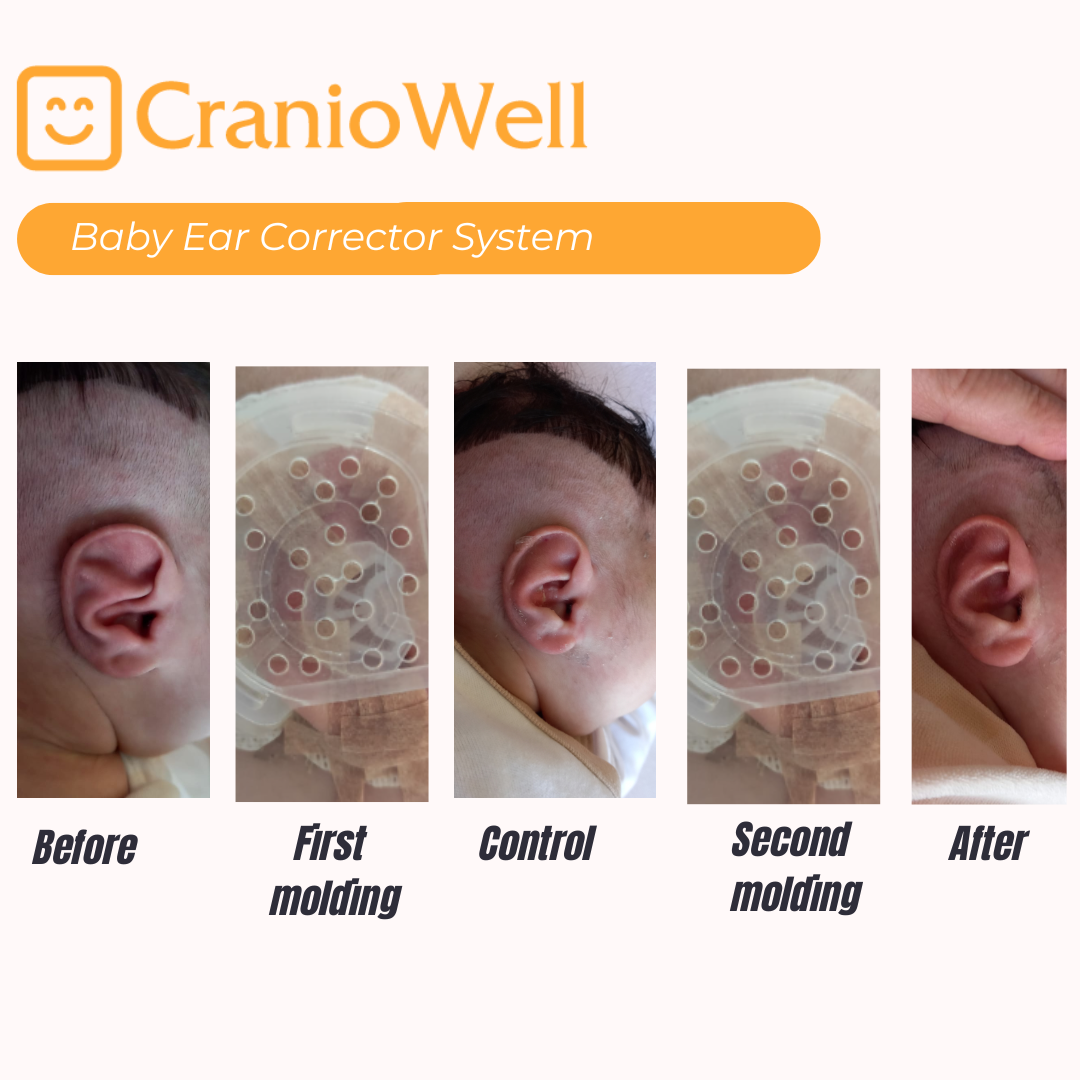
Ear deformities can arise from the infant's ear position in the womb during pregnancy or from genetic factors. One of the most common causes is the ears being in a cramped position. Especially in the last weeks of pregnancy, the baby's position can lead to the permanent shaping of the ear cartilage. These conditions can manifest as a folded upper part of the ear (e.g., lop ear), abnormalities in the position of the tragus, or deformities of the earlobe.
Common Types of Ear Deformities
- Lop Ear (Sticked Ear): The upper part of the ear is noticeably folded towards the head.
- Prominent Ear (Bat Ear): The ear protrudes more from the head than normal.
- Helical Rim Deformities (Crinkled Ear): The upper rim of the ear is wrinkled or folded.
- Conchal Crus: A cartilaginous protrusion in the lower part of the ear, extending towards the earlobe.
- Microtia: Incomplete development of the ear, resulting in a small or absent ear (usually seen in more severe cases).
It's important to remember that besides aesthetic concerns, these deformities can also lead to difficulties in later life, such as with the use of hearing aids.
Non-Surgical Ear Molding Systems: Advantages of the CranioWell Infant Ear Corrector
One of the most innovative methods developed for the treatment of ear deformities is non-surgical ear molding systems. These systems aim to reshape the ears into the desired form by utilizing the natural elasticity of cartilage, especially when applied within the first few weeks.
How Does the CranioWell Infant Ear Corrector Work?
The CranioWell infant ear corrector is a specially designed product gently applied to the baby's ear. This device reshapes the ear's cartilage structure by applying continuous yet gentle pressure. The system generally works by:
- Comprehensive Molding: It works by preserving the natural form of the baby's ear and guiding it into the desired shape.
- Gentle and Continuous Pressure: It slowly guides the ear into the desired position by utilizing the cartilage's regrowth potential.
- Easy Application: It can be easily applied and removed by parents.
The biggest advantage of this treatment method is that it offers effective results without surgical risks, anesthesia, and long recovery periods. Furthermore, the chance of success is quite high when applied during the first 4-6 weeks of a baby's life, when their cartilage is most flexible.
Treatment Process and Success Rates
The duration of treatment with the CranioWell infant ear corrector varies depending on the type and severity of the deformity. During this treatment, which typically lasts a few weeks, it is important to use the device regularly and not to miss doctor's appointments. Early diagnosis and intervention shorten the treatment time and increase the success rate. Clinical studies and user experiences have shown that such systems can achieve success rates of up to 90% for specific ear deformities.
When to Start?
The timing of starting treatment for ear deformities is critical. The first few weeks after a baby is born are when their cartilage is still influenced by the intrauterine position and is at its most flexible. Therefore, it is recommended to consult a specialist and start treatment as soon as an ear deformity is noticed. We discussed this topic in more detail in our article titled When Should Prominent Ear Correction Be Done in Infants?.
Expert Opinion and the CranioWell Approach
At CranioWell, we focus on non-surgical methods for treating cranial and ear shape deformities in infants. Our goal is to ensure that babies have a healthy developmental process and to provide reliable solutions for parents. The CranioWell infant ear corrector is an important part of this vision. Our expert team offers personalized approaches to create the most suitable treatment plan for each baby. You can review our other article to learn more about Head Shaping Methods for Infants.
In summary, ear deformities in infants are a condition that can be easily corrected with early diagnosis and appropriate treatment methods. Non-surgical ear molding systems offer a safe and effective solution in this area.
For more information, see our ear deformities infants nonsurgical solutions page.